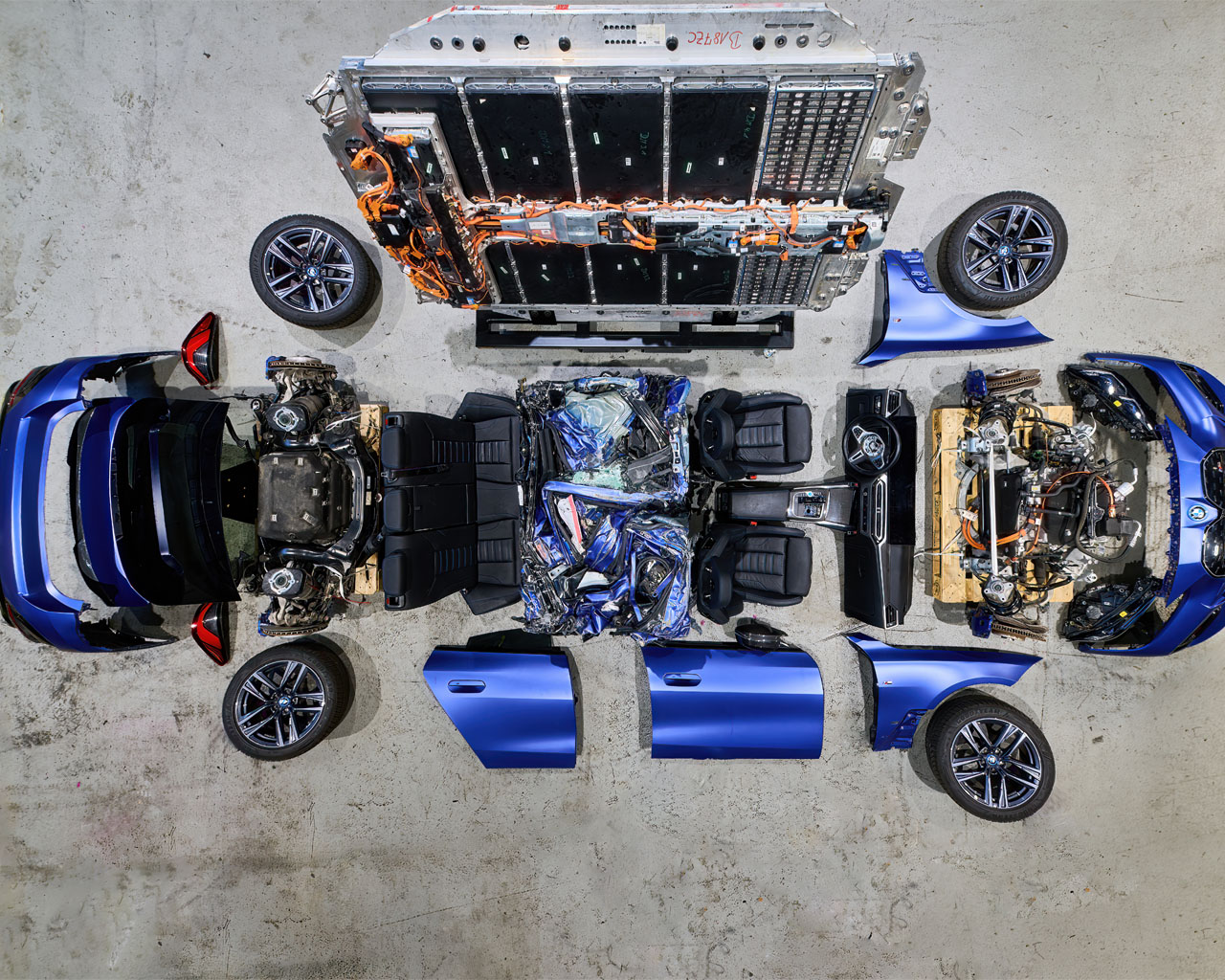
The BMW iFACTORY is the guiding principle for how the BMW Group shapes its production today and tomorrow. In daily operation it shows up as concrete numbers and places: one million vehicles moved automatically through the plants, robots that learn their movements from experienced production employees, a new battery plant in Lower Bavaria that went into series production two-and-a-half years after construction began, and a Cell Recycling Competence Center that feeds raw materials straight back into cell production. Four perspectives on what digital, connected, and circular production looks like once it leaves the pilot stage.

Production
04.11.2026
9 MIN
What does the BMW iFACTORY look like in daily operation?

What does one million automated vehicle movements prove?
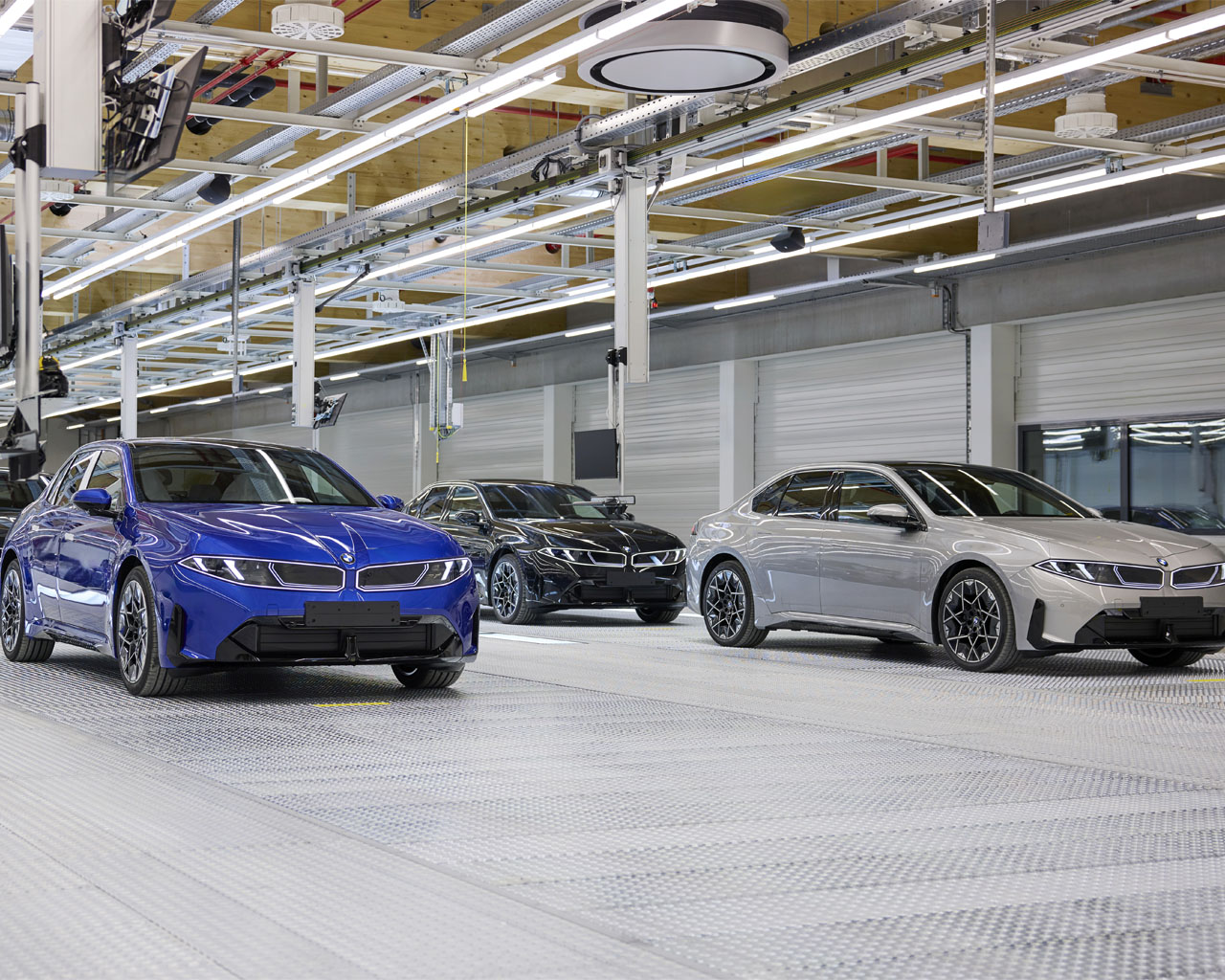
One million is the number: that is how many vehicles the BMW Group has already moved driverless through its plants using Automated Driving in Production (AFW). At MINI Plant Oxford alone, the technology accounted for more than 53,000 automated journeys over the past year, and across the network around 3,500 automated journeys take place every day. Oxford is the fourth BMW Group plant to use the system, after Dingolfing, Leipzig and Regensburg. What began as a pilot in Dingolfing in 2022 has developed from a technology trial into a scalable series application that is being rolled out step by step across the global production network. Plant Spartanburg is next in line.
The breadth behind the number is what makes it meaningful. AFW is not a single-plant solution: the technology can be adapted across different sites, vehicle architectures and production sequences, and the vehicles react dynamically to their surroundings – to people, other vehicles, automated guided vehicles, logistics traffic and temporary obstacles. Oxford adds a new step. It is the first BMW Group site where automatically moved vehicles are connected directly to existing plant controls: the AFW system positions the vehicle precisely at a lifting device where a defined work step is carried out, enabled by a cloud-based solution. Technically, AFW combines external sensors, a cloud architecture and sophisticated motion-planning software; LiDAR sensors along the routes continuously capture the surroundings, and Plant Dingolfing operates the largest LiDAR infrastructure in Europe. The technology was developed together with the Swiss company Embotech, a partnership initiated through the BMW Startup Garage.
One million vehicles moved using automated driving technology and the deployment of this technology at four sites to date demonstrates the innovative strength and scaling capabilities of our production network. We recognised the potential of Automated Driving In-Plant early, tested it in a pilot phase and systematically developed it to series maturity. We are now rolling out this technology worldwide. Automated Driving In-Plant is a prime example of how we are translating the vision of the BMW iFACTORY into industrial practice and driving the efficiency, digitalisation and intelligent connectivity across our production.
Who teaches the AI-driven robots how the BMW Group builds cars?
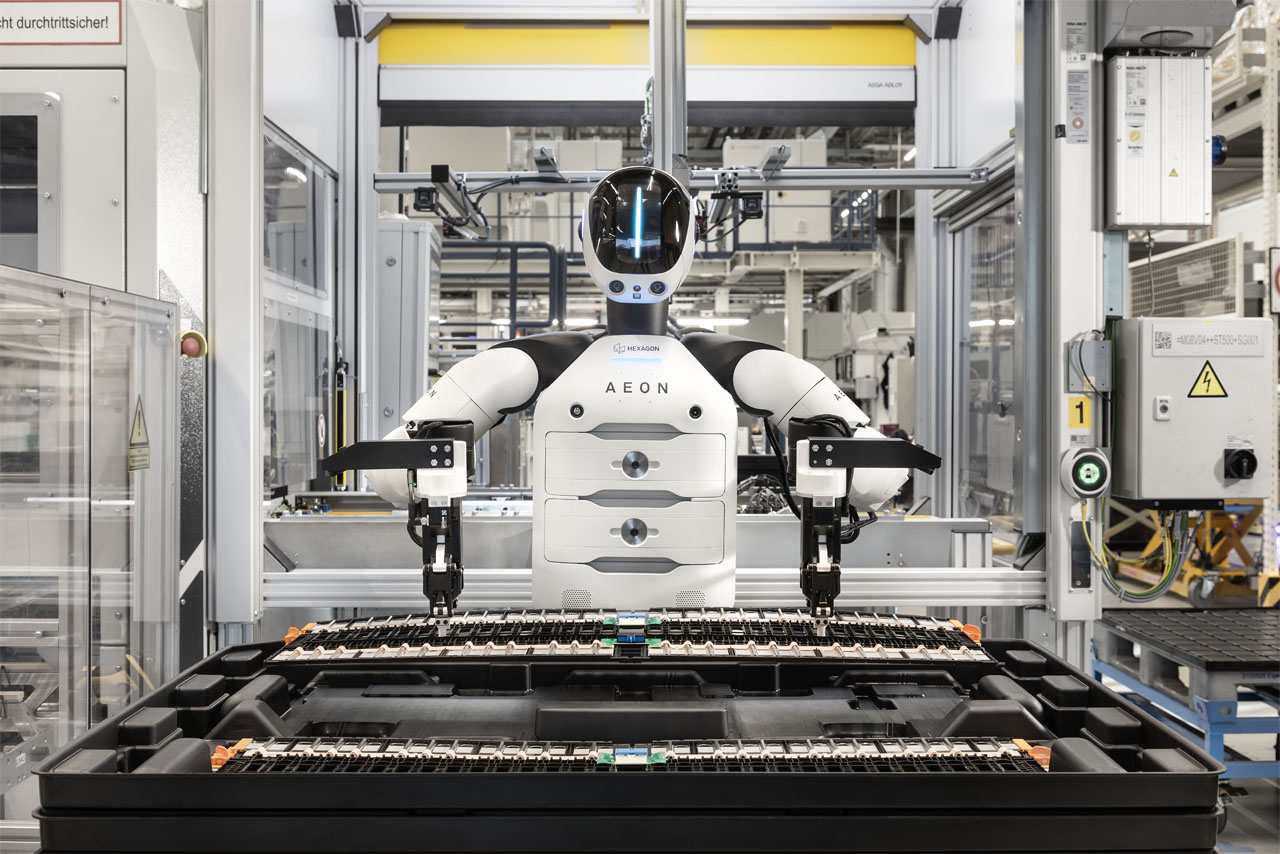
Physical AI is moving into series production, and the BMW Group is putting a great deal of its own know-how into training it. The engineers do not simply work alongside these systems – they teach them. Every grip, every motion, every adjustment is passed on by the people who know the production process better than anyone: experienced production employees. Their expertise is what makes the integration of Physical AI into series production work in the first place.
The point is not to replace that experience but to free it up. Physical AI relieves employees of monotonous tasks, which allows them to concentrate on higher-value work. And the collaboration itself is working: employees are happy to work with Physical AI, without reservations, and they enjoy doing it. Human knowledge is the foundation of intelligent production.

How does a global battery production standard get built locally?
Plant Irlbach-Straßkirchen in Lower Bavaria opened on October 1, 2026 and started series production the same day – immediately on a two-shift basis, because high demand for Neue Klasse models made the ramp-up faster. In the beginning, the site supplies Plant Munich with sixth-generation high-voltage batteries for the BMW i3 and serves as the central platform for the German vehicle plants. The figures behind it: an investment of around one billion euros, a 60-hectare site, less than two years between the start of construction in April 2024 and the first pre-series battery in March 2026, and around 1,600 employees once fully operational, producing several hundred high-voltage batteries a day on two production lines.
Irlbach-Straßkirchen is one of five Gen6 battery assembly plants the BMW Group is building close to its vehicle plants under the local-for-local principle, alongside Debrecen (Hungary), Shenyang (China), Woodruff (USA) and San Luis Potosí (Mexico). Shenyang began series production in October 2026 as the third location in the network; Woodruff and San Luis Potosí follow in the coming months. Uniform production, quality and safety standards apply worldwide, while each location contributes its regional manufacturing and supplier expertise. In Irlbach-Straßkirchen, more than 3,500 data points recorded per battery and monitored in real time, in-house developed AI assistants and agents working with 500 robots across 50,000 square meters toward zero-defect production – and a 100 percent end-of-line inspection for every battery in all of the five plants.


Plant Irlbach-Straßkirchen demonstrates how quickly we can scale a new battery concept to industrial production. The key factor is the interaction between a skilled and committed team and the continuous sharing of experience within the production network.
Where do valuable residual battery raw materials go at the end of the line?
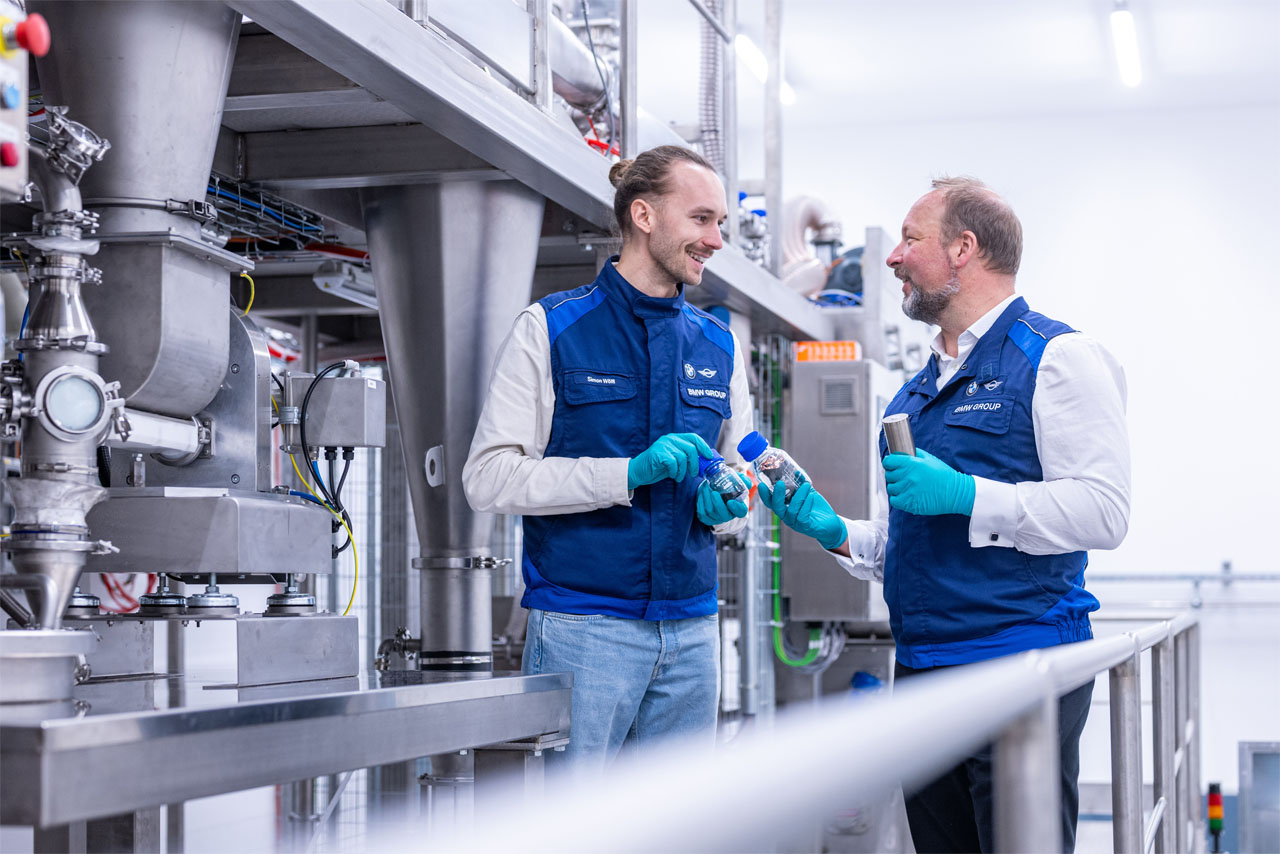
The Cell Recycling Competence Center (CRCC) in Salching, just 16 kilometres from Irlbach-Straßkirchen, went into operation in December 2025 and recovers valuable raw materials using a direct recycling process developed in-house by the BMW Group. Direct recycling allows residual materials from battery cell production, including complete battery cells, to be mechanically dismantled. The raw materials are not entirely reverted to their original state but are instead fed directly back into the cell production cycle, which removes the conventional, energy-intensive chemical or thermal processing step. Once fully operational, the annual volume of recycled battery cell material will be in the mid-double-digit tonne range.
What the CRCC recovers goes straight back into pilot cell production at the Cell Manufacturing Competence Center (CMCC) in Parsdorf. That short distance is the point of the Bavarian battery network: research at the Battery Cell Competence Center in Munich, near-series cell manufacturing in Parsdorf, recycling in Salching and high-voltage battery production in Irlbach-Straßkirchen – research, production and recycling connected along one value chain. The Cell Recycling Competence Center is built and operated by Encory GmbH, a joint venture between the BMW Group and the Interzero Group, while the intellectual property for the recycling method remains fully with the BMW Group.

Summary
What the BMW iFACTORY adds up to.
Five developments, one direction: production that is digital, connected and circular. Automated vehicle movements have grown from a pilot in one plant into a series application across four, with Spartanburg to follow. Physical AI is entering the line, trained by the people who know the work best. Gen6 battery production runs to one global standard built locally, from Lower Bavaria to Debrecen and Shenyang, with Woodruff and San Luis Potosí still to start – and the technology inside delivers the gains in energy density, charging speed and range that the Neue Klasse is built on. In Salching, the raw materials from cell production find their way back into cell production. All of these projects contribute to the BMW iFACTORY, BMW Group Production’s strategic vision that combines efficiency, sustainability and digitalisation, with employees at its heart.
FAQ
Frequently asked questions about production at the BMW Group.
The Gen6 high-voltage battery is the new battery generation for the all-electric models of the Neue Klasse. Newly developed cylindrical cells, the cell-to-pack concept and the Energy Master deliver a technological leap in energy density, charging speed, range and flexible integration into different vehicle models.
Physical AI is artificial intelligence that acts in the physical world through robots: it perceives its surroundings and carries out movements and handling tasks. In BMW Group production, it is intended to relieve associates of monotonous tasks and ensure a high degree of repeatability.
Compared with the previous cell generation, the new cylindrical cells offer more than 20 percent higher energy density. Charging speed and range increase by up to 30 percent. Integrating the cells directly into the battery housing also makes more efficient use of the available installation space.
“Local for local” means industrializing key future technologies close to the market and producing them near the respective vehicle plants. Uniform production, quality and safety standards apply worldwide, while each location contributes its regional manufacturing and supplier expertise.
The CRCC in Salching, Lower Bavaria, recycles battery cell material using a direct recycling process developed by the BMW Group. It has been in operation since December 2025.
Newly built vehicles drive routes within the plant without a driver. Sensors along the route capture the surroundings, and an cloud-based system plans the movements.
Production data is captured and analyzed throughout the entire manufacturing process. Digital twins, data analytics, AI-supported inspection methods and inline inspection systems help detect deviations at an early stage and ensure traceability. Finally, every high-voltage battery undergoes comprehensive testing for quality, safety and functionality.