DE
News Press Careers
News Press Careers
Contact
Two experts examine recycled battery material samples beside an electrode recycling system in the BMW Group Cell Recycling Competence Centre (CRCC) in Salching, Lower Bavaria.
Innovation 26.01.2026 7 MIN

BMW Group and Encory
launch innovative direct recycling of battery raw materials.

What’s an efficient way of keeping battery raw materials in the material cycle? Mechanical recycling that avoids energy-intensive treatment. The BMW Group shows how it’s done – at its newly commissioned Cell Recycling Competence Centre (CRCC) in Salching.

The innovative direct recycling technique was developed and implemented with strong regional partners and creates real added value for sustainable electromobility.

Salching:
The quiet beginning of a raw material cycle.

What happens with battery cells before they start powering a vehicle? At the BMW Group, it’s sustainable thinking – which is not just something we do at the end of a vehicle’s life. With us, sustainable thinking starts much earlier than that. And it’s recently been happening in a new place: our Cell Recycling Competence Centre (CRCC) in Salching, Lower Bavaria.

The CRCC might look quite ordinary – and it doesn’t produce cars, engines or bodies. But what it does make is decisions around how materials from battery cells might be reused in the future. Because the new CRCC is the BMW Group’s next step towards true circular economy.

Recycling reinvented:
Mechanical rather than energy-intensive

Conventional recycling processes often involve energy-intensive chemical or thermal treatments. But the BMW Group is deliberately taking a different approach – with mechanical recycling.

The key advantage is that materials don’t have to be broken down into their basic constituents first. Instead, they can be returned directly to the battery cell production cycle, saving both costs and resources.

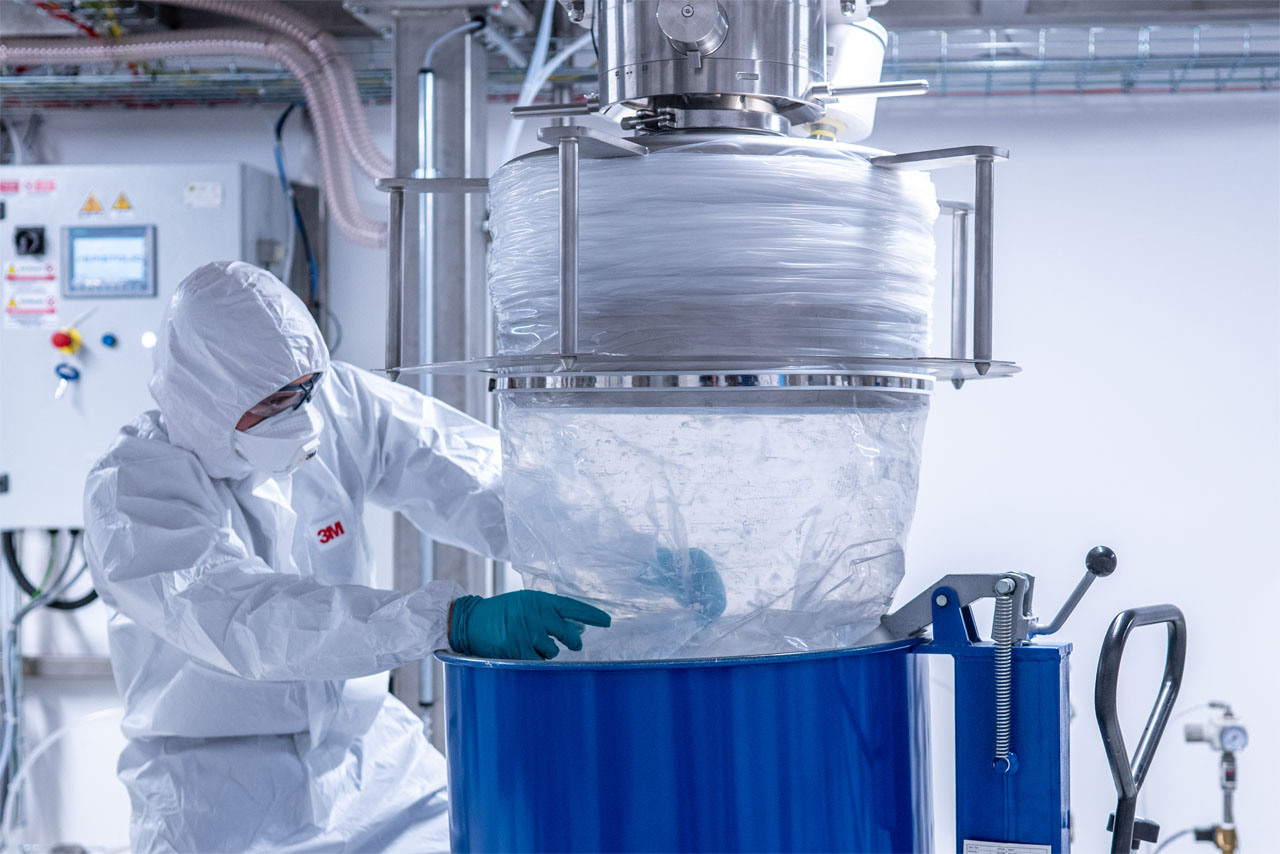
A specialist in a white suit at the BMW Group CRCC uses a stainless-steel fixture to empty recycled battery material into a blue container.
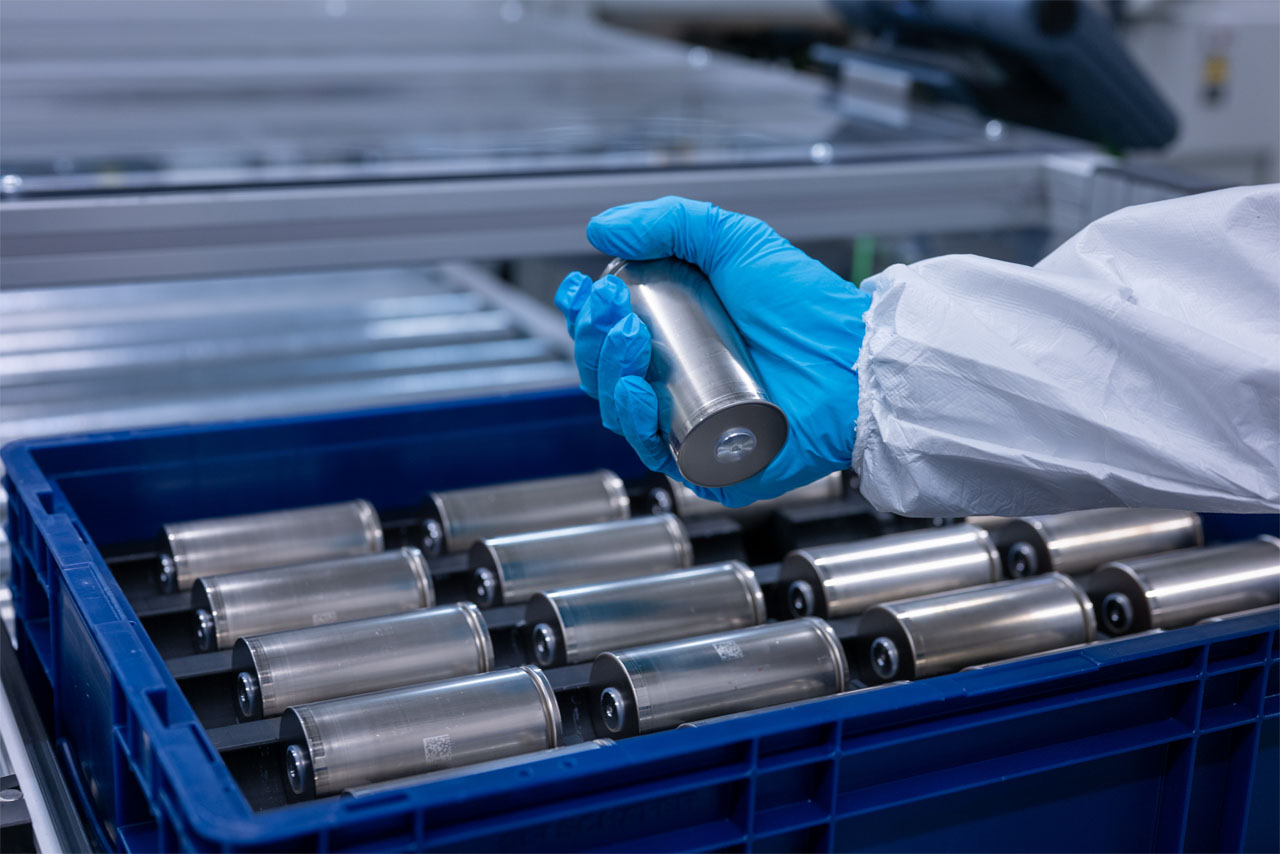
A specialist in protective gear at the BMW Group CRCC holds a cylindrical battery cell over a blue crate containing further cells.

From residue to resource.

At the new CRCC, the BMW Group and its partner Encory process not just residues from battery cell manufacturing but entire cells from pilot production.

Once the facility is fully up and running, it will recover tens of tonnes of battery cell materials a year, returning them straight to production at the Cell Manufacturing Competence Centre (CMCC) in Parsdorf. This will create a cycle designed for efficiency and keep materials where they are needed.

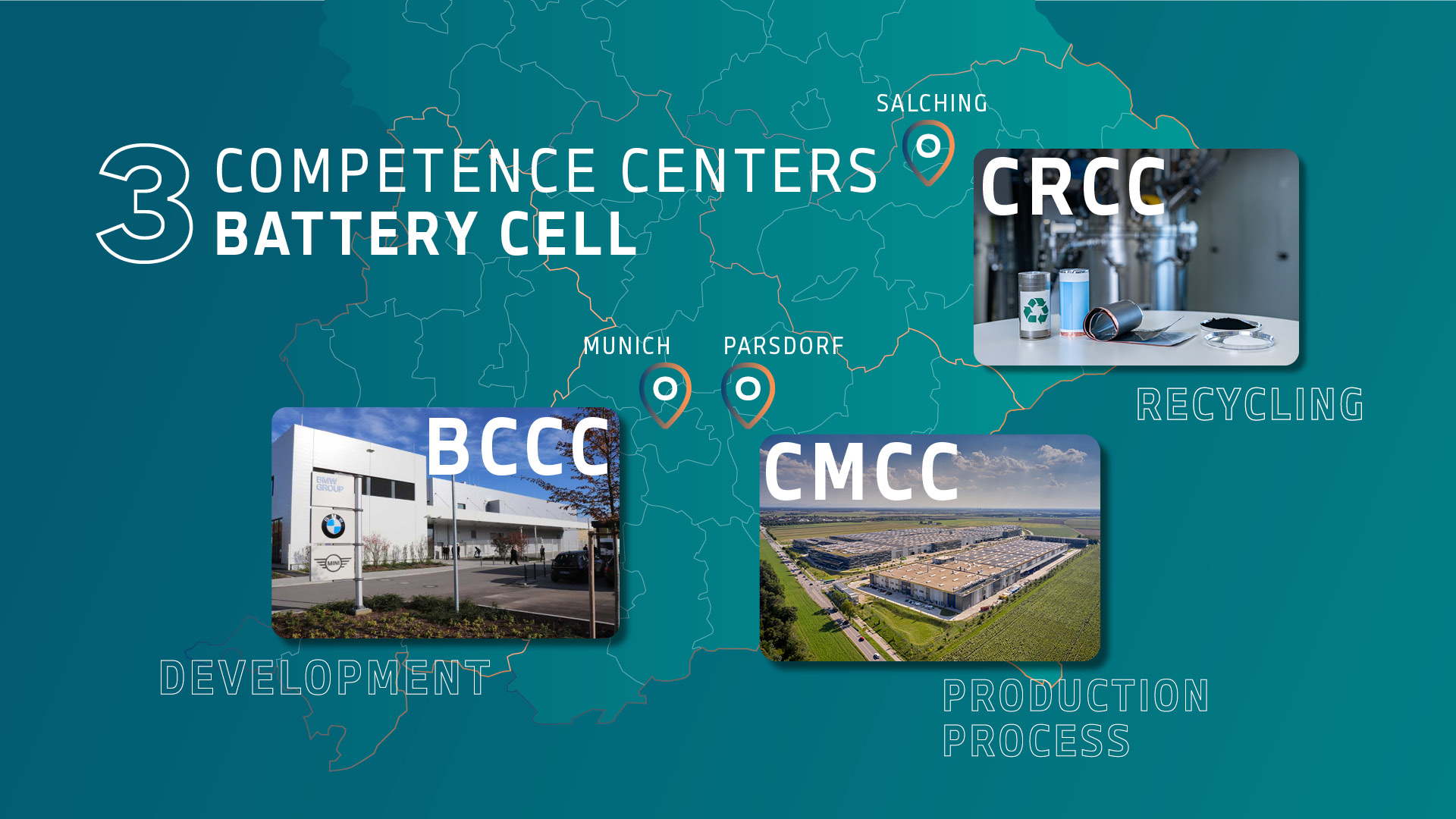
Info graphic showing the locations of the BMW Group’s three centres of excellence in battery cells: the BCCC in Munich, the CMCC in Parsdorf and the CRCC in Salching.

Battery cell expertise
concentrated at three sites.

The BMW Group follows a clear principle of concentrating battery cell expertise at three Bavarian locations. These specifically build on each other:

  • Munich (BCCC): Cell development 
  • Parsdorf (CMCC): Pilot production and scaling for mass production 
  • Salching (CRCC): Recycling and recirculation of materials

What’s developed in Munich grows further in Parsdorf and returns to the material cycle via Salching. Battery cell expertise at the BMW Group is organised as a closed loop, with everything in close proximity, clear processes and a consistent focus on resource efficiency.

BMW Group:
Pioneers of direct recycling.

Direct recycling comes as the result of intensive development work and production expertise at the BMW Group. It is now being implemented on a larger scale at Salching for the first time, and in the longer term, it could potentially be used by cell manufacturers in series production as well.

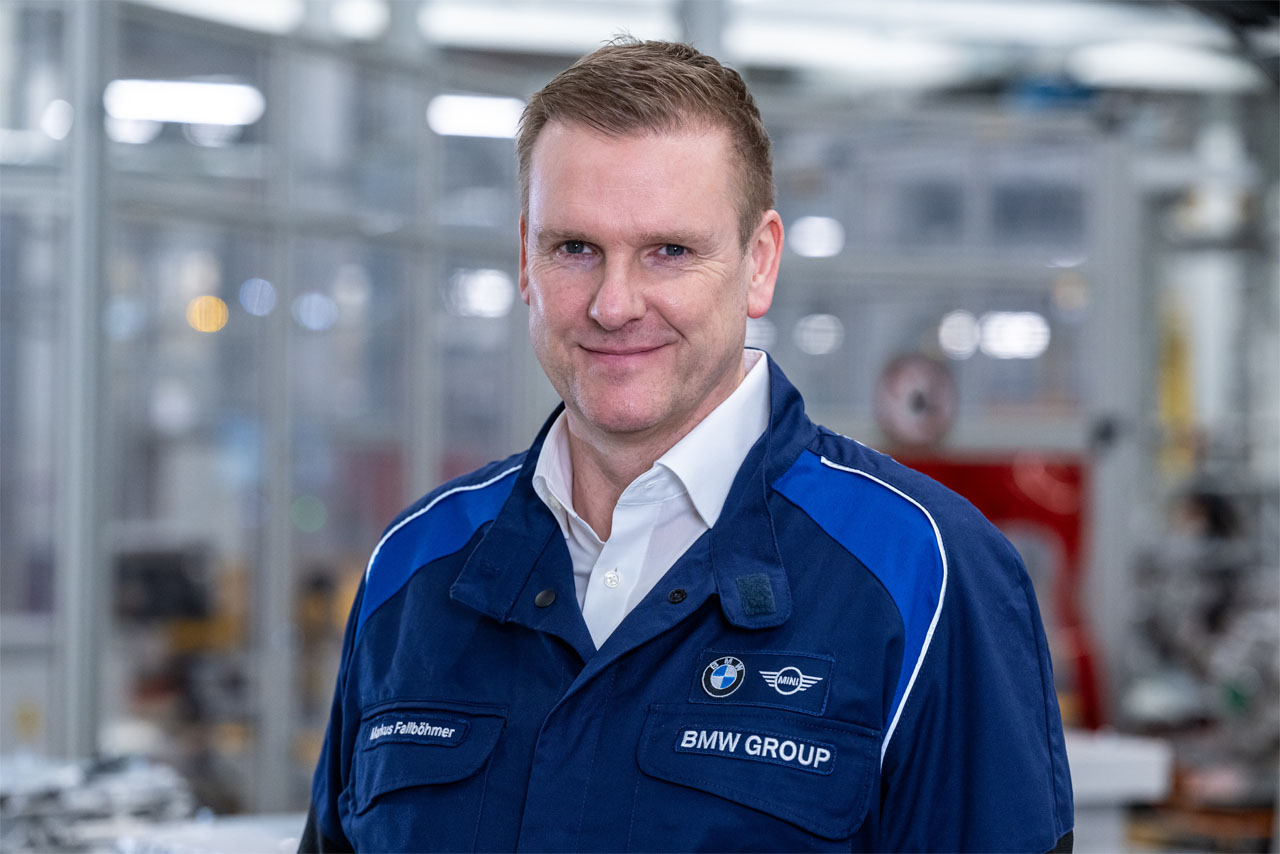
Markus Fallböhmer, Head of Battery Production BMW AG – a portrait.
Our direct recycling process puts us at the forefront of the industry and has tremendous potential to further optimise battery cell production.
Markus Fallböhmer
Head of Battery Production BMW AG

Technology meets regional strength.

The BMW Group’s new CRCC is situated in a pre-existing hall in Salching, Lower Bavaria. Here, roughly 2,100 square metres are dedicated to production and warehousing, with office space and break rooms accounting for about 350 square metres. Rooftop photovoltaics generate a share of the energy needed – providing further evidence of the consistency of the BMW Group’s circular approach.

While the CRCC itself is built and operated by Encory GmbH, the intellectual property for the direct recycling method remains fully with the BMW Group. Encory is a 50:50 joint venture between the BMW Group and the Interzero Group and develops logistics and consulting solutions for the recovery, recycling and reprocessing of vehicle components. In the future the new centre will employ about 20 people.

Establishing the CRCC, the BMW Group was keen to tap into the region’s strengths. With the exception of one Swiss firm, we commissioned work from German companies only – almost half of them based within a 100-kilometre radius of Salching.

The CRCC combines technological innovation with regional value creation.

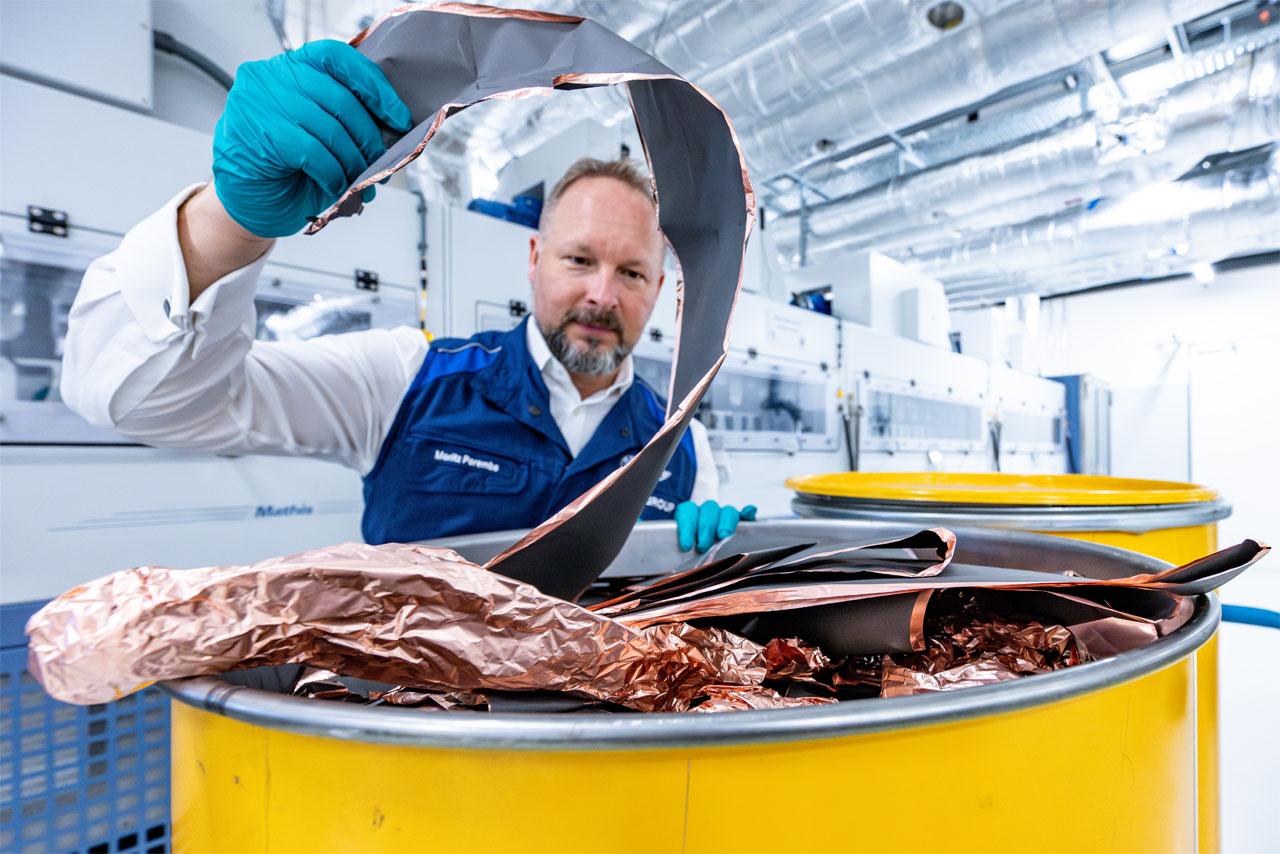
A BMW Group recycling specialist holds a black, foil-like material with copper-coloured edges in his hand to inspect it. The foil is stored in a yellow bin.

The 4Re strategy:
The guiding principle of circular economy.

The CRCC is part of a broader strategy for circular economy at the BMW Group, which is based on four clear principles:

  • Re:Think processes
  • Re:Duce resources
  • Re:Use materials
  • Re:Cycle raw materials

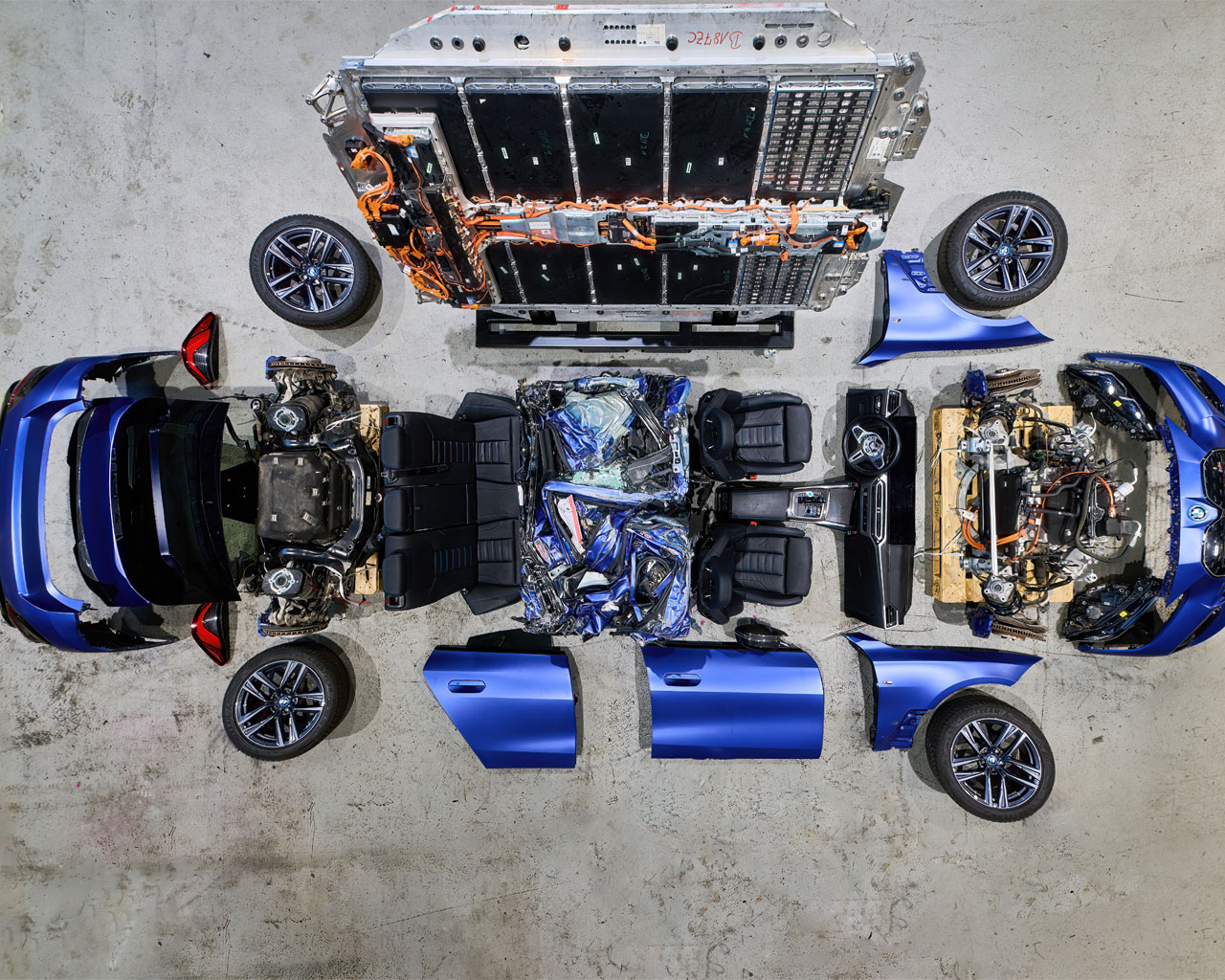
These principles inform every decision we make, from vehicle design and production through to recycling and reuse. At the end of their life cycle, our aim is for vehicles to become valuable sources of raw materials.

Building blocks from battery waste.
A new beginning for old materials.

The BMW Group already incorporates recycled and reused materials in its vehicles today – and their share continues to grow. Selected production residues are returned to material suppliers and processors, who then recover their valuable components and feed them back into new production cycles.

Direct recycling at the CRCC aligns perfectly with this approach: it not only avoids energy-intensive processing but also keeps valuable materials circulating within the production cycle – reducing demand for newly extracted raw materials and ensuring that, from pilot production through to recycling, everything is carried out in close proximity.