DE
News Press Careers
News Press Careers
Contact

BMW Group Renewable fuels and highly efficient combustion engines.

Page Overview
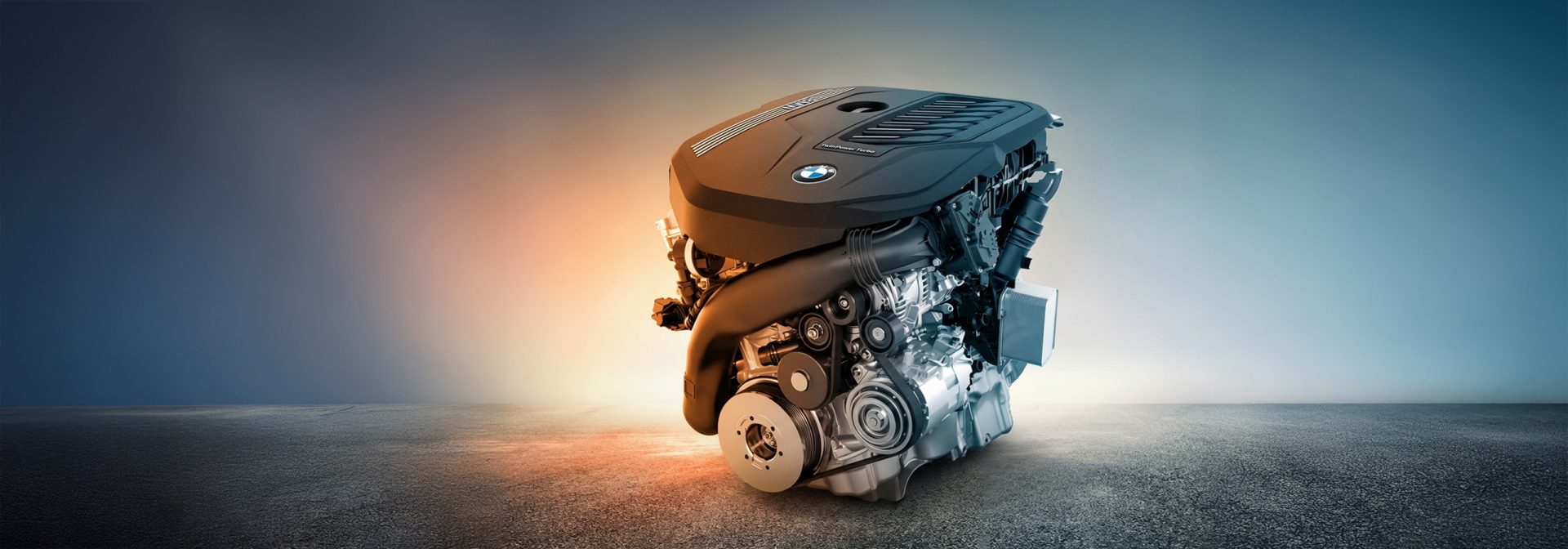
BMW Motor freistehend auf Asphalt mit Licht im Hintergrund

The BMW Group has a clear approach to reducing CO2 emissions: we leverage every available technology to cut carbon output effectively. A technology-open mindset has always been fundamental to our strategy, and alongside a diverse portfolio of drive systems, innovative fuels have a crucial role to play in helping us achieve our goal.

Increasingly, it is not just fully electric vehicles that are gaining attention but fuels made from renewable raw materials, too. Known as carbon-neutral fuels (CNFs), these offer a key advantage, helping to reduce the carbon footprint significantly. With more than 250 million cars currently on Europe’s roads, increasing the share of fuels from renewable sources would lead to a noticeable decline in overall CO2 emissions.

One thing is certain: highly efficient combustion engines will remain essential to personal mobility for many years to come. And that’s why the BMW Group continues to advance its engine technologies – making engines as efficient and future-ready as possible.

Highly efficient combustion engines.

The BMW Group’s current product portfolio includes not only battery-electric cars but also highly efficient combustion-powered models – driven either by the engine alone or by the engine within a mild-hybrid or plug-in hybrid system.

Developed and manufactured entirely in-house, the BMW Group’s combustion engines are certified for the use of CNFs – in line with DIN EN 228 for petrol, DIN EN 590 for diesel, and DIN EN 15490 for XTL fuels such as HVO100.

The BMW Group’s current combustion engines all belong to the BMW Efficient Dynamics family. They incorporate a wide range of technologies that are configured and applied to meet customers’ preferences for dynamics and efficiency – to optimum effect.

BMW TwinPower Turbo technology:
To deliver the required performance, our petrol and diesel engines offer state-of-the-art turbocharging.

Valvetronic – fully variable valve control:
Current BMW Group petrol engines feature the latest fully variable Valvetronic valve control. Many of them – particularly the longitudinal four- and six-cylinder engines in our mild hybrids – also incorporate switchable exhaust valves, reducing drag torque by up to 66 percent in no-load operation. This allows significantly more energy to be recuperated for storage in the 48-volt battery, which can then be used highly efficiently in everyday driving, including for purely electric driving under low loads.

Combustion in diesel and petrol engines – a closer look:
Diesel engines by the BMW Group feature two-stage turbocharging and friction-optimised steel pistons as fundamental elements. These combine with a highly efficient combustion process based on multiple injections at pressures of up to 2,500 bar.

Petrol engines, by contrast, largely use what’s known as the Miller combustion cycle, in which the ideal fuel-air mix helps to drastically reduce fuel consumption. This involves shorter intake valve opening times, which also enhances overall efficiency. Additional efficiency refinements include redesigned intake ports and combustion chambers, as well as optimisations to the camshaft control system, fuel injection, ignition system and exhaust routing.

48-volt mild-hybrid technology:
Petrol and diesel engines in the current BMW Efficient Dynamics modular generation offer market-specific features. Almost all of them now incorporate the latest 48-volt mild-hybrid technology for enhanced efficiency, dynamics and driving comfort.




What are carbon-neutral fuels (CNFs)?

Regenerative – or carbon-neutral – fuels convert CO2 back into usable energy: the CO2 released during their combustion is essentially the same CO2 that was previously captured from the atmosphere or recycled from existing sources to produce them. So, in effect, they release no additional CO2 emissions into the atmosphere. Instead, they create a near-complete carbon cycle.

CNFs are produced either synthetically – as e-fuels made from CO2, water and renewable electricity – or from sustainable biomass. A climate-neutral alternative to fossil fuels, they open up further opportunities to gradually reduce the carbon footprint of existing vehicle fleets and other transport sectors.

Diesel CNF / HVO100.

When it comes to protecting the climate, every tonne of CO2 saved makes a difference. In Europe the large number of diesel cars offers significant potential: a greater share of regenerative diesel could cut the carbon footprint of these vehicles considerably.

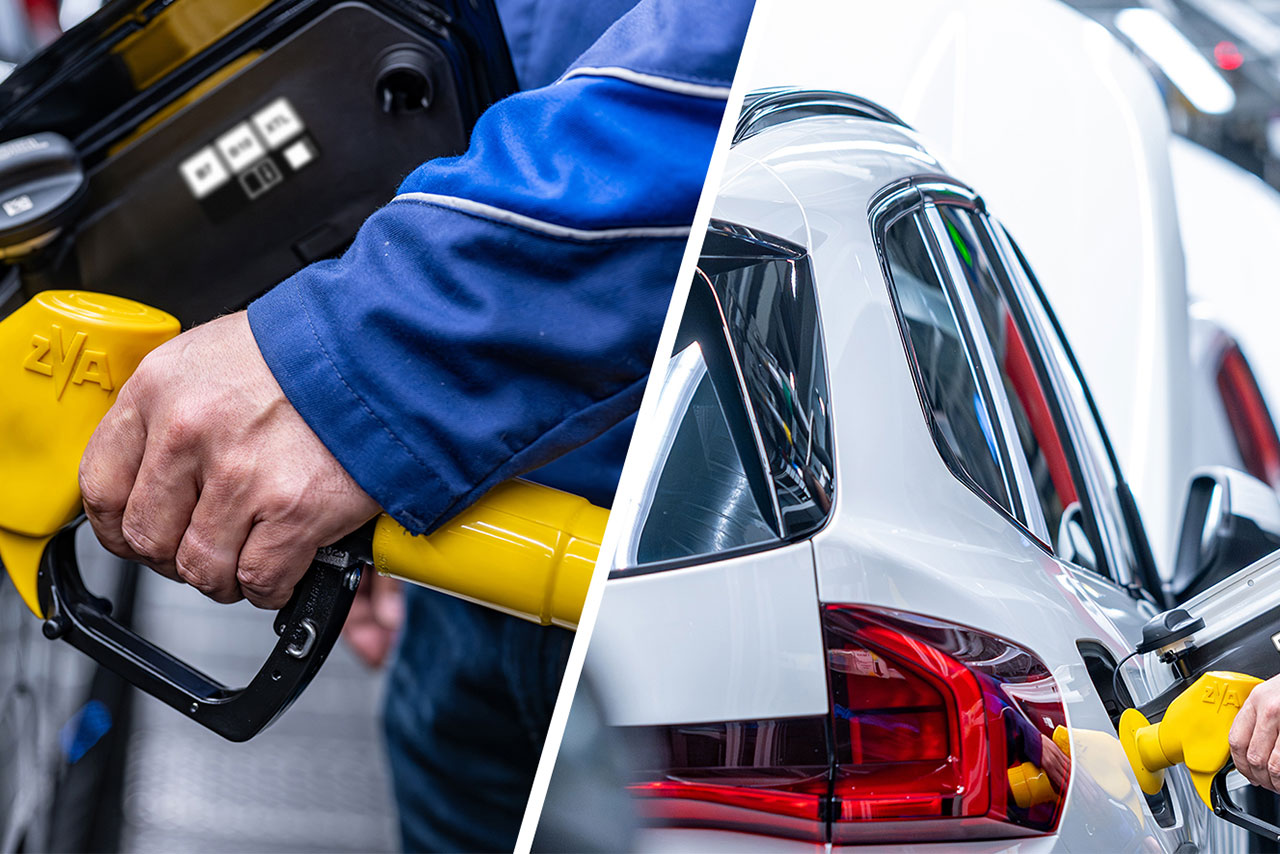
The BMW Group is doing its part to help make this happen: since January 2025 all our German-made diesel models leave our plants with HVO100 in their tanks. HVO100 is a high-quality diesel substitute with a 90 percent lower CO2e footprint overall. It is made from HVO, or hydrotreated vegetable oil. The “100” in the fuel’s name indicates that it is a pure fuel that can be used at 100 percent concentration.

The HVO100 used at BMW Group Plants Munich, Dingolfing, Regensburg and Leipzig is Neste MY Renewable DieselTM. Depending on the model, each vehicle receives between five and eight litres of the fuel as the initial filling before being delivered to the retailer. Diesels made in Germany account for more than half of the BMW Group’s annual diesel production.

Since the end of May 2024 paraffinic diesel such as HVO is also approved for sale at German fuel stations. HVO is produced from waste, residues and other renewable ingredients – such as used cooking oils – and meets stringent quality and sustainability standards. It contains no palm oil and no conventional biodiesel.

Compared with fossil diesel, HVO100 saves significant amounts of CO2. To realise its potential more fully, the BMW Group is collaborating with Neste, which is headquartered in Espoo, Finland.

HVO100 is a high-quality fuel with a range of technical advantages over fossil diesel. As well as saving CO2, its chemical properties deliver markedly better cold-weather performance. Its high purity also makes it largely resistant to bacterial contamination, or “diesel bug”.

Developed and manufactured almost entirely in Steyr, BMW Group diesel engines are approved for HVO100 according to the European fuel regulation EN 15940. This even applies to certain models and series produced as long ago as March 2015. For more information, check our current overview of HVO100-capable vehicles.


dummy
dummy

Petrol CNF.

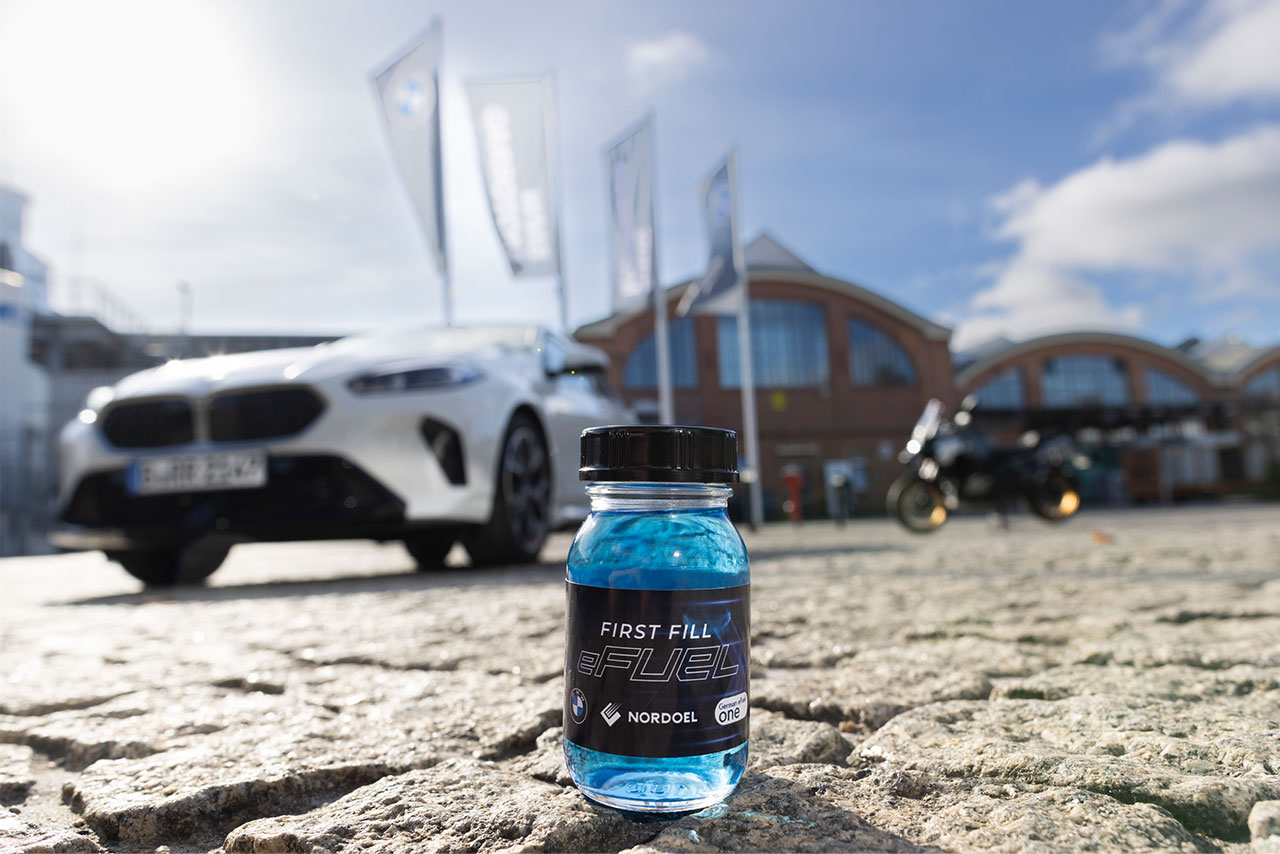
The BMW Group is moving ever closer to more climate-friendly combustion engines: with Lother GmbH and German eFuel One GmbH as our partners, we are advancing the use of renewable petrol fuels. Our joint initiative is underpinned by a Letter of Intent signed in October 2025 at BMW Group Plant Berlin.

We plan to use e-fuel for the initial filling of new petrol-engine vehicles at selected German production sites. This fuel can be used in all our E10-classified petrol models, with no technical modifications required.

This step highlights the BMW Group’s holistic approach: from electromobility to combustion engines powered by renewable fuels, when it comes to climate protection, every technology has a role to play.

The BMW Group, Lother GmbH and German eFuel One GmbH share a clear objective: a gradual transition to net-zero mobility – with advanced biofuels and RFNBOs (renewable fuels of non-biological origin) such as e-fuels as potentially key components in climate-friendly transportation. The e-fuel we intend to use is a synthetic petrol compliant with DIN EN 228 for E10-grade fuel. Produced entirely from non-fossil CO2, it offers a renewable alternative to conventional fossil petrol.