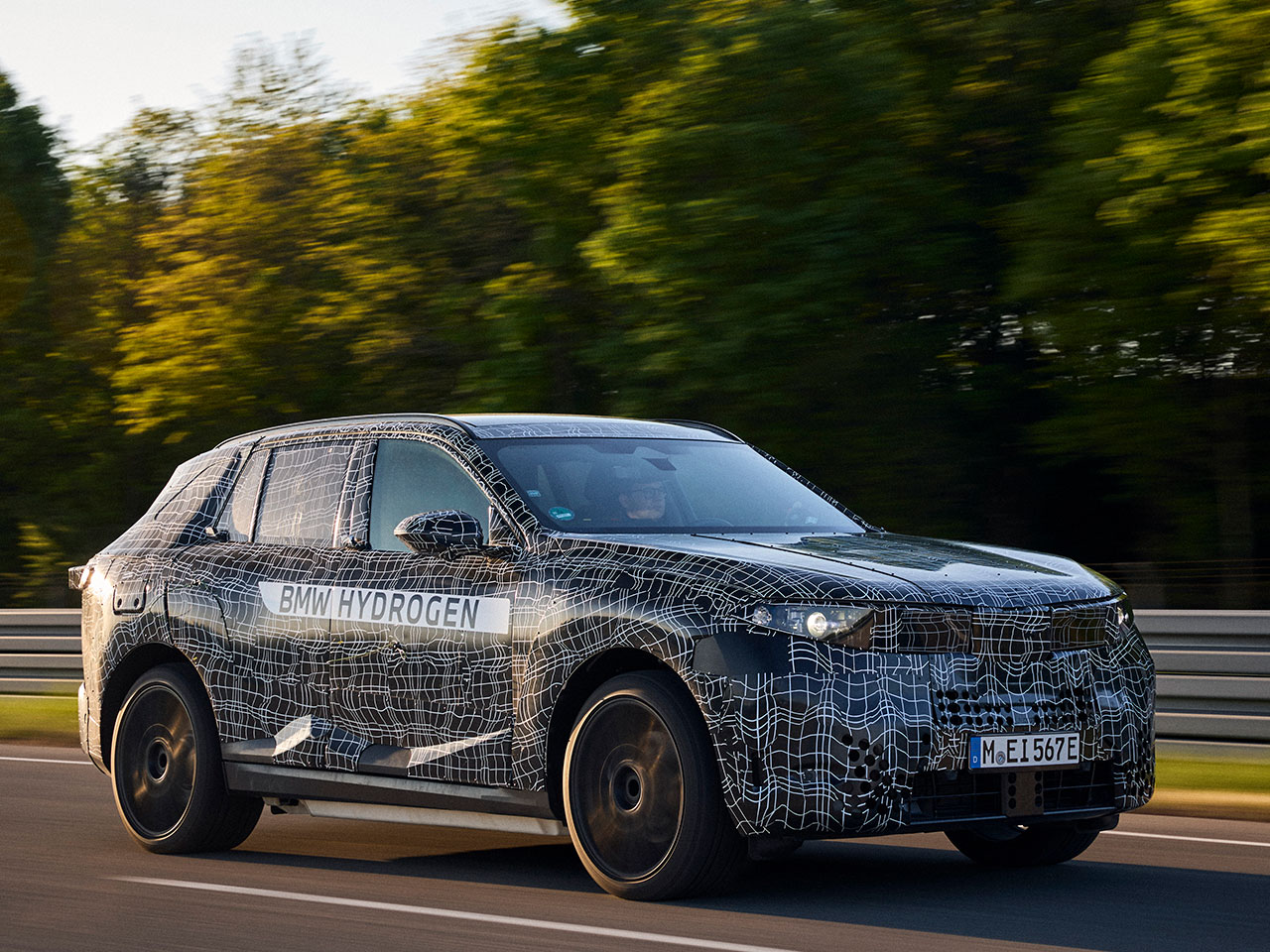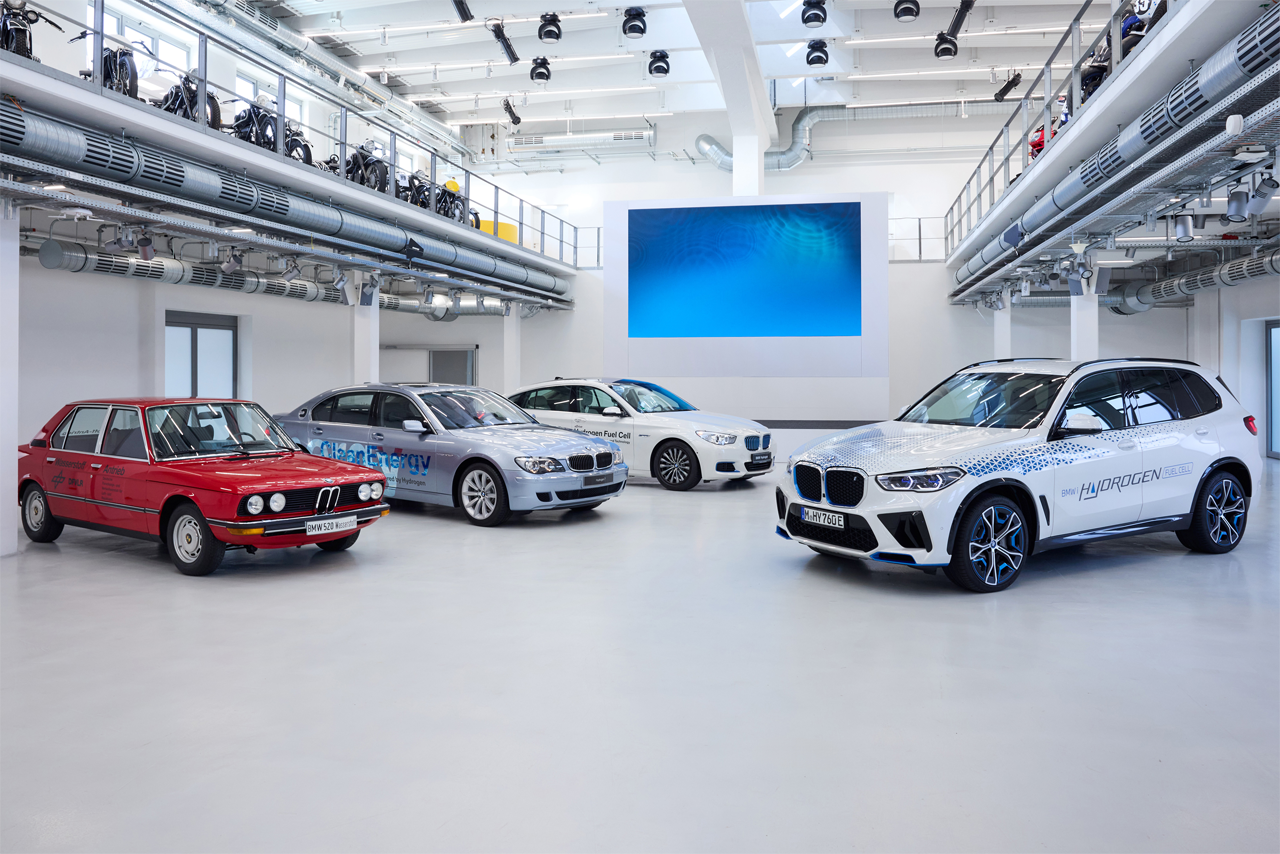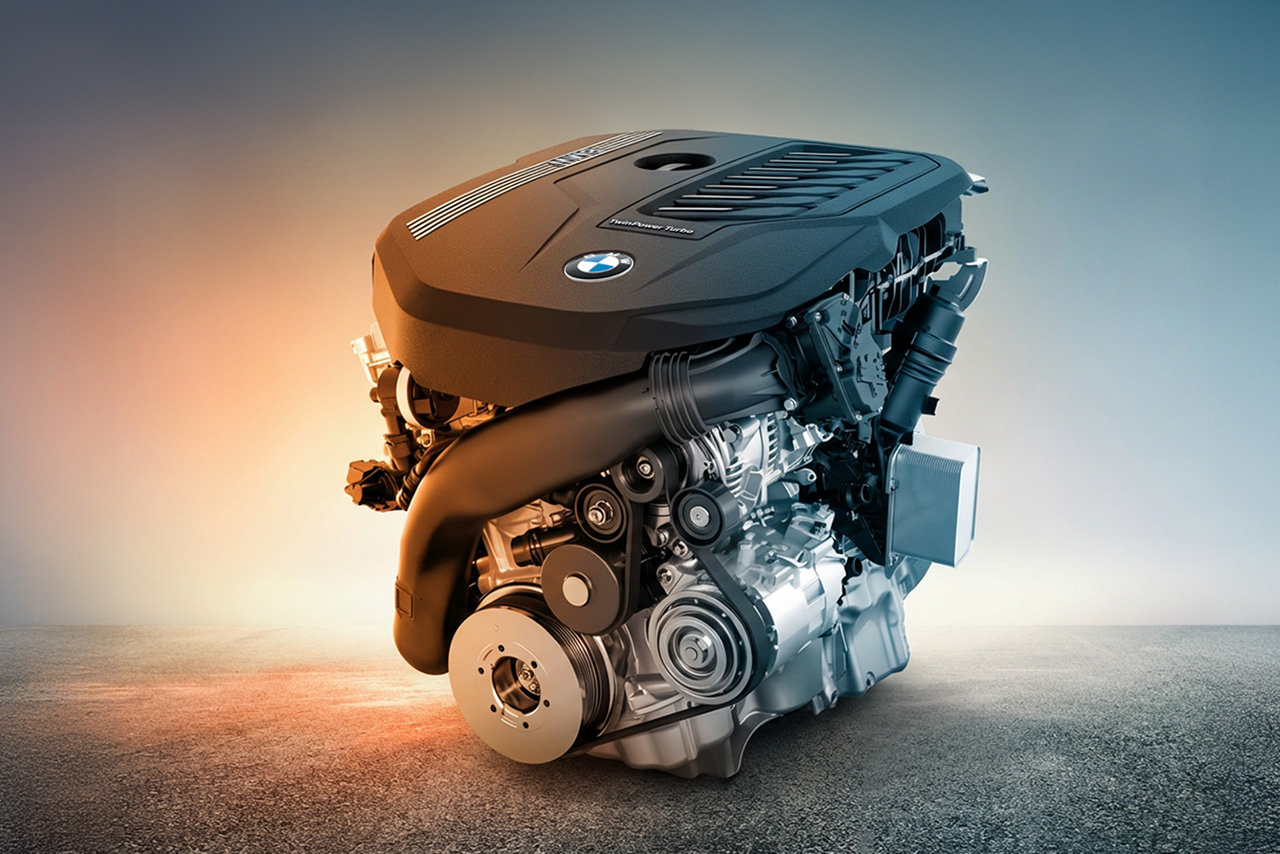







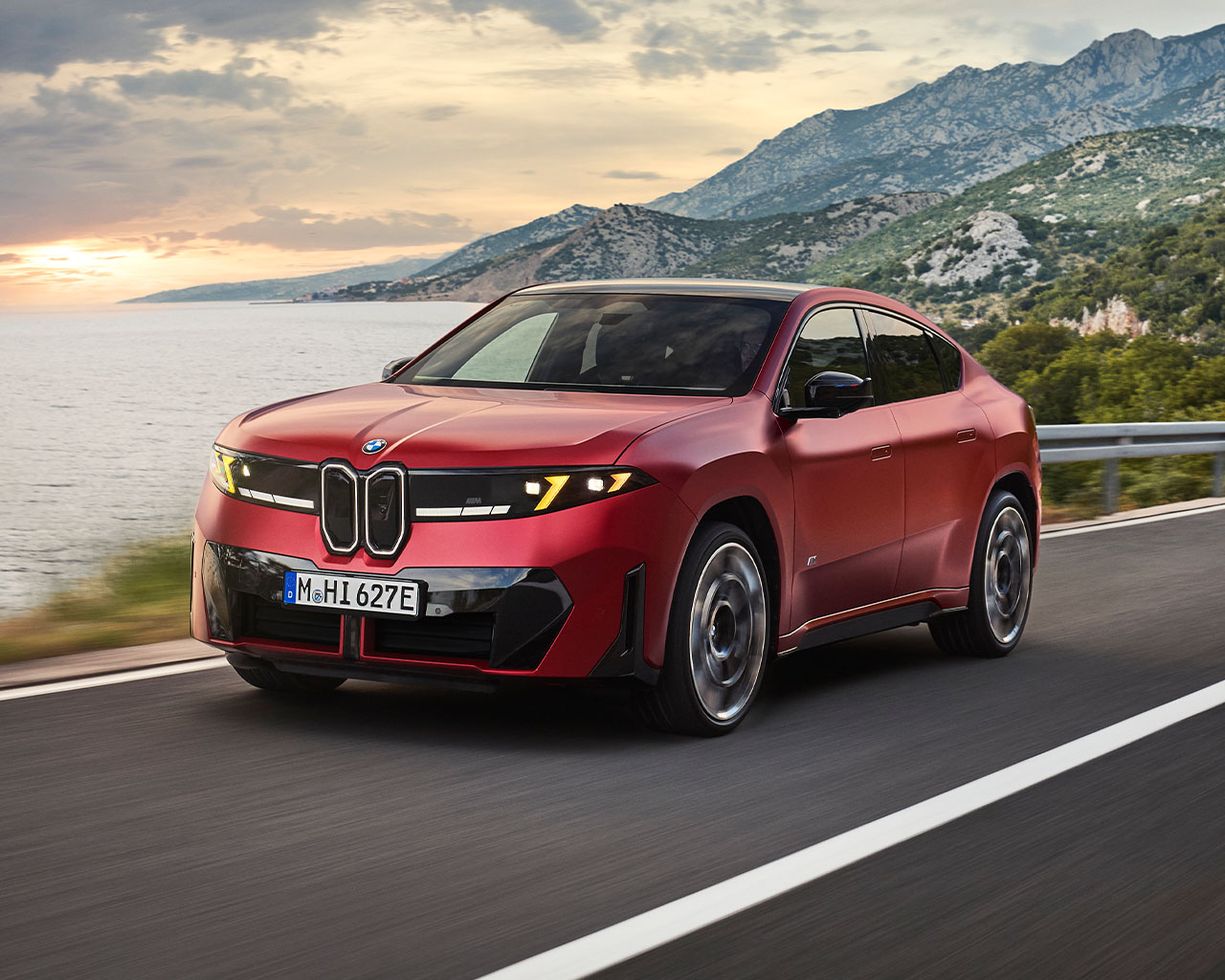
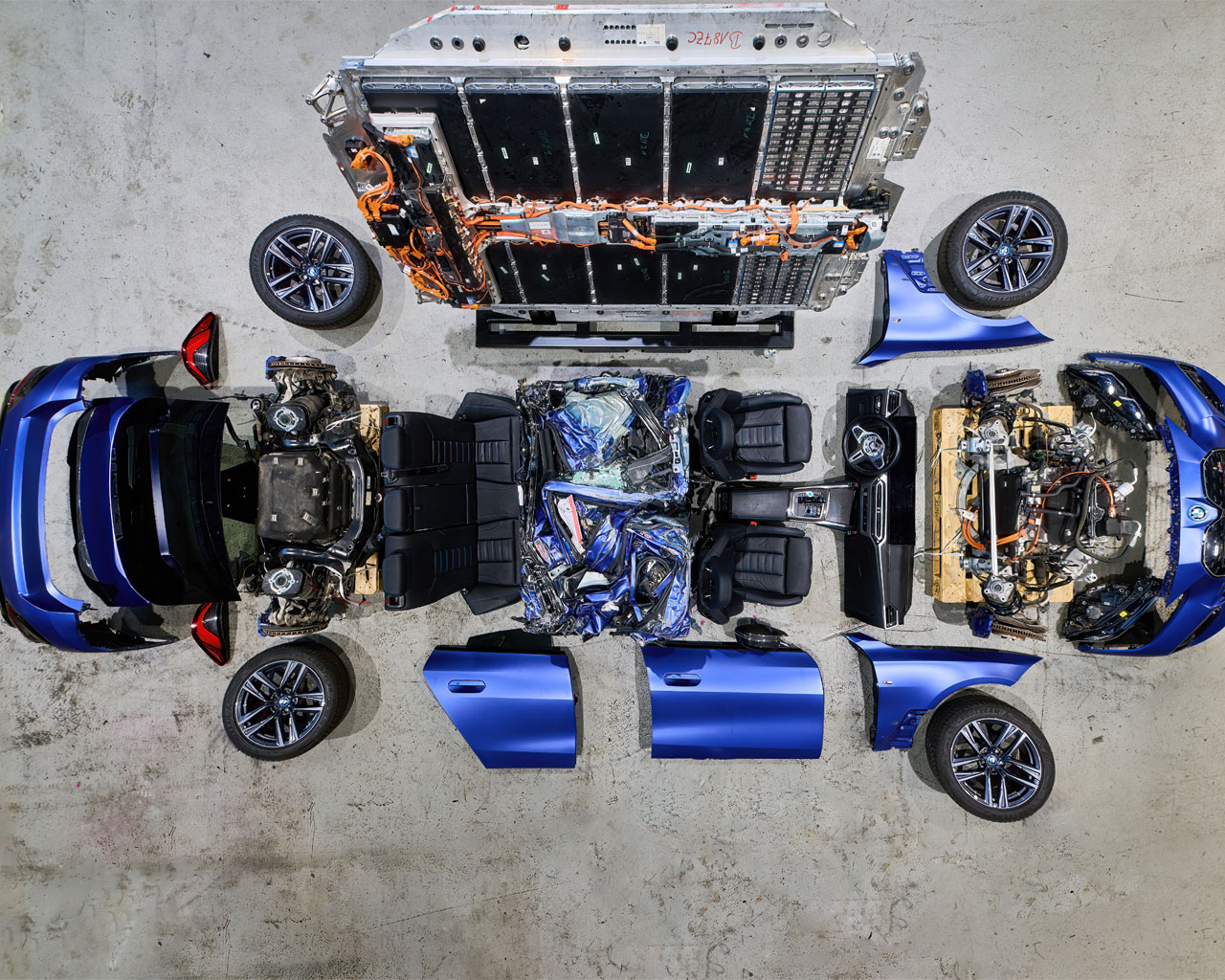

The BMW Group is advancing hydrogen fuel cell technology as a key pillar of mobility with zero tailpipe emissions. Building on 47 years of experience in hydrogen technologies and over two decades in fuel cells, we are constantly advancing alternative powertrains while keeping an open mind to all the technologies available. Joining the vehicle portfolio in the future will be the new BMW iX5 Hydrogen, which combines up to 750 kilometres of range* (WLTP), refuelling in under five minutes and the electric xDrive with the full versatility of an X5. It underscores the BMW Group’s strategy of providing the right drive solutions for different customer needs around the world.
Why is the BMW Group advancing hydrogen technologies?
The BMW Group is advancing hydrogen as a key technology because mobility requires different solutions in different parts of the world. That’s why we pursue a technology-open approach, with battery-electric vehicles as our main pillar and hydrogen fuel cell vehicles as a complementary option that meets specific infrastructure, energy supply or mobility requirements.
Building on 47 years of experience in hydrogen technology, the BMW Group is consistently advancing its use in powertrains. Beyond mobility, hydrogen can also be used to store energy from renewables, support grid stability and contribute to a more diversified infrastructure.
How does a hydrogen drive work? Fuel cell technology explained.
A hydrogen drive generates electricity inside the vehicle. Hydrogen from the high-pressure tanks reacts with oxygen from the ambient air in the fuel cell system, generating electricity to power the electric motor. With water vapour as a byproduct, fuel cell vehicles operate with zero tailpipe emissions. Fuel cell vehicles combine all the advantages of an electric drive with the fast refuelling of a hydrogen car.
The fuel cell system comprises far more than the cells themselves: it also includes the hydrogen and air supply systems, control units, cooling technologies and numerous other components. Together, these ensure safe, efficient operations while delivering BMW’s hallmark performance, safety and driving dynamics.
Third-generation hydrogen fuel cell technology: More compact, more efficient, more powerful.
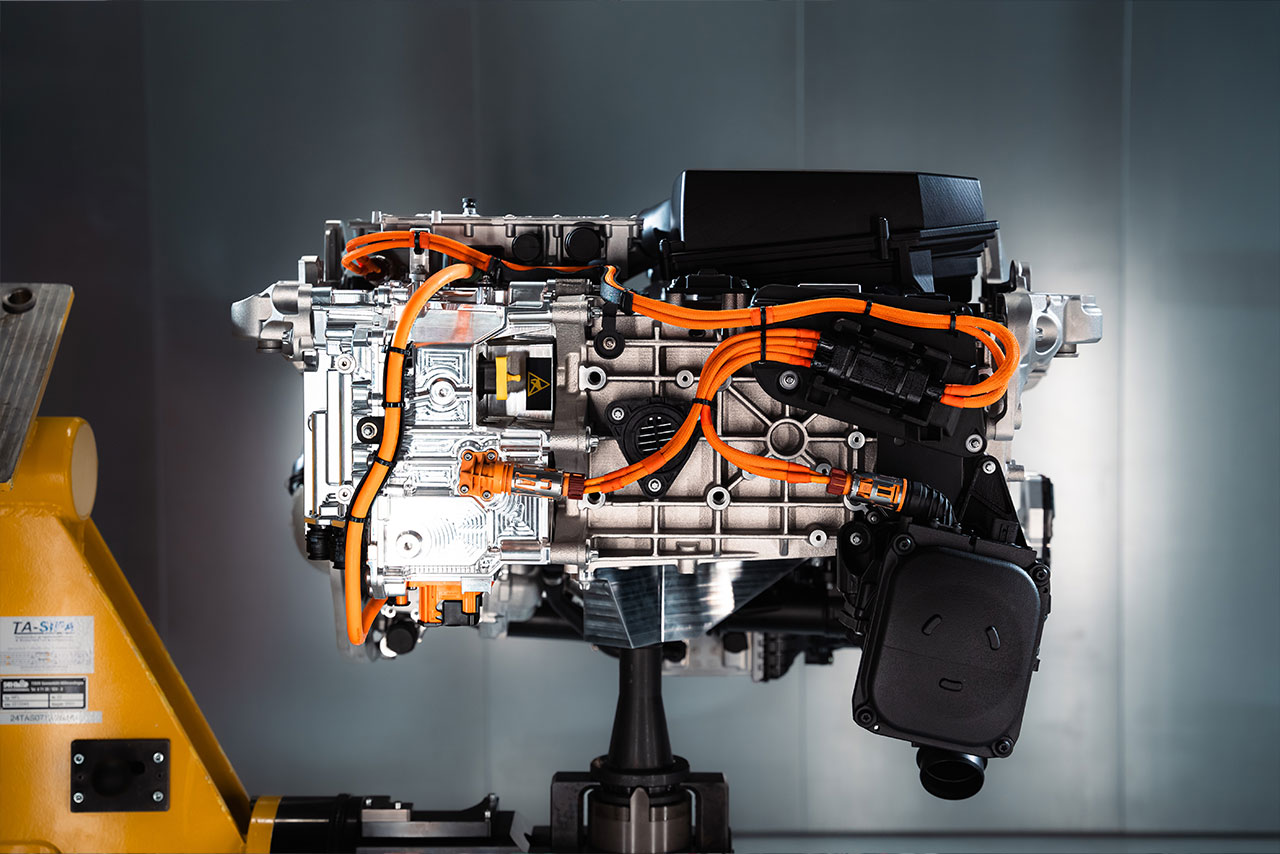
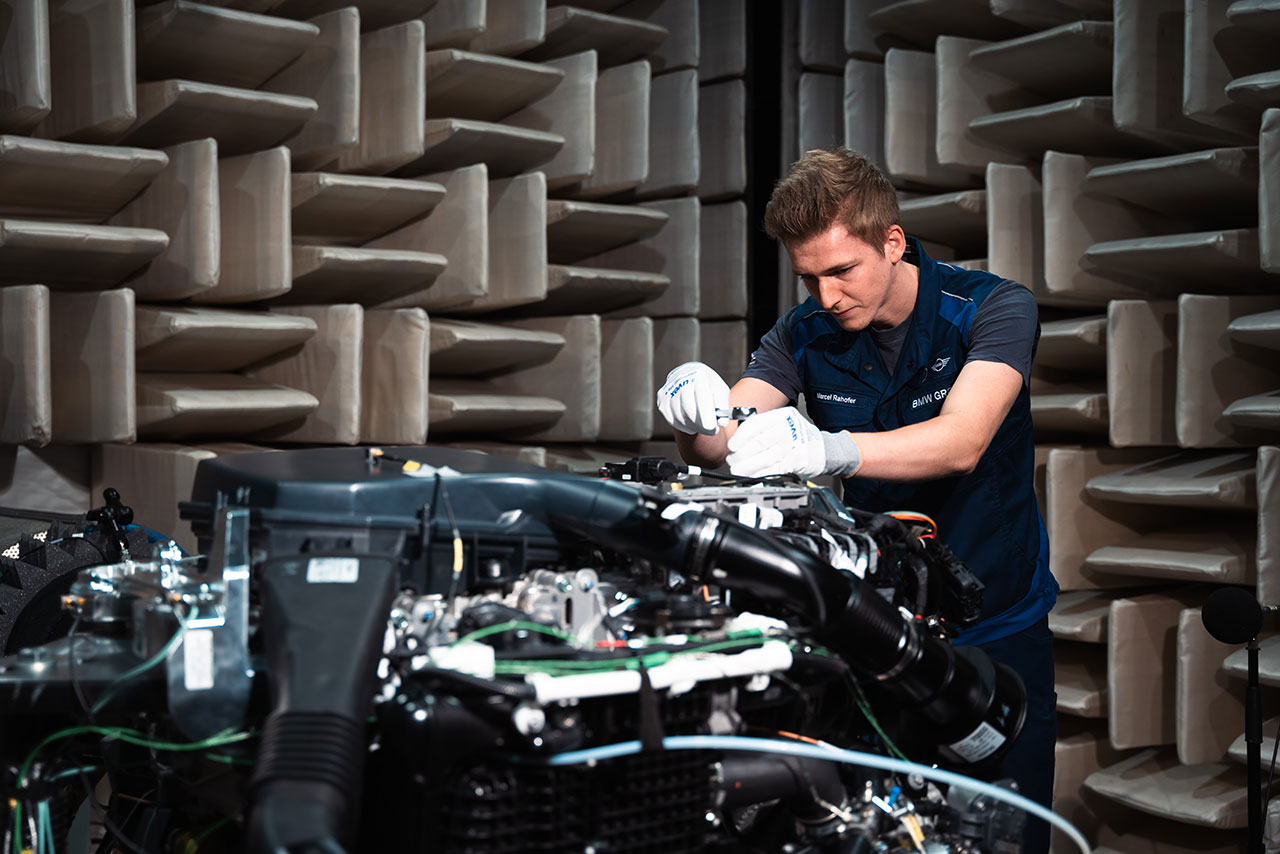
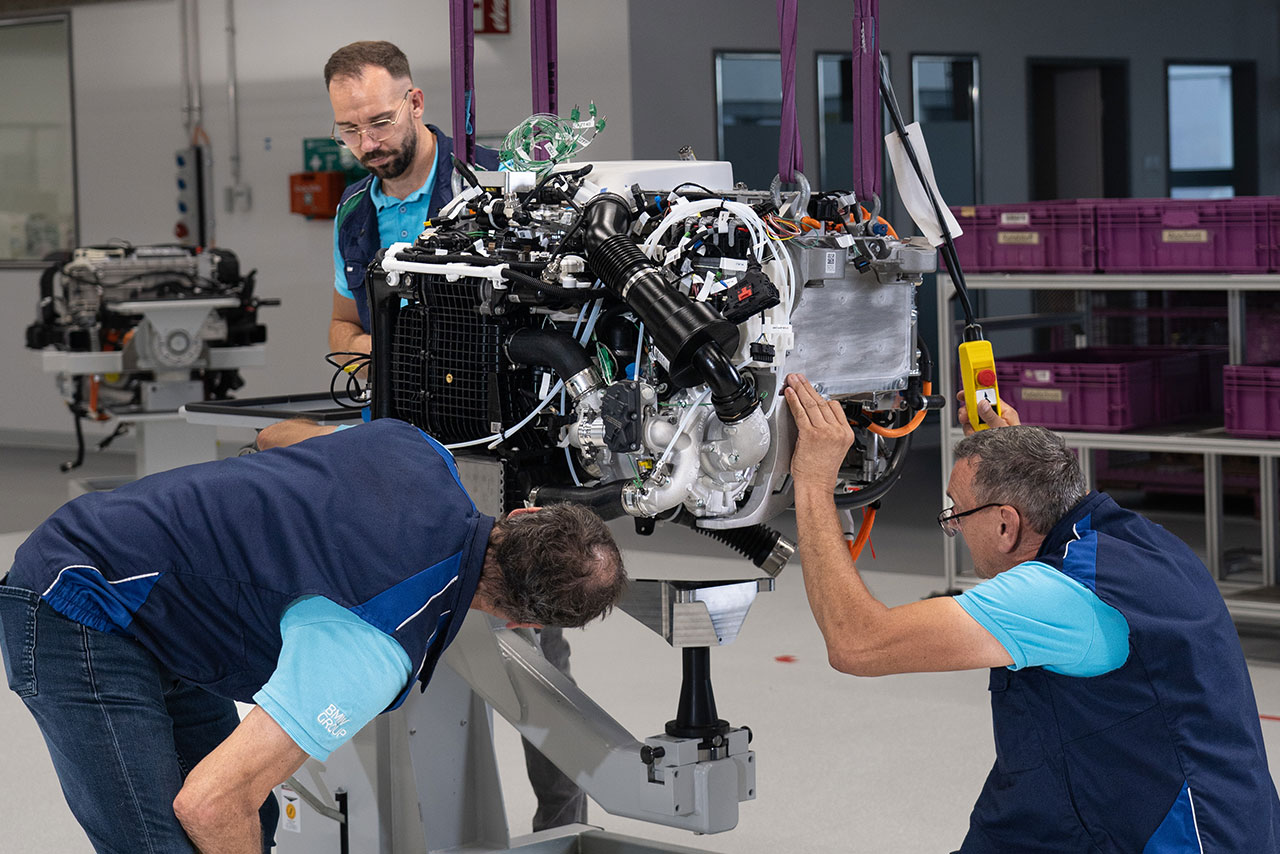
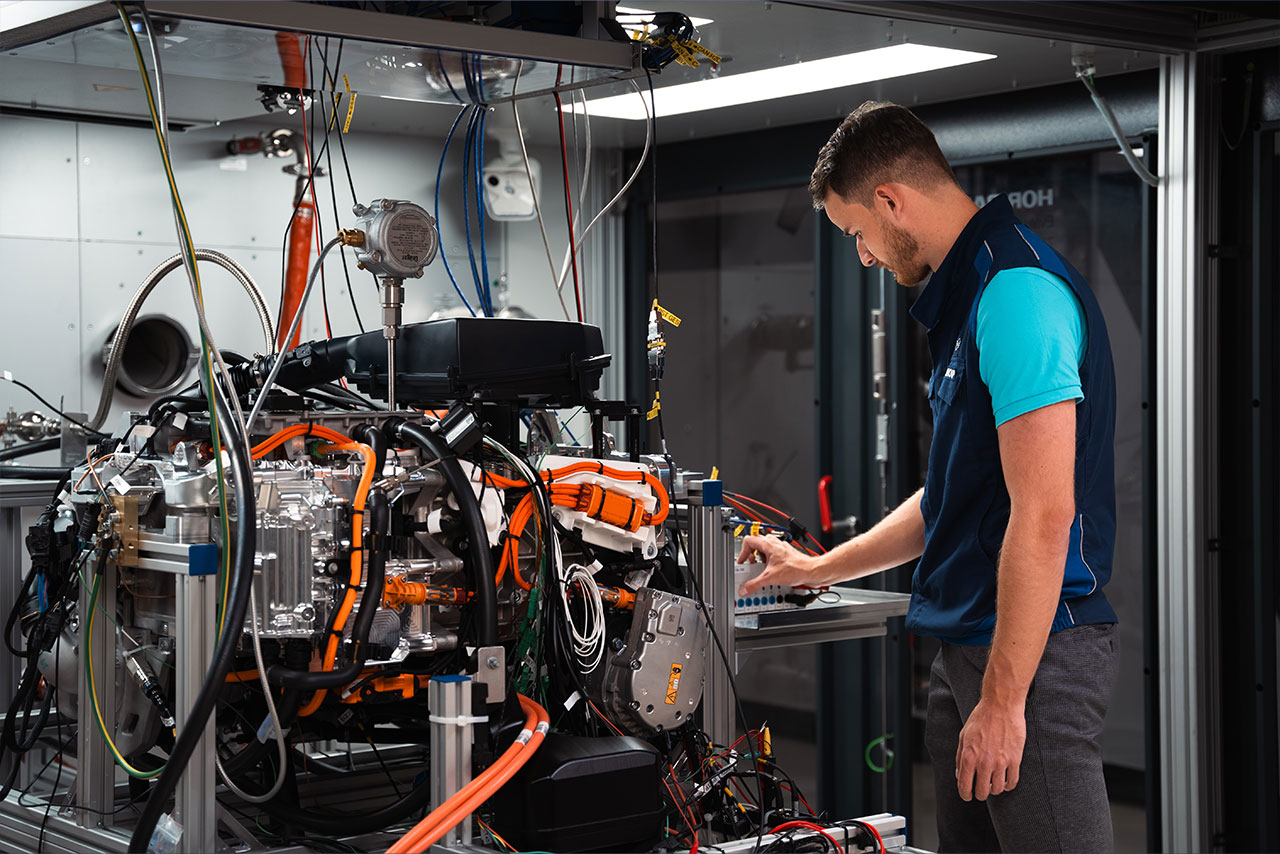
The centrepiece of the hydrogen drive is the fuel cell system. Compared with previous generations, the third generation currently in development is more efficient, more powerful and 25 percent more compact. Developed by the BMW Group in conjunction with the Toyota Motor Corporation, it will feature in the BMW iX5 Hydrogen, converting hydrogen into electricity to power the drive. The first prototypes are being built at the moment at dedicated centres of excellence in Munich and at BMW Group Plant Steyr.
BMW Group fuel cell development: From practical testing to system expertise.
The BMW Group has been building its expertise in fuel cells for more than ten years. Its first fuel cell vehicle, the BMW 535iA, was introduced in 2014. It was powered by a first-generation fuel cell drive provided entirely by Toyota. Since then, however, the BMW Group has developed its own complete fuel cell system, with only the cells provided by an external partner, to power the pilot fleet of BMW iX5 Hydrogen vehicles. Today, the BMW Group and Toyota are jointly developing a third-generation fuel cell system for passenger vehicles.
Components of a hydrogen drive: tank, fuel cell system, electric motor.
Essentially, a hydrogen drive combines hydrogen storage, a fuel cell system, a high-voltage battery and an electric motor. In the new BMW iX5 Hydrogen, the fuel is stored in the BMW Hydrogen Flat Storage unit and used to generate electricity via the fuel cell system. A high-voltage battery provides additional power, while the electric motor propels the vehicle. Together, the fuel cell technology and electric propulsion deliver BMW’s hallmark driving dynamics.
New hydrogen tank: How does the BMW Hydrogen Flat Storage work?
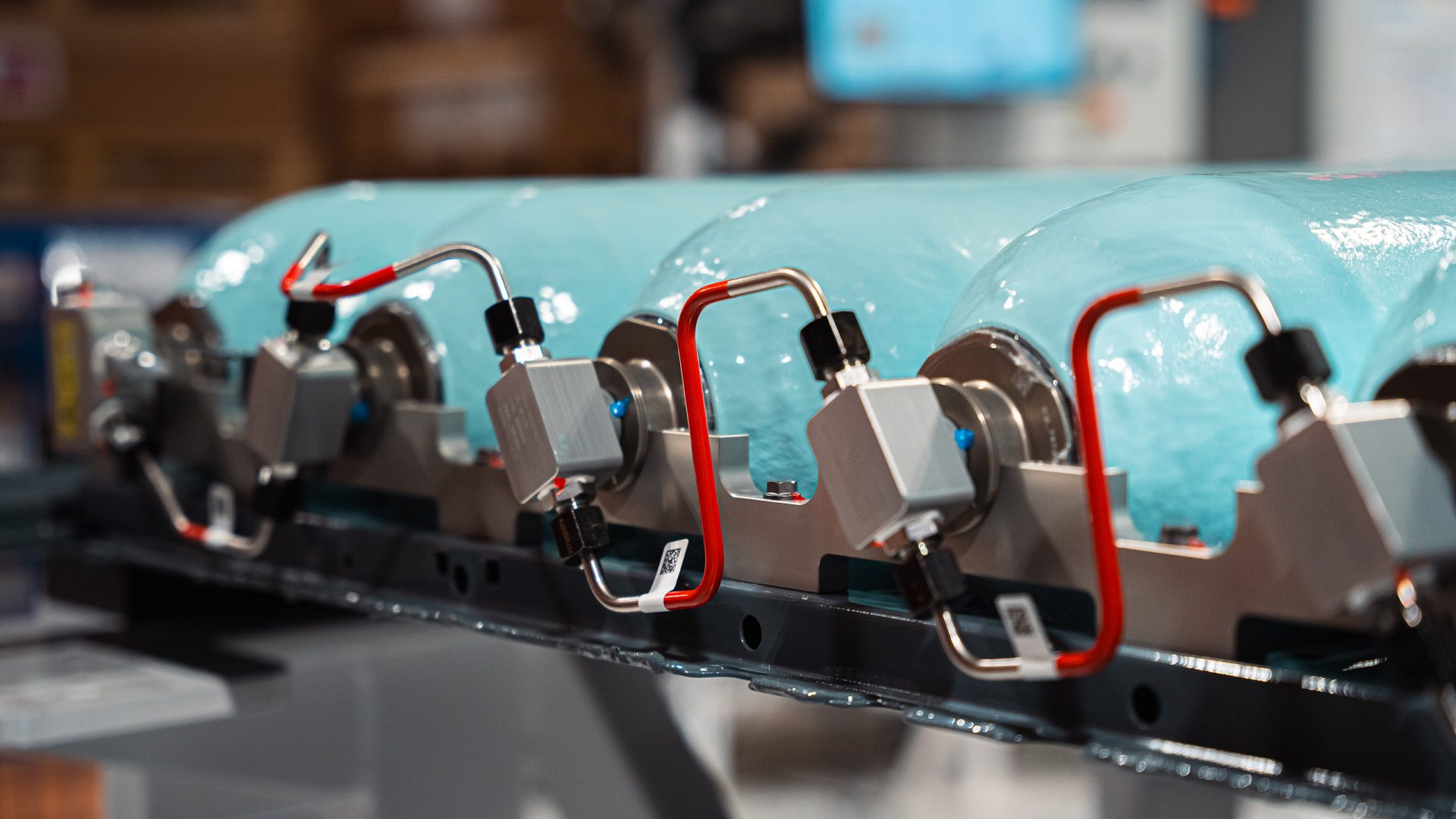
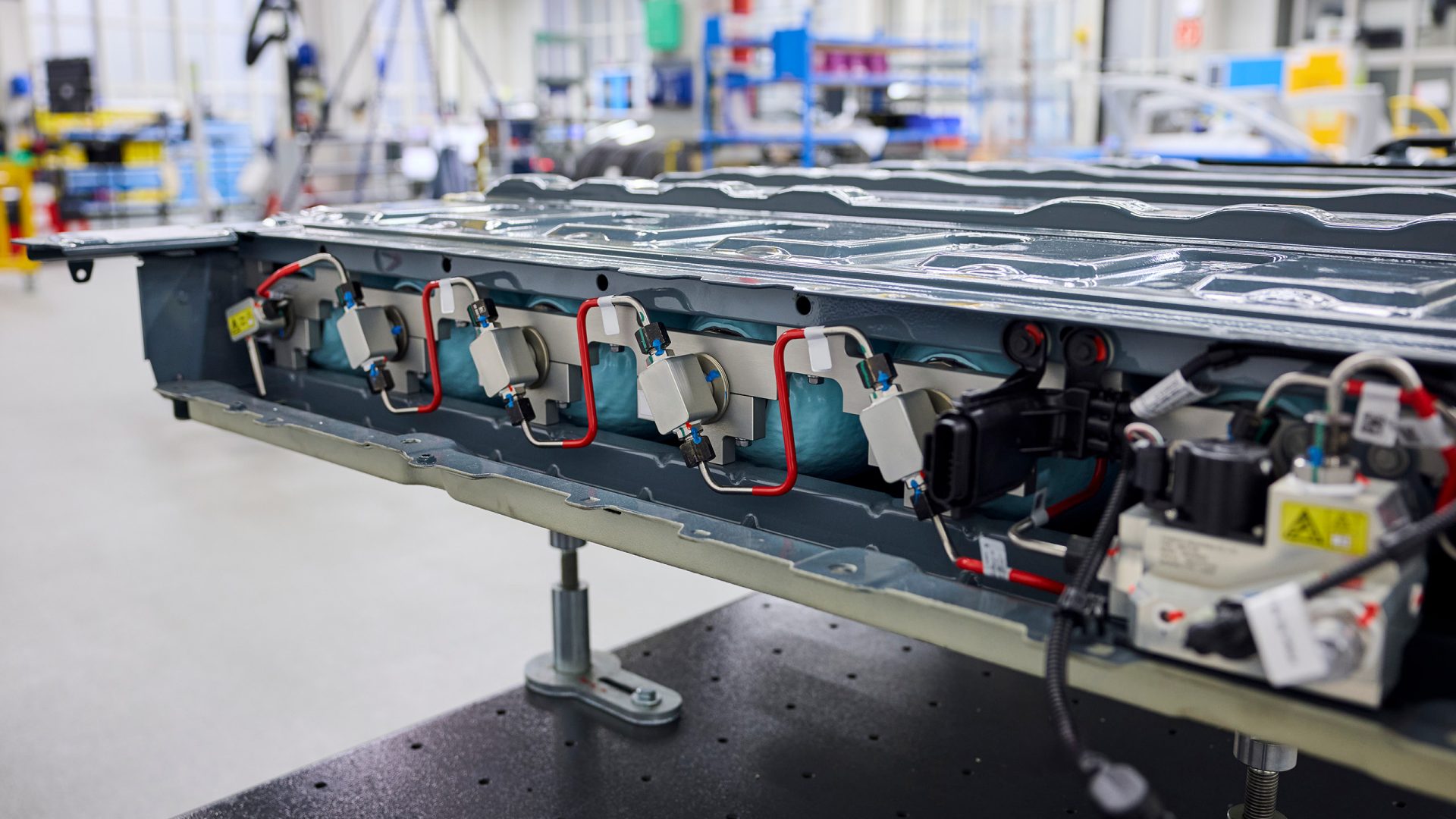
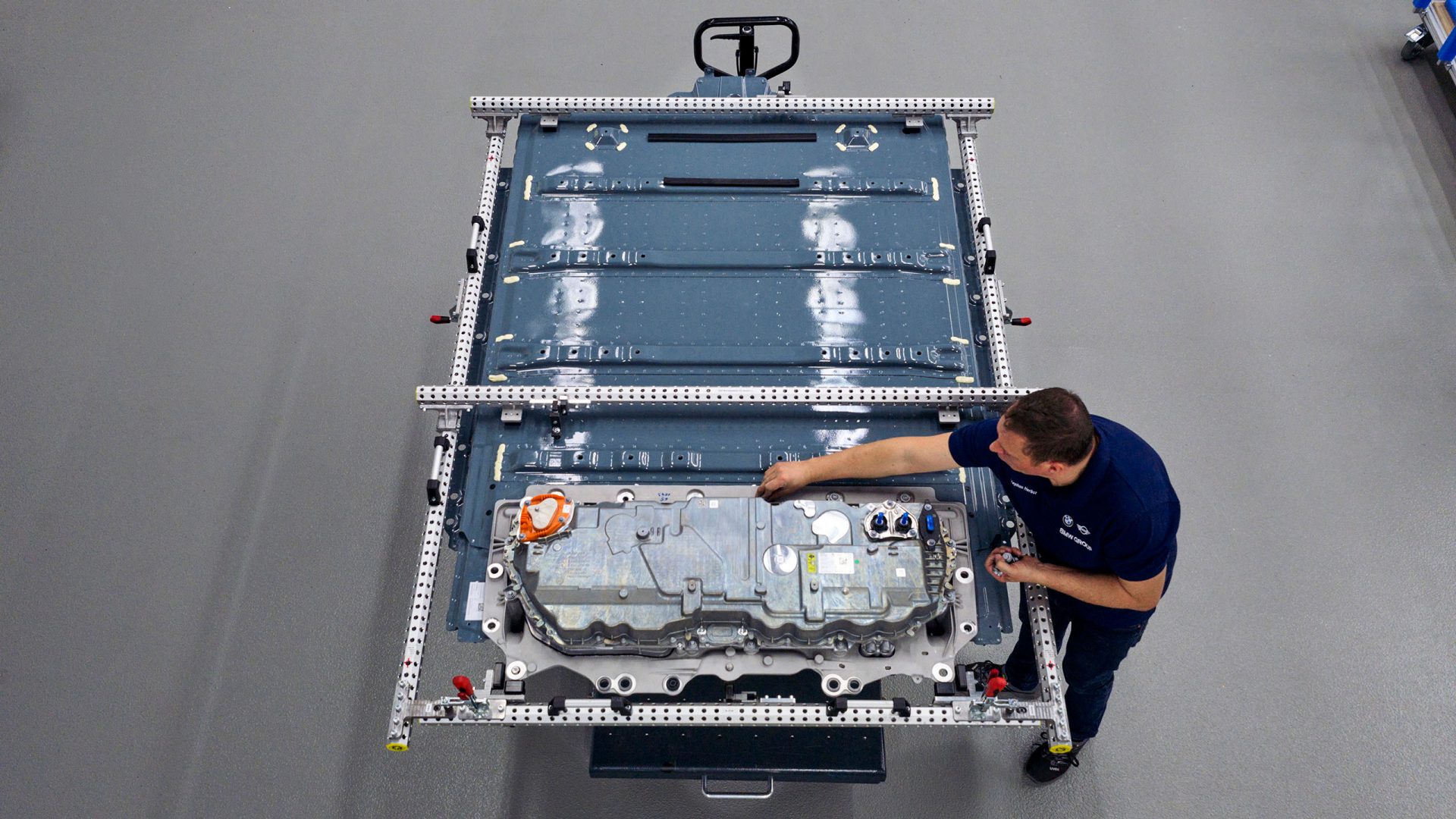
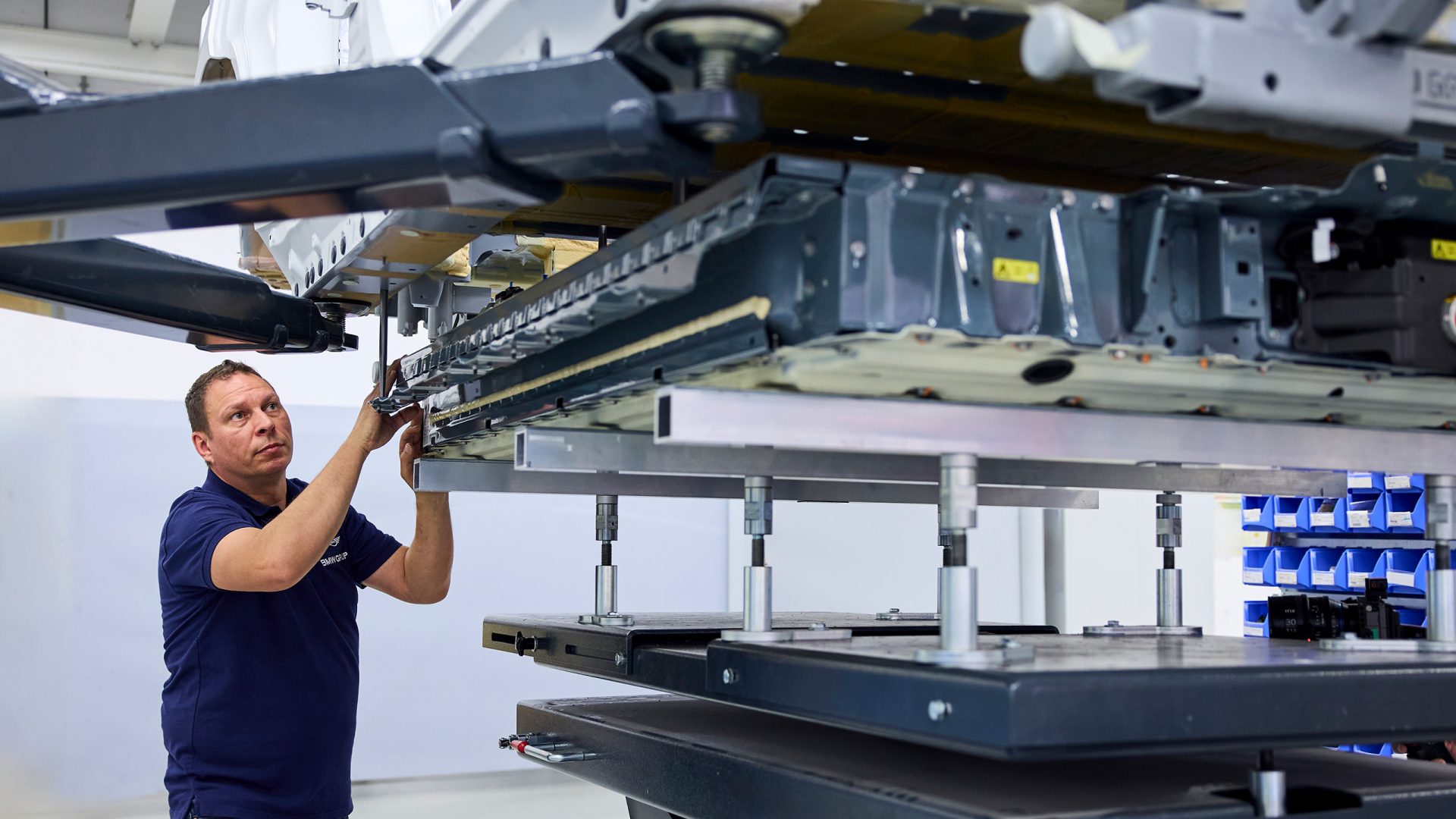
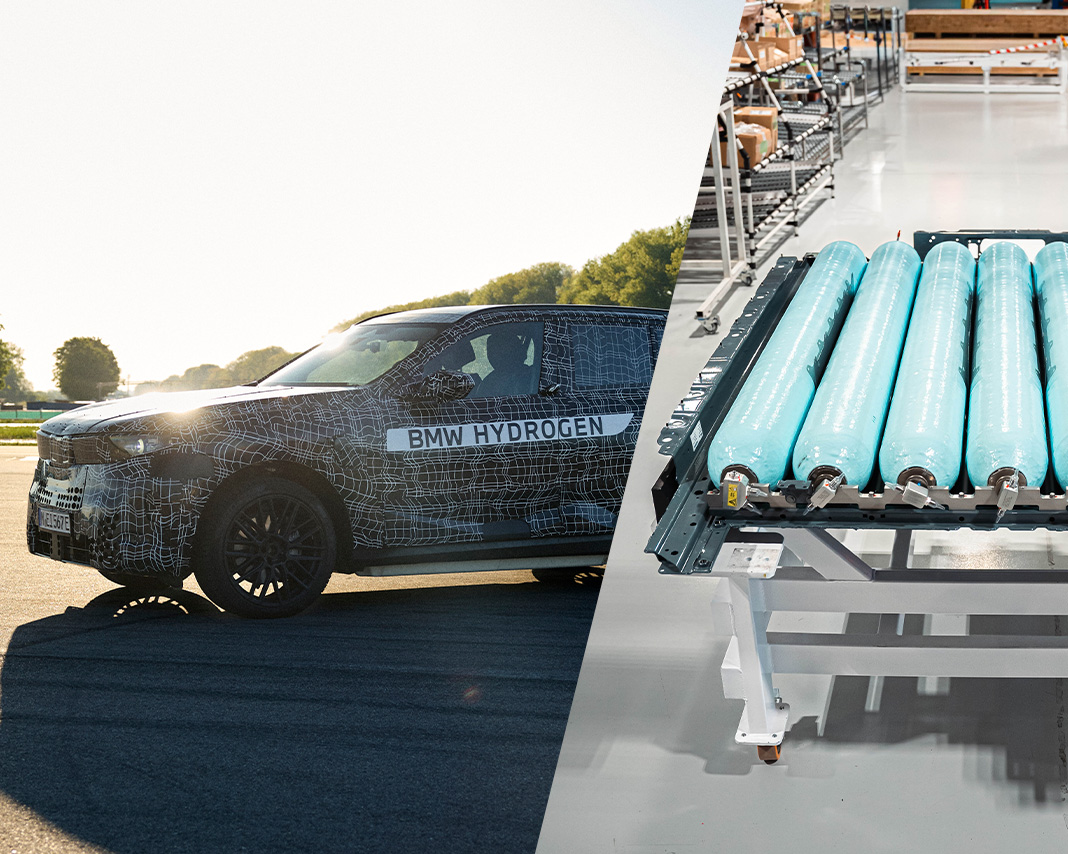
Whether a technology reaches series maturity often comes down to the details. For the BMW iX5 Hydrogen, the BMW Group is actively advancing a key component: the BMW Hydrogen Flat Storage unit. With a storage capacity of at least seven kilograms, this enables a range of up to 750 kilometres* and refuelling in under five minutes. This combination of range, capacity and short refuelling is made possible by the arrangement and size of the tanks, which make efficient use of the available package space while remaining compatible with the Gen6 high-voltage battery. The concept not only preserves interior space but also enables fuel cell vehicles to be manufactured on the same production line as vehicles with other drivetrains.
The BMW Hydrogen Flat Storage unit also highlights the close integration of the tank system, high-voltage architecture and vehicle structure. Energy and data streams within the hydrogen-electric drivetrain are coordinated by the Energy Master, which is the central control unit of the high-voltage system and integrated into the tank structure. The 700-bar high-pressure hydrogen tanks benefit from the mechanical protection of the vehicle’s structure.
Funding information.
Through the "HyPowerDrive" project the development of the powertrain and the tank system of the BMW iX5 Hydrogen is funded by the Federal Ministry of Transport (BMV) within the framework of the IPCEI Hy2Move. The federal government is providing funding of EUR 191 million. In addition, the project is (co-)financed by the state of Bavaria with a total of EUR 82 million. The funding is implemented by the Project Management Jülich (PtJ) and coordinated by NOW GmbH.
Structure of the BMW Hydrogen Flat Storage: High-pressure tanks, frame, main valve.
The all-new BMW Hydrogen Flat Storage unit consists of seven high-pressure tanks made from carbon fibre-reinforced composite. The tanks are connected in parallel and integrated into a robust metal frame. The distinctive feature of this design is that, rather than separate tank vessels, it combines multiple interconnected chambers to form a single enclosed unit controlled by a central main valve. The optimised storage concept gives the BMW iX5 Hydrogen more range as well as fuel storage capacity of at least seven kilograms while allowing safe, rapid refuelling.
From pilot to series: The new BMW iX5 Hydrogen.
After successful global testing with the pilot fleet, the BMW Group is now preparing to launch its first hydrogen-powered series model: the new BMW iX5. Its drive technology will be based on the third-generation fuel cell system co-developed by the BMW Group and Toyota. This system is more compact, more efficient and more powerful than previous generations.


Longstanding partnership – BMW and Toyota drive hydrogen mobility.
The BMW Group and Toyota are strengthening their collaboration on hydrogen fuel cell technology with a particular focus on the joint development of a fuel cell drive for passenger cars. Plans to deepen their long-standing partnership were announced in September 2024, and the two companies are now collaborating on development and procurement and pooling their technological expertise. The aim is to put the next generation of fuel cell technology on the road – and reduce the cost of the technology by leveraging economies of scale in the process.
Pilot fleet on the road worldwide – Everyday capabilities proven over millions of kilometres.
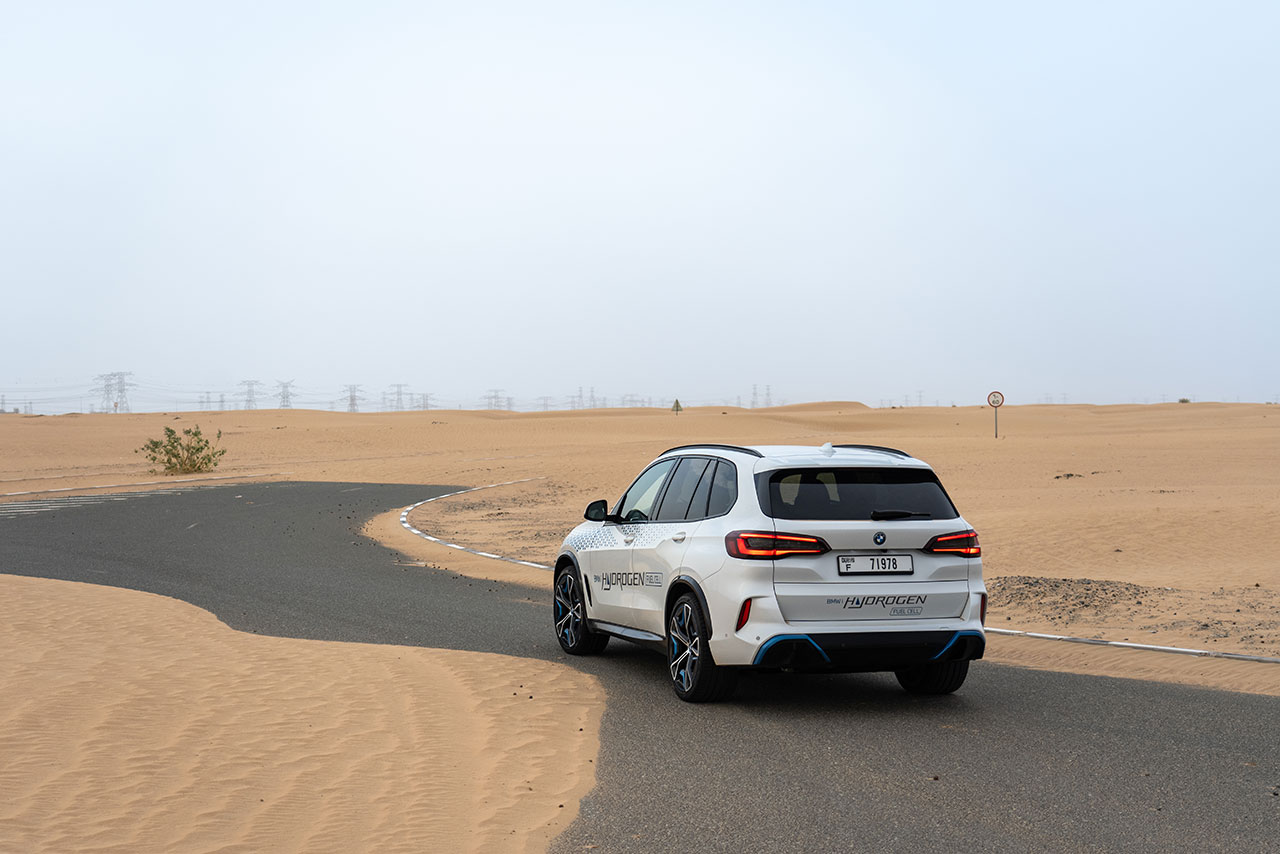
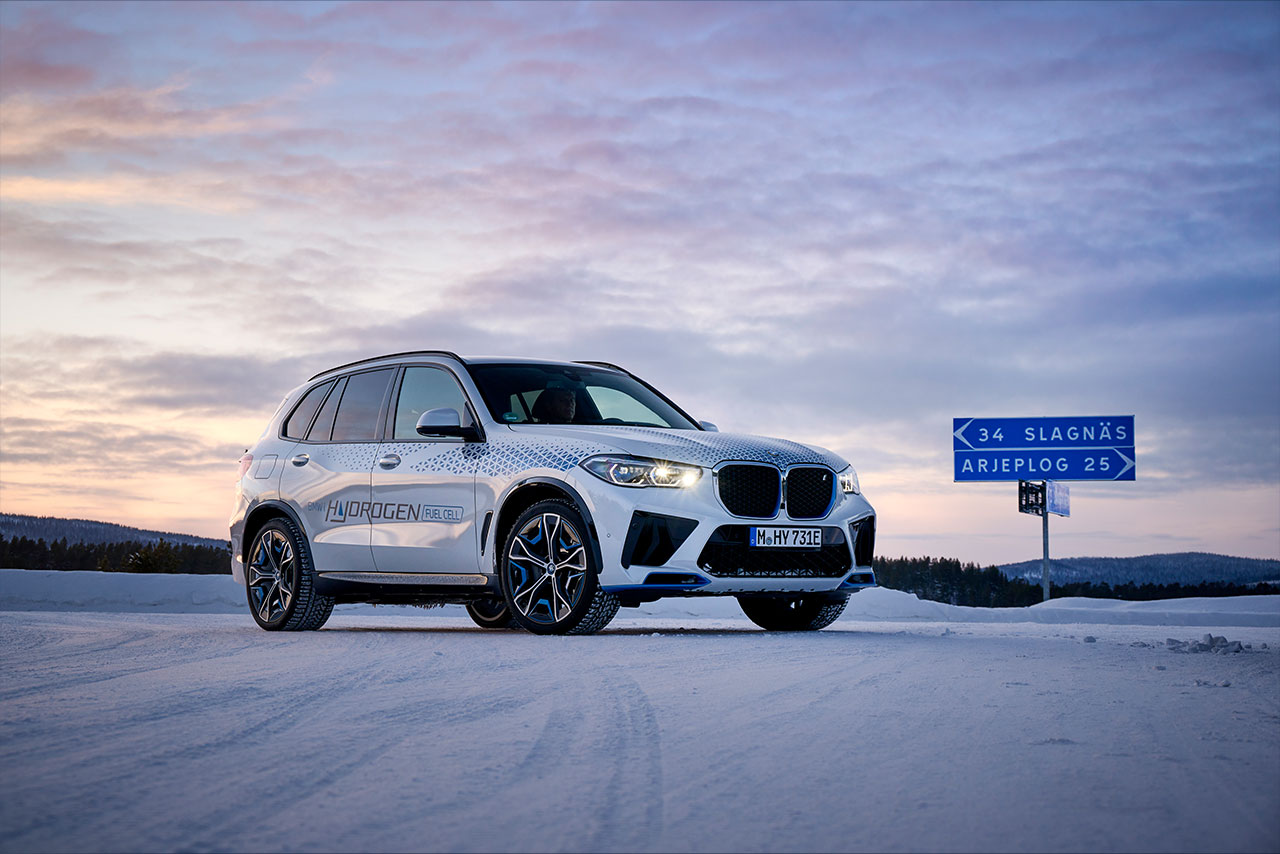
Since 2023 the BMW iX5 Hydrogen pilot fleet has been on the road in selected regions worldwide, showcasing its technology and testing performance in diverse climates and terrains. So far, the cars have impressively withstood temperatures of up to 45°C as well as sand, dust, varying inclines and different humidity levels.
The hydrogen fuel-cell drive also performed on a par with the conventional combustion engine in the extreme cold: full system performance was available shortly after start-up, and range remained unaffected by the biting temperatures.
So far, the pilot fleet has travelled through more than 20 different countries including many in Europe as well as Japan, Korea, China, Australia, South Africa and the USA. It has also set an important milestone, clocking up over one million test kilometres.
Key insights have fed into the development of the new BMW iX5 Hydrogen and reaffirm that hydrogen-powered vehicles are a viable alternative for everyday driving.
How do you refuel a hydrogen vehicle?
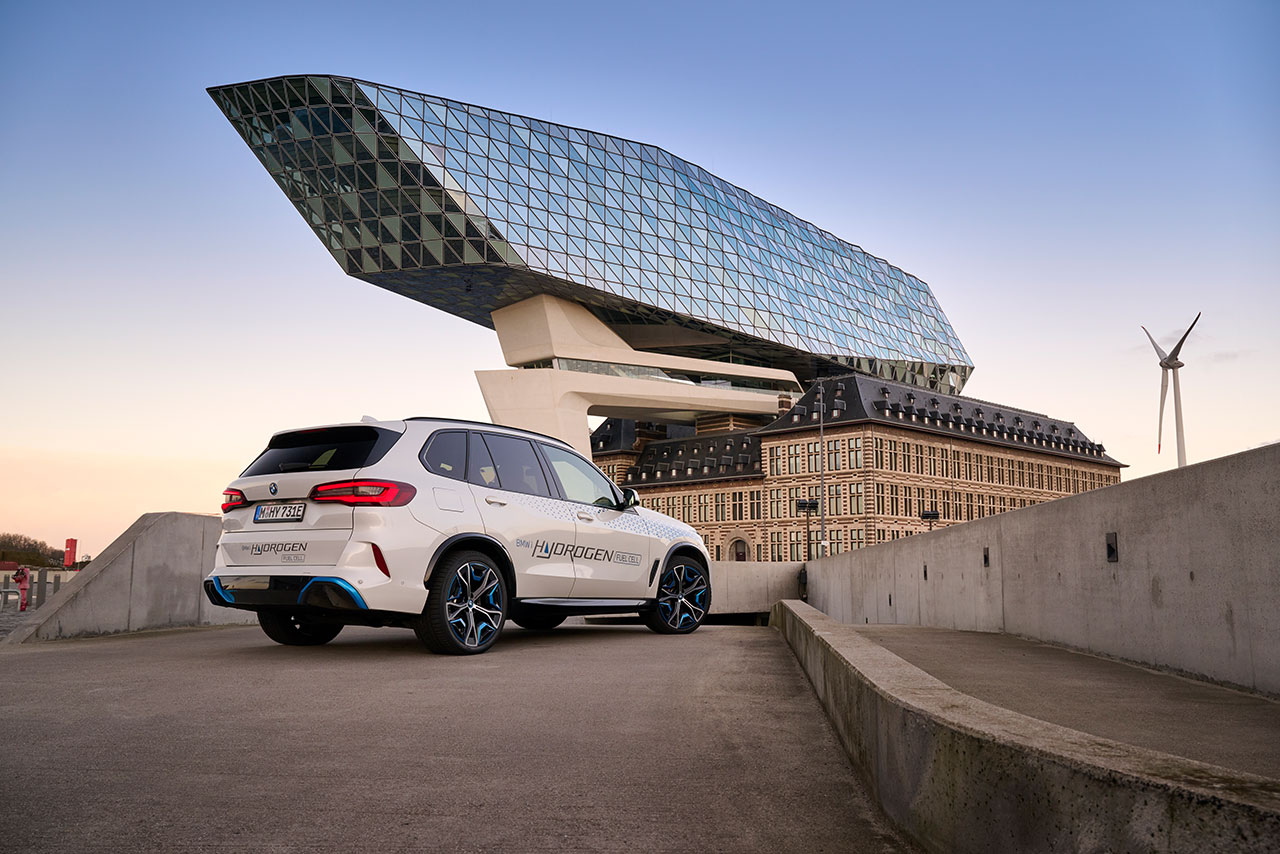
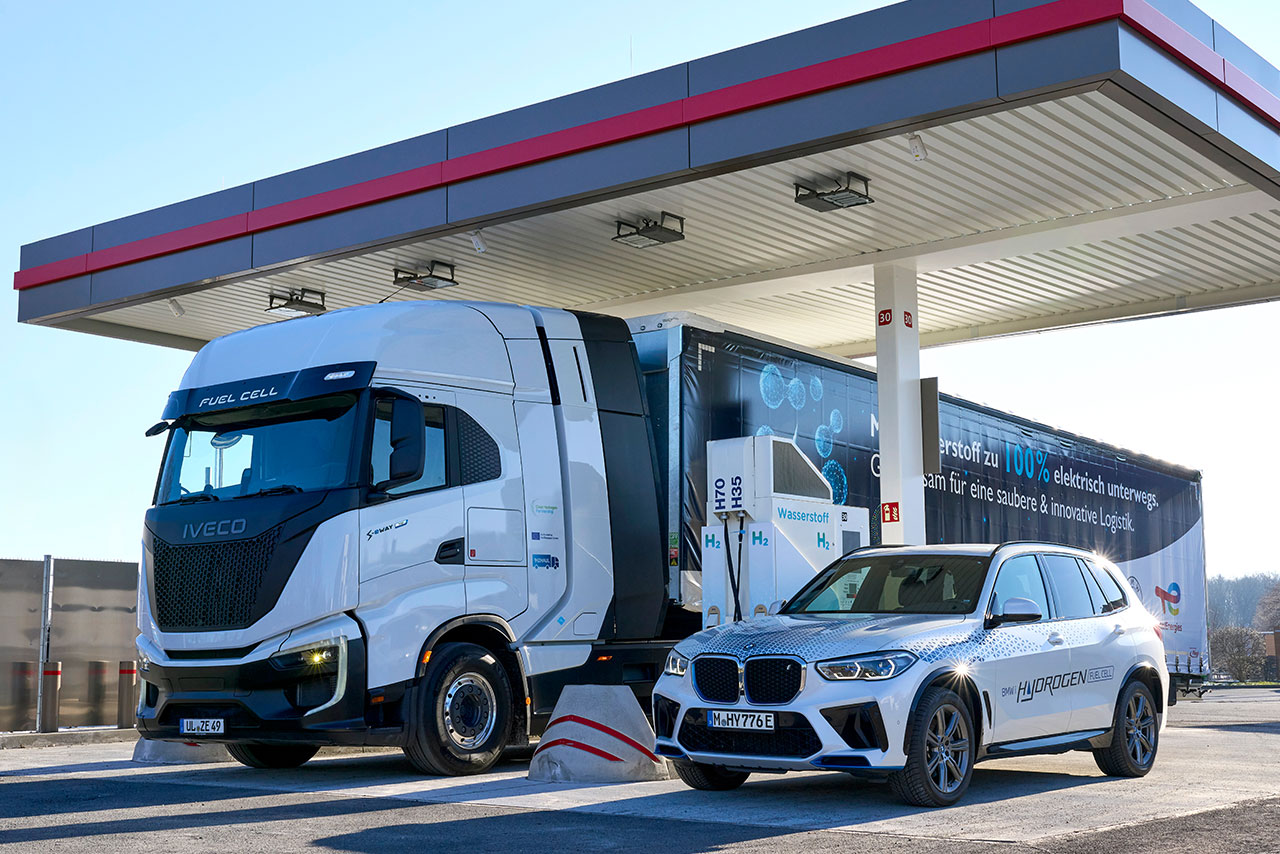
Refuelling with hydrogen is much like refuelling with diesel or petrol. In many respects, the process is familiar: connect the nozzle of the fuel hose to the vehicle, lock it in place and start refuelling. The all-new BMW iX5 Hydrogen takes less than five minutes to fill from empty. Hydrogen is transferred into the tanks under high pressure, with the system itself monitoring the process and automatically shutting it off when the tanks are full. Fast refuelling is particularly practical for long-distance driving, and the BMW Group remains committed to expanding both the charging network and the hydrogen refuelling infrastructure.
The HyMoS Initiative: Partnership for a stronger hydrogen infrastructure.
Alongside developing the new BMW iX5 Hydrogen, BMW is actively involved in establishing hydrogen filling stations. As part of this commitment, the HyMoS (Hydrogen Mobility at Scale) initiative was launched – a collaboration between multiple industry partners and institutions aimed at advancing the ecosystem for hydrogen mobility. The initiative seeks to make systems more economically viable by introducing a standardised solution that meets demand from all types of vehicles, including trucks, buses and passenger cars. This approach enables hydrogen filling stations to be optimally distributed and utilised.
HyMoS supports existing projects as they evolve, efficiently consolidate demand and optimise hydrogen station operations. A pilot programme has been launched to strengthen existing ecosystems in Germany and France and gather valuable insights for expansion into urban areas – and potentially other countries as well.
The BMW Group’s holistic approach: Hydrogen in production and logistics.
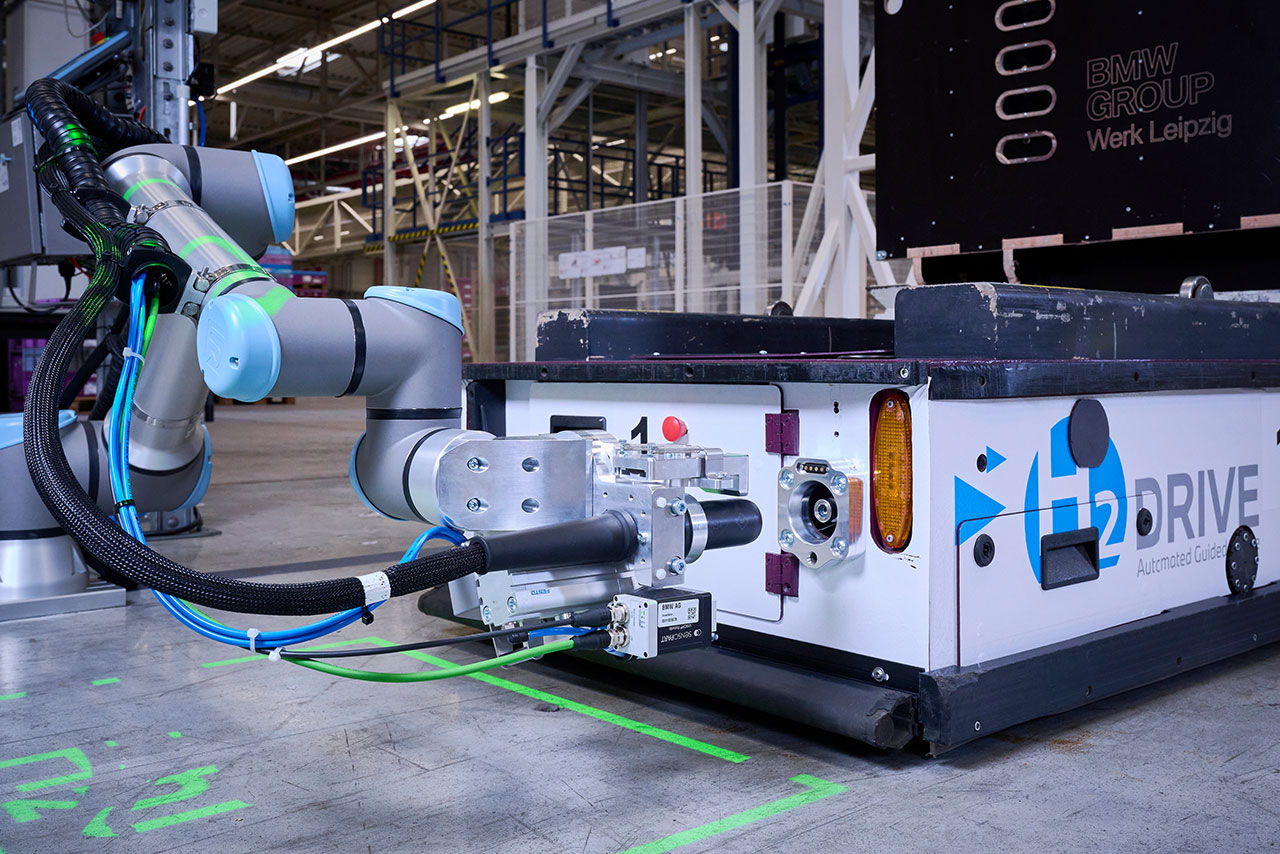
The BMW Group has used hydrogen to power plant logistics for more than ten years. In 2013 we set up Germany’s first indoor refuelling station at Plant Leipzig, where vehicles used for internal plant transport can be refuelled. This laid the foundation for broader hydrogen deployment at further sites across the production network today. At BMW Group Plant Munich, for example, assembly operations are supported by 125 hydrogen-powered forklifts that can be refuelled in about three minutes. At Plant Regensburg a six-kilometre hydrogen network is under construction to enable decentralised indoor hydrogen refuelling and support the gradual conversion of the entire intralogistics fleet to hydrogen by 2031. Hydrogen has been an established part of plant logistics at our US plant in Spartanburg since 2010.
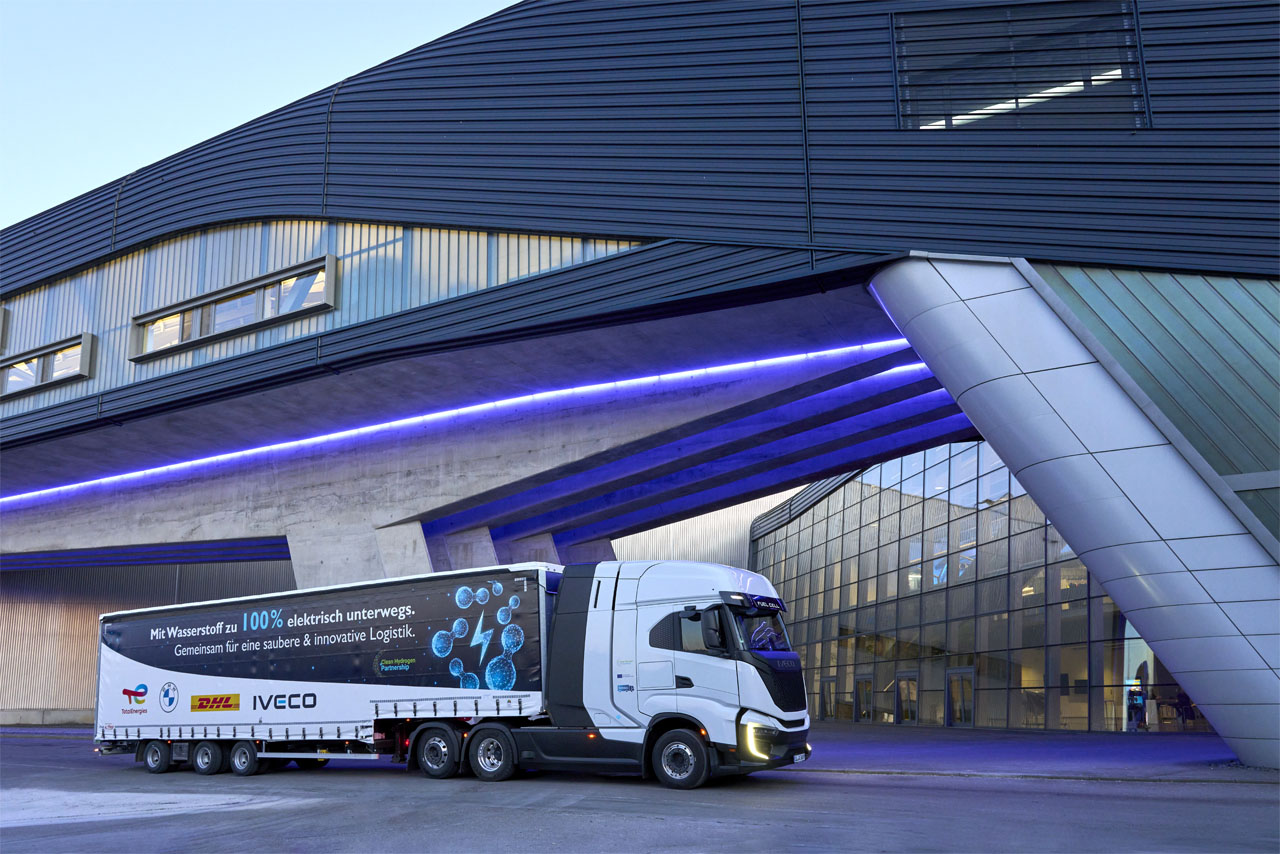
Together with our partners, we also use hydrogen beyond the factory gates as part of our efforts to decarbonise transport logistics. The BMW Group is involved in research projects such as H2HAUL and HyCET, and is also trialling the use of hydrogen in vehicle production, in the paintshop at Plant Leipzig. In the future, the plant in Leipzig will be connected to a hydrogen pipeline approximately two kilometres long, which will supply the plant with hydrogen via a german core network from mid-2027 onwards. The industrial pipeline will replace traditional hydrogen delivery by truck – a globally unique step in automotive production.
FAQs – Hydrogen at the BMW Group.
A hydrogen car is essentially an electric vehicle that generates its own electricity. Hydrogen from the vehicle’s tanks reacts with oxygen from the ambient air in the fuel cell system, generating electricity to power the electric motor. With water vapour as a byproduct, fuel cell vehicles operate with zero tailpipe emissions. They are propelled by the electric motor.
The BMW Group is advancing hydrogen as a key technology because mobility requires different solutions in different parts of the world. We are currently developing our hydrogen fuel cell technology as our second pillar of electromobility, alongside battery-electric vehicles. The BMW Group keeps an open mind to different technologies, the different needs and infrastructures of the various markets, and to customers’ diverse usage patterns. The all-new BMW iX5 Hydrogen adds a further drive option to the vehicle portfolio.
The BMW iX5 Hydrogen fuel cell vehicle will join the X5 model range at a later date. Its technology will build on the third-generation fuel cell system currently being developed by the BMW Group and Toyota. With the BMW iX5 Hydrogen, the BMW Group will be the first global premium manufacturer to offer a series-produced fuel cell vehicle.
The fuel cell system is the centrepiece of the drivetrain in the BMW iX5 Hydrogen. Inside the fuel cells, hydrogen from the vehicle’s tanks reacts with oxygen from the ambient air, generating electricity to power the electric motor. The BMW iX5 Hydrogen will feature the third-generation fuel cell system, developed jointly by the BMW Group and Toyota.
The BMW iX5 Hydrogen has a range of up to 750 kilometres. This is enabled by the BMW Hydrogen Flat Storage unit, which can store at least seven kilograms of fuel and be refilled from empty in under five minutes.
The BMW Hydrogen Flat Storage unit is the new fuel tank system in the BMW iX5 Hydrogen. It consists of seven high-pressure tanks made of carbon fibre-reinforced composite that are integrated into a robust metal frame. Being flat, the unit uses the package space efficiently. Its space requirements are identical to those of the Gen6 high-voltage battery.
The Energy Master is the central control unit of the high-voltage system in the BMW iX5 Hydrogen. It is integrated into the BMW Hydrogen Flat Storage unit and coordinates energy and data streams within the hydrogen-electric powertrain. It therefore links the fuel cell system with the high-voltage battery and the elements of the electric drive.
Yes, a hydrogen car is electric. However, rather than sourcing its energy from a single large-scale battery, it generates its own electricity from hydrogen and oxygen in the fuel cells when in operation. The electricity is then used to power the electric motor, which propels the vehicle.
Hydrogen-powered electromobility is a useful alternative to battery-electric mobility for range, fast refuelling and specific usage profiles. Hydrogen can also be used to store energy from renewables and help offset fluctuations in the grid. For the BMW Group, it represents an additional element in its technology-open approach to zero tailpipe emissions mobility.
* As this is a prototype in the development phase, the statutory WLTP consumption data (and EPA) is not yet available.