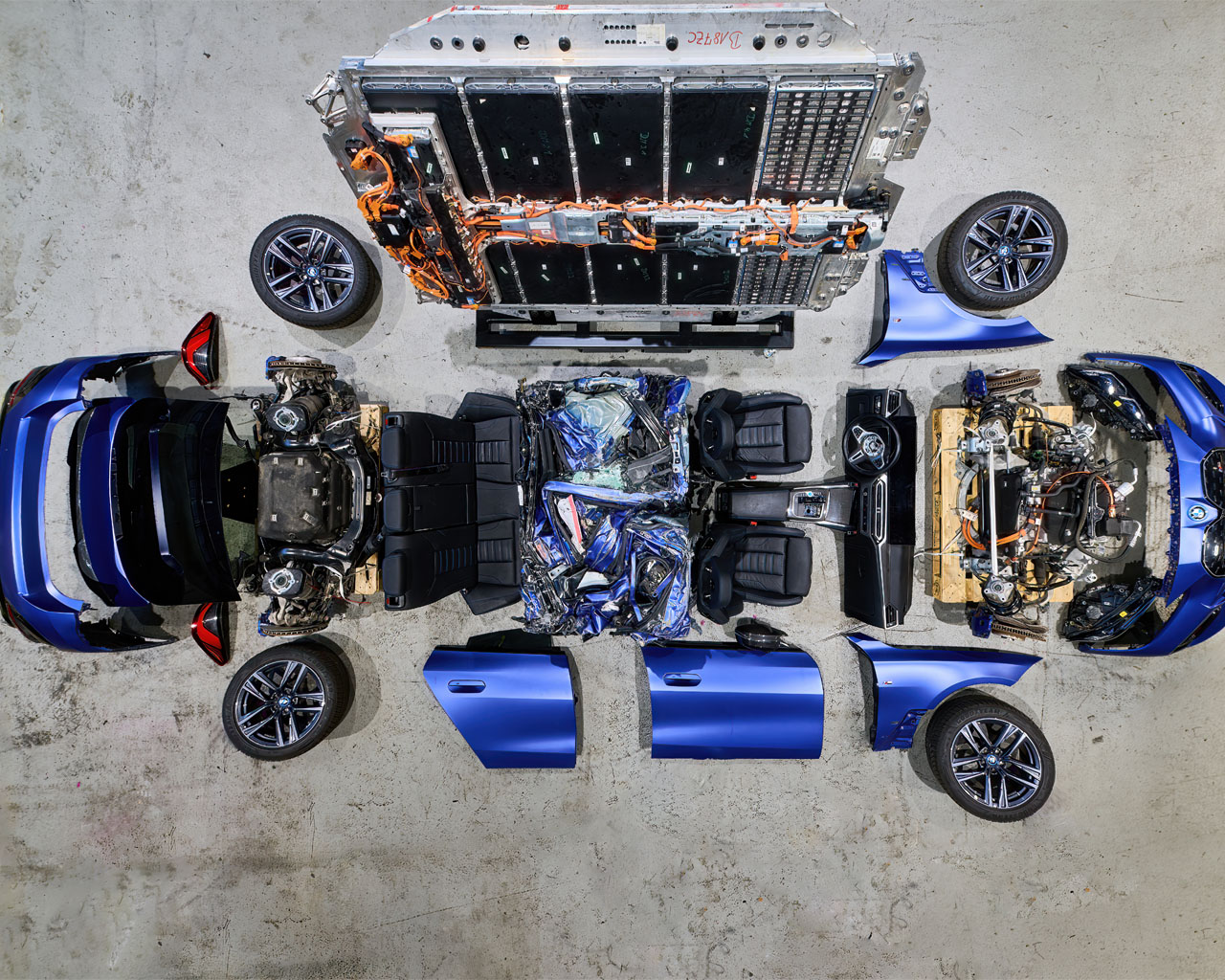
For more than five decades, the BMW 3 Series has stood for sporty driving pleasure, unmistakable design and continuous technical progress. More than 18 million units sold make it the most successful model in the brand’s history. With the eighth generation, the BMW Group is bringing the innovations of the Neue Klasse to the core of the brand for the first time – in the fully electric BMW i3 as well as in models with highly efficient combustion engines and 48V mild-hybrid technology. Design, drivetrain technology, driving dynamics and the road to series production: four perspectives show what changes with this generation, and what remains unmistakably BMW 3 Series.

Innovation
26.10.2026
6 MIN
What does the Neue Klasse change for the new BMW 3 Series?
Why is the eighth generation a new chapter for the BMW 3 Series?
The first BMW 3 Series rolled off the line at the home plant in Munich in 1975 and went on to become the most successful model the brand has ever built. Every new generation is measured against that record. The eighth generation answers with a technological leap: the innovations of the Neue Klasse, introduced with the BMW iX3, now reach the heart of the model range. The first fully electric BMW 3 Series celebrates its premiere in the form of the new BMW i3, joined by variants with highly efficient combustion engines and 48V mild-hybrid technology.
The range makes the technology-open approach tangible. The BMW i3 50 xDrive develops a system output of 345 kW/469 hp, accelerates from 0 to 100 km/h in 4.7 seconds and offers a maximum range of up to 912 kilometers (WLTP)1. Its 800V technology allows DC charging at up to 400 kW, enough to add up to 423 kilometers of range in ten minutes. The BMW i3 40 xDrive delivers 275 kW/374 hp and up to 710 kilometers1. On the combustion side, the BMW M350 xDrive marks the entry point into the world of BMW M with a 3.0-liter six-cylinder in-line engine, 326 kW/443 hp and a sprint to 100 km/h in 4.1 seconds. Two four-cylinder variants, the BMW 318 and the BMW 320, complete the launch range.

The Neue Klasse is about far more than a single car. Scalable and global, the Neue Klasse innovations are now being rolled out across our entire model range. And with the new BMW 3 Series, we are bringing them to the core of the brand for the first time. The eighth generation of our icon reaps the benefits of this technological leap forward, regardless of the drive system type providing the power.
What makes the design instantly recognizable as a BMW 3 Series?
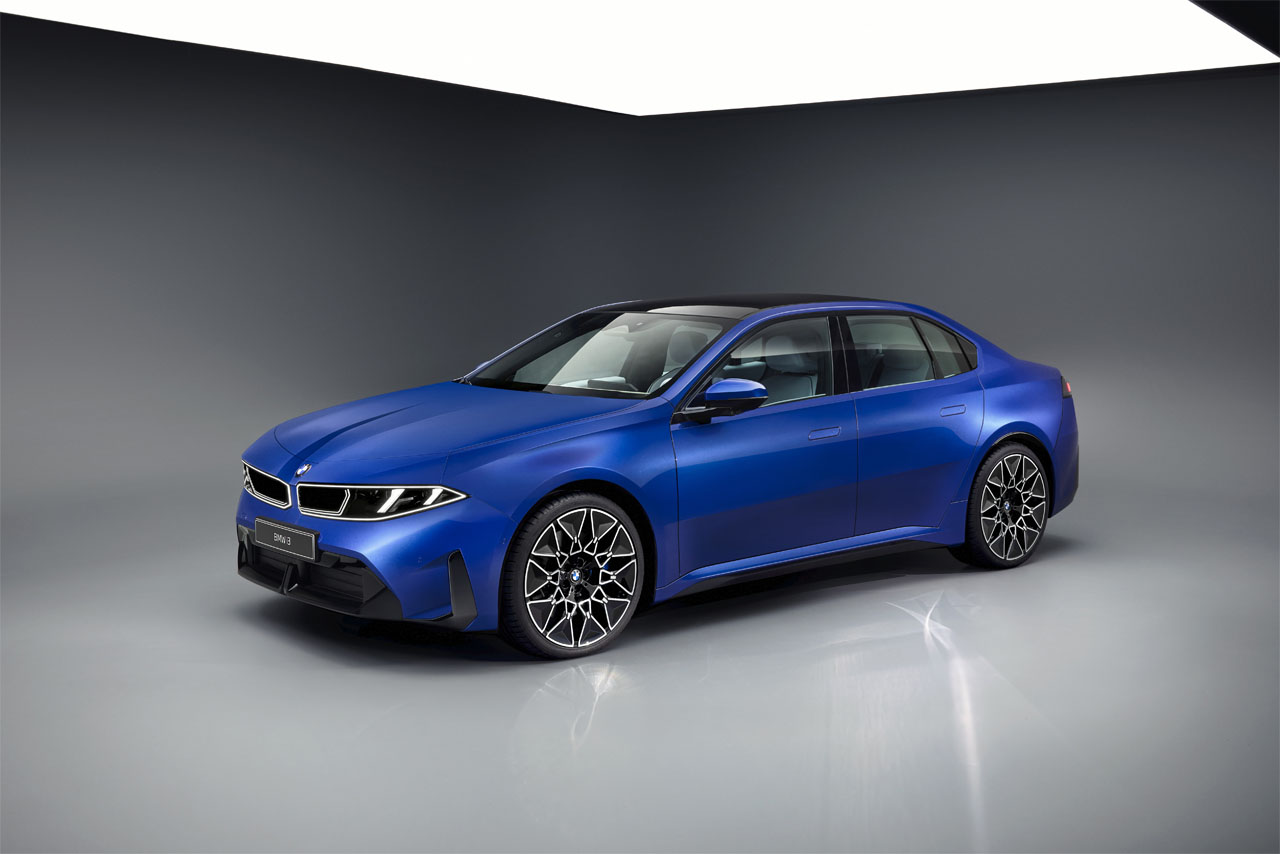
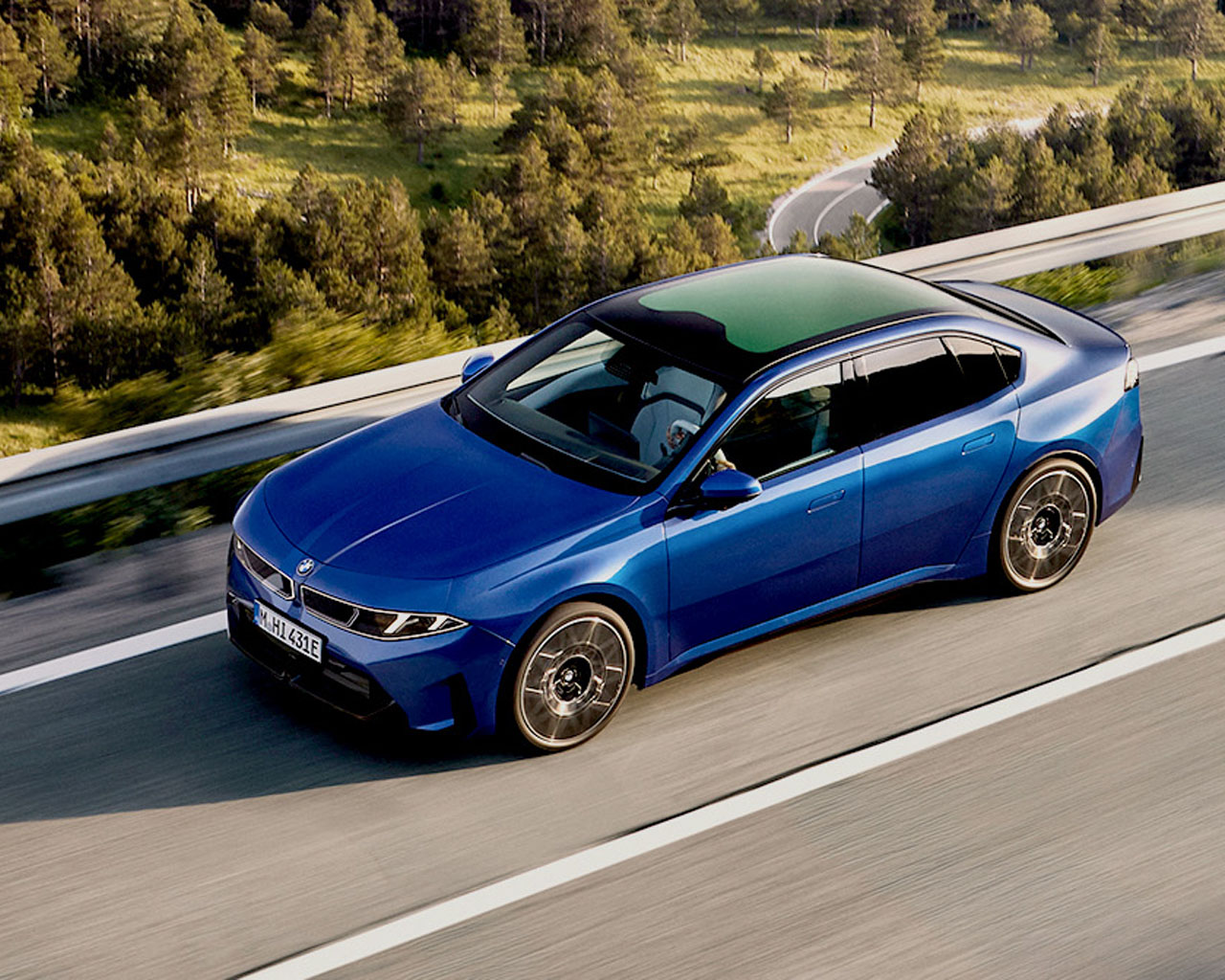
With the Neue Klasse, BMW is moving into a completely new design language. It builds on the brand’s heritage and carries the BMW 3 Series forward – and it deliberately leaves every model room for a character of its own. In the new BMW 3 Series, that design language meets the confident proportions of a sporty sedan: a modern 2.5-box design, a long wheelbase, short overhangs and eye-catching surfaces define the silhouette. Muscular, prominently flared wheel arches reinforce the sporting stance. The set-back glasshouse is a character-defining feature in its own right, while a low character line along the flanks lowers the visual center of gravity closer to the road.
At the front, two design icons are reinterpreted: the BMW kidneys and the twin headlights merge into a single visual unit – a symbiosis of geometry and light, with a horizontal light signature that extends almost all the way across the front end. Precise contour lighting adds visual depth around the kidneys; The rear end has a signature of its own: the markedly horizontal rear lights carry a new three-dimensional light signature, an abstract take on the L-shape familiar from previous BMWs, and extend well into the car’s pronounced shoulders. One design language, regardless of the drive system – the fully electric BMW i3 and its combustion-engined sister models differ only in details informed by the drive system at hand. Wheels range from 19 to 21 inches for the BMW i3 and from 18 to 20 inches for the combustion-engined models.
The new BMW 3 Series embodies the essence of our brand. Its design blends sporting dynamism and timeless elegance in the clear, reduced design language of the Neue Klasse.


How does driving pleasure work across every drive system?
Much of the answer lies in the software. Every new BMW 3 Series has a newly developed electronics and software architecture, and at its technological core sits the BMW Driving Stack – an integrated hardware and software system that makes all driving-relevant functions work together as one. In the fully electric BMW i3 works the Superbrain Heart of Joy with the BMW Dynamic Performance Control Driving Stack. Developed specifically for the sixth-generation fully electric drive system architecture, it brings drive system and driving dynamics functions into a single control unit for the first time and responds ten times faster than previous systems. One result is the Soft Stop function, which delivers the smoothest stopping action in the history of the BMW 3 Series. The combustion-engined models use their own intelligent BMW Driving Stack, honed over decades and tuned precisely to that drive system.
The hardware is tuned to match. Compared with its predecessor, the new BMW 3 Series has a longer wheelbase and wider tracks front and rear, and its almost perfectly balanced weight distribution remains a key ingredient of agile handling. The double-joint spring strut front axle gains increased positive caster trail and revised elastokinematics, the five-link rear axle a new setup, and anti-roll bar mounts with high preload on both axles improve roll control. A new steering ratio gives finer control, and the upgraded integrated braking system offers a consistent pedal feel. At the top of the combustion range, the BMW M350 xDrive adds Drift Moment: activated via the Central Display, it sends the engine’s power to the rear wheels only – a driving experience previously reserved for the high-performance models from BMW M GmbH.

Both the new fully electric BMW i3 and the new BMW 3 Series models with combustion engines and plug-in hybrid drive feature their own specific BMW Driving Stacks. They combine state-of-the-art control technology with our dynamic DNA. This enables us to infuse all of the BMW 3 Series drive variants with our brand’s signature driving experience – headlined by exceptional precision, intoxicating agility and the poise and assurance for which BMW is renowned.
How does the new BMW 3 Series get from the test track to series production?
Long before the first customer car is built, the new BMW 3 Series has to prove itself – virtually and in the real world. Prototypes completed their final dynamic fine-tuning at the BMW Group winter test center in Arjeplog, Sweden, where snow-covered roads and prepared surfaces on frozen lakes create ideal conditions: low friction coefficients allow the engineers to test, analyze and optimize the interaction of the electronic control systems under precisely reproducible conditions. The program continued on the Nürburgring and concluded at the BMW Group proving ground near Miramas in southern France, which offers everything from a high-speed oval to a variety of handling courses and road surfaces of all kinds. The focus of that final round was clear: to analyse and optimise every aspect of a vehicle’s driving behaviour in detail.
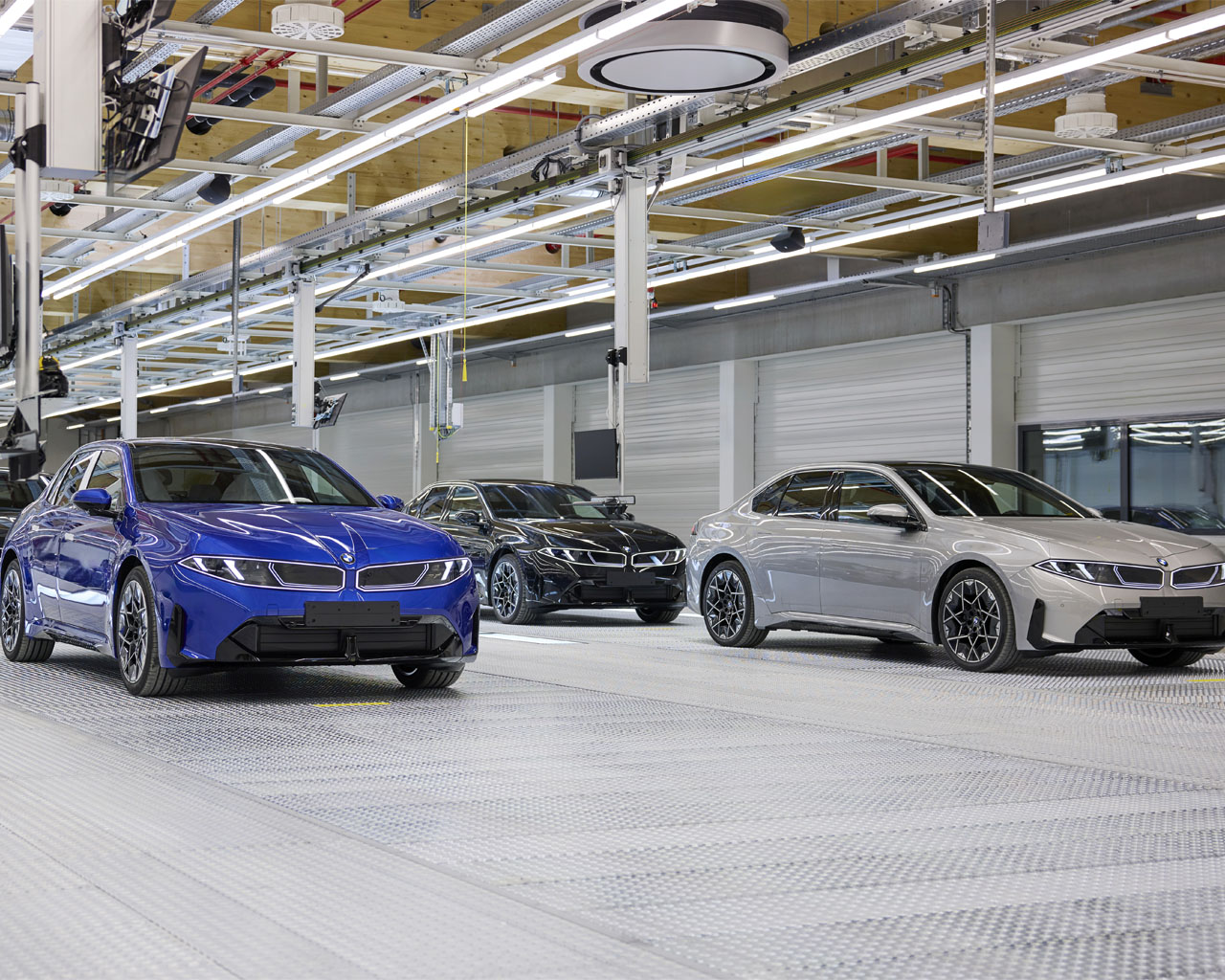
Series production then starts where the story began. The fully electric BMW i3 has been built at BMW Group Plant Munich since August 2026, following an investment of around €650 million in modern, digital production structures – a new body shop, state-of-the-art vehicle assembly and additional logistics sturctures areas covering roughly one third of the plant’s surface, all while up to 1,000 vehicles a day continued to leave the line. From 2027, Munich will build fully electric vehicles exclusively. The combustion-engined models follow from November 2026 at BMW Group Plant Dingolfing, on the same flexible line as the BMW 4 Series and BMW 5 Series, while BMW Group Plant Steyr supplies the key components for both drive system types. Digital tools run through all of it: from virtual twins to real-time data analysis, digital technologies and artificial intelligence are used in planning, production, quality assurance and logistics – and the new plant in Irlbach-Straßkirchen, which supplies the high-voltage batteries from October 2026, combines a rigorous zero-defect approach with complete in-line quality checks.


Summary
Where the new BMW 3 Series goes from here.
To sum it up: a new design language, a new digital experience, a new dimension of driving dynamics and state-of-the-art drivetrain technology. In short, this is the best BMW 3 Series the BMW Group has ever built. And there is more to come: the plug-in hybrid variant joins over the coming year, the BMW i3 M60 xDrive M Performance model arrives in 2027, new assistance functions will enable navigation-guided, partially automated driving in urban areas from 2027, and the BMW i3 Touring is set to follow as a future model from Plant Munich.
FAQ
Frequently asked questions about the new BMW 3 Series.
Yes, the BMW M350 xDrive will be powered by a six-cylinder in-line engine. It has 48V mild-hybrid technology and develops 326 kW/443 hp.
The BMW i3 50 xDrive has a range of up to 912 km (WLTP)1 and its electric power consumption is 18.0–13.4 kWh/100 km. The BMW i3 40 xDrive offers a range of up to 710 km (WLTP)1 and electric power consumption of 17.9–14.3 kWh/100 km.
The BMW i3 is a Neue Klasse model. All Neue Klasse models have sixth-generation BMW eDrive, 800V technology and high-voltage batteries with new cylindrical cells.
All BMW 3 Series models, regardless of the drive system type, offer innovative SAE Level 2 driver assistance systems and active safety functions with significant improvements, functional enhancements and BMW Symbiotic Drive.
The Drift Moment will be available over the course of 2027 and will then also be activated via Software Update in cars that have already been delivered.
1 Figures determined on the basis of the prescribed WLTP measurement procedure. Real-world values depend on factors such as load, driving style, route, weather, auxiliary consumers, tires and battery condition. All figures are provisional.