






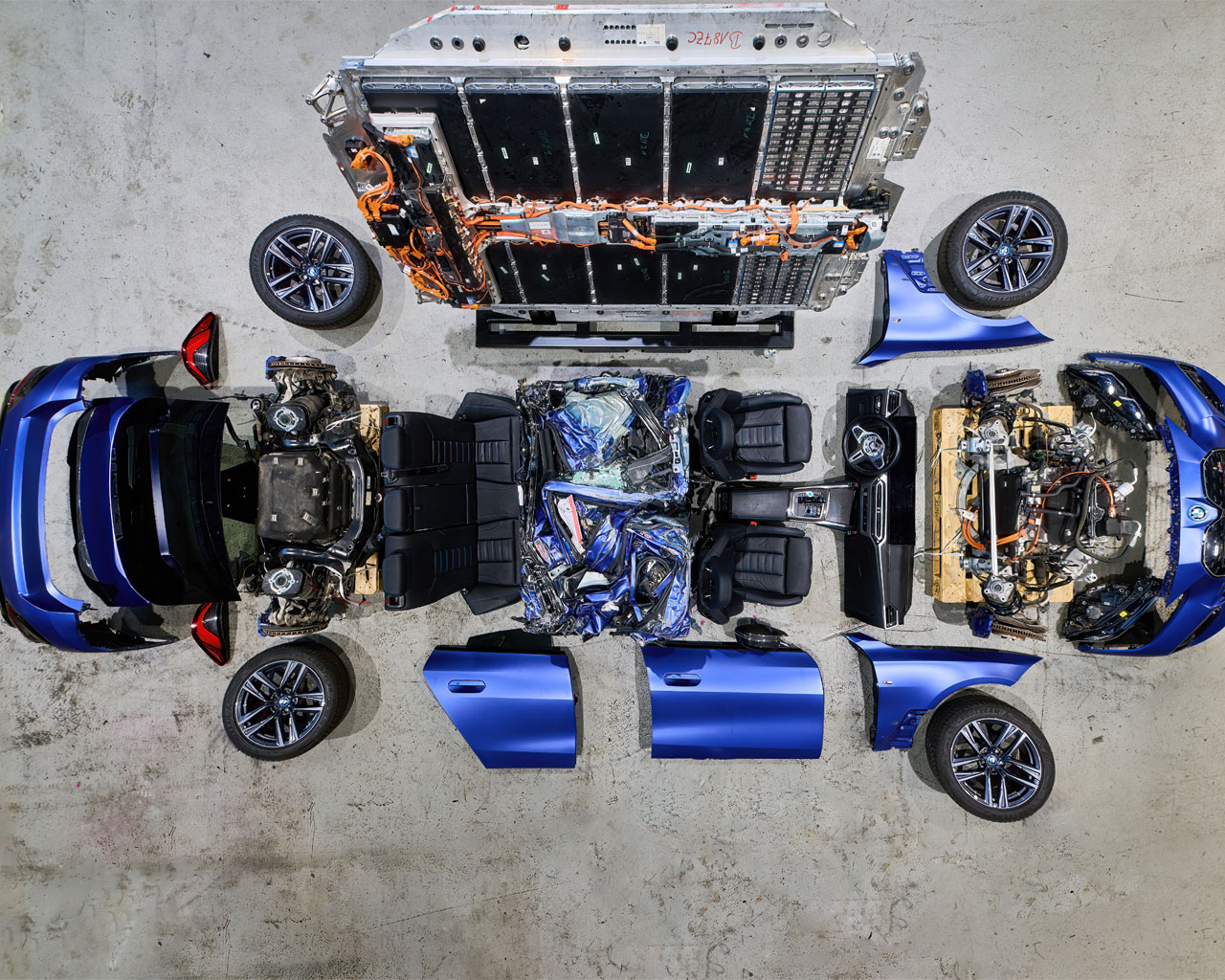

With the launch of the Neue Klasse, the BMW Group is making an expanded portfolio of active safety systems standard across multiple model series – from an exit warning that can actively delay door opening to an emergency steering intervention that can guide the vehicle around an obstacle within its own lane. All of them follow one principle: seamless support when it is needed, staying in the background when it is not. The functions can cover hazards all around the vehicle and are backed by a new sensor generation, a high-performance computer with around 20 times the computing power of its predecessor, and a 600-hectare proving ground in the Czech Republic.

Innovation
04.09.2026
8 MIN
When do active safety intervene, and when do they stay in the background?
What changes with the Neue Klasse for everyday safety?
From the launch of the Neue Klasse onwards, the BMW Group offers an expanded portfolio of active safety assistance systems as standard across multiple model series. The BMW iX3 was the first production model to feature them; the new BMW 3 Series, the BMW 7 Series, the BMW X5, and further model lines will follow. Fleet data from vehicles equipped with the previous generation of driver assistance technology indicates how much these kinds of systems can improve road safety: in July 2026 alone, the analyzed fleet in Europe covered 1.6 billion kilometers.1 Customers were alerted to potential collisions around 8 million times, and in 243,977 cases active steering and braking interventions helped prevent a potential collision.
The active safety assistance functions of the new vehicle generation were extensively improved with BMW Symbiotic Drive. The technology interprets steering inputs and line of sight to recognize what the driver intends so that the system intervenes when a genuine risk is detected and stays in the background when it is not. Independent testing confirms the approach: the new BMW iX3 achieved five stars in the latest Euro NCAP test, assessed under new and much stricter protocols revised in 2026.
The broad rollout of our new active safety functions as standard is based on our ‘Smart, Symbiotic, Safe’ philosophy. We bring drivers and assistance systems together into a cooperative system that works in harmony. At BMW, active safety functions operate as quiet, intelligent companions in the background, discreet yet highly effective when it matters most in critical situations.
How does the car react to hazards ahead?
Forward safety functions analyze the driving environment ahead continuously to mitigate the risk of frontal collisions. The Emergency Brake Assistant with evasive steering support can help prevent imminent head-on collisions – for example, when approaching the end of a traffic jam – and can apply the brakes up to full deceleration. Due to improved sensor technology, it can better assist in situations involving animals on the road and wildlife crossings.
The emergency steering intervention even goes a step further. For the first time, it can automatically steer the vehicle around an obstacle while keeping it within its own lane. For example, if a person steps onto the road between two vehicles after a breakdown or if a cyclist is overlooked in low-light conditions. Data from the sensors is processed by the central high-performance computer, so the vehicle can detect the hazard early and intervene precisely when a rapid reaction is required.

What happens when danger approaches from the side?

Lateral safety functions monitor the vehicle’s surroundings continuously and can detect developing hazards early and provide emergency steering support precisely when required. In situations with a risk of a side-impact collision, an emergency steering intervention can gently move the vehicle away from the object and keep it within its own lane if enough space to maneuver is available.
The cooperative Lane Keeping Assistant warns or steers only when the vehicle detects an unintended lane departure or an imminent collision. If the driver initiates a maneuver deliberately – shown by the turn signal, an active steering input, or a shoulder check – the system stays out of it, provided there is no foreseeable risk.
And what about the hazards coming from behind?
What happens behind the vehicle matters just as much – particularly when it is stationary. Dooring accidents occur when the door of a parked vehicle opens unexpectedly into the traffic lane, which is particularly dangerous for cyclists. According to the German Insurance Association, 8 percent of all bicycle accidents in Berlin in 2024 were related to dooring.2 The BMW Group has offered the exit warning as standard on many models for years; with the Neue Klasse, it now includes active door opening delay. Side radars monitor the traffic area around the parked vehicle, and if a risk of collision is detected, the electronic door lock delays the opening until the danger has passed.
Reversing out of a parking space onto a busy street is another scenario with limited visibility. Here, the emergency braking function for cross-traffic can prevent serious accidents involving cyclists and other road users: rear-side radars scan the surrounding area, while the rearview camera and the bird’s-eye-view display add visibility. Active Park Distance Control brakes not only at the rear but, for the first time, for objects on the vehicle’s side. Standard start monitoring addresses pedal misapplication. If the accelerator is pressed unusually hard while an obstacle is close by, the vehicle brakes in a controlled manner until it comes to a stop.

What makes these interventions possible in the first place?
Every intervention depends on the vehicle's understanding its surroundings in time. The new generation of cameras, radars, and ultrasonic sensors supplies the data. All new active safety, automated driving, and automated parking functions are processed on one central high-performance computer – the water-cooled “Superbrain of Automated Driving” – with around 20 times the computing power of its predecessor.
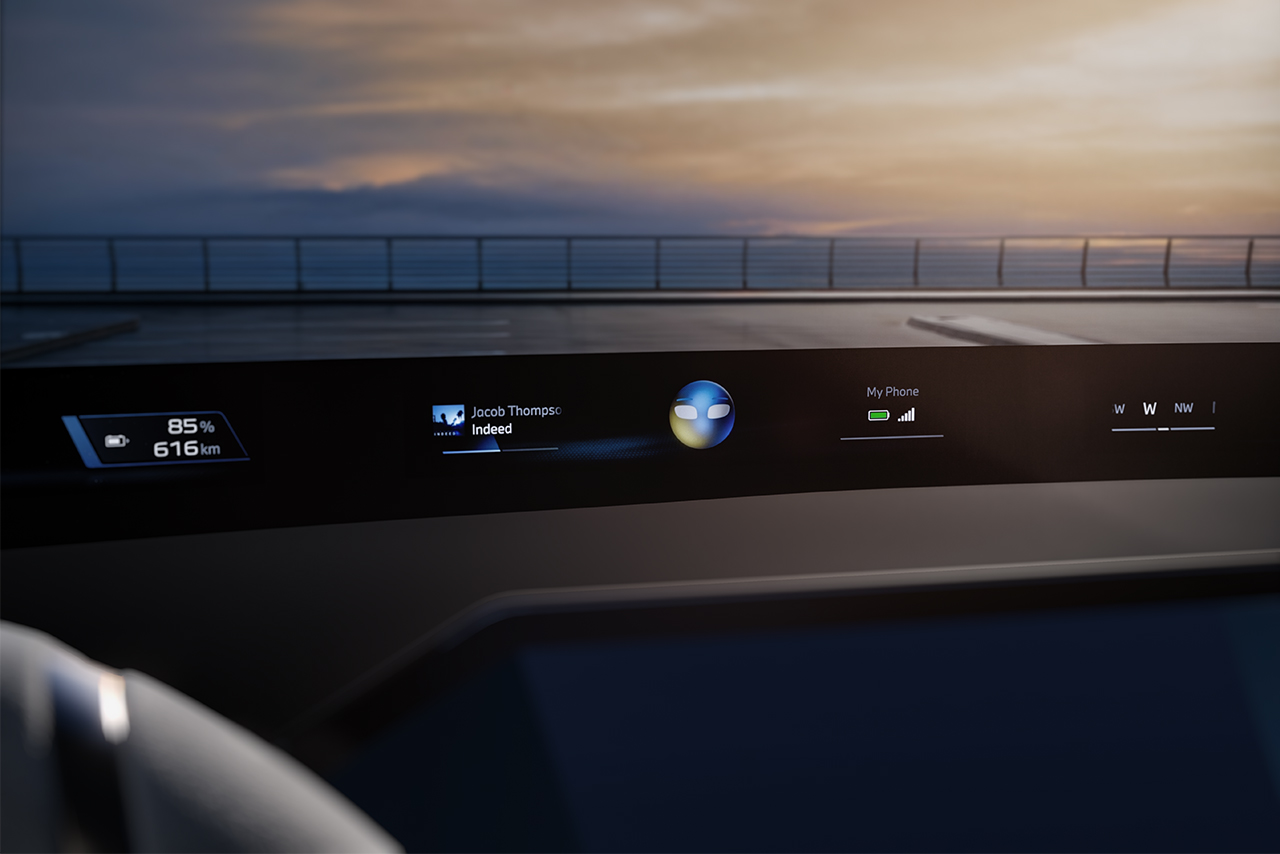
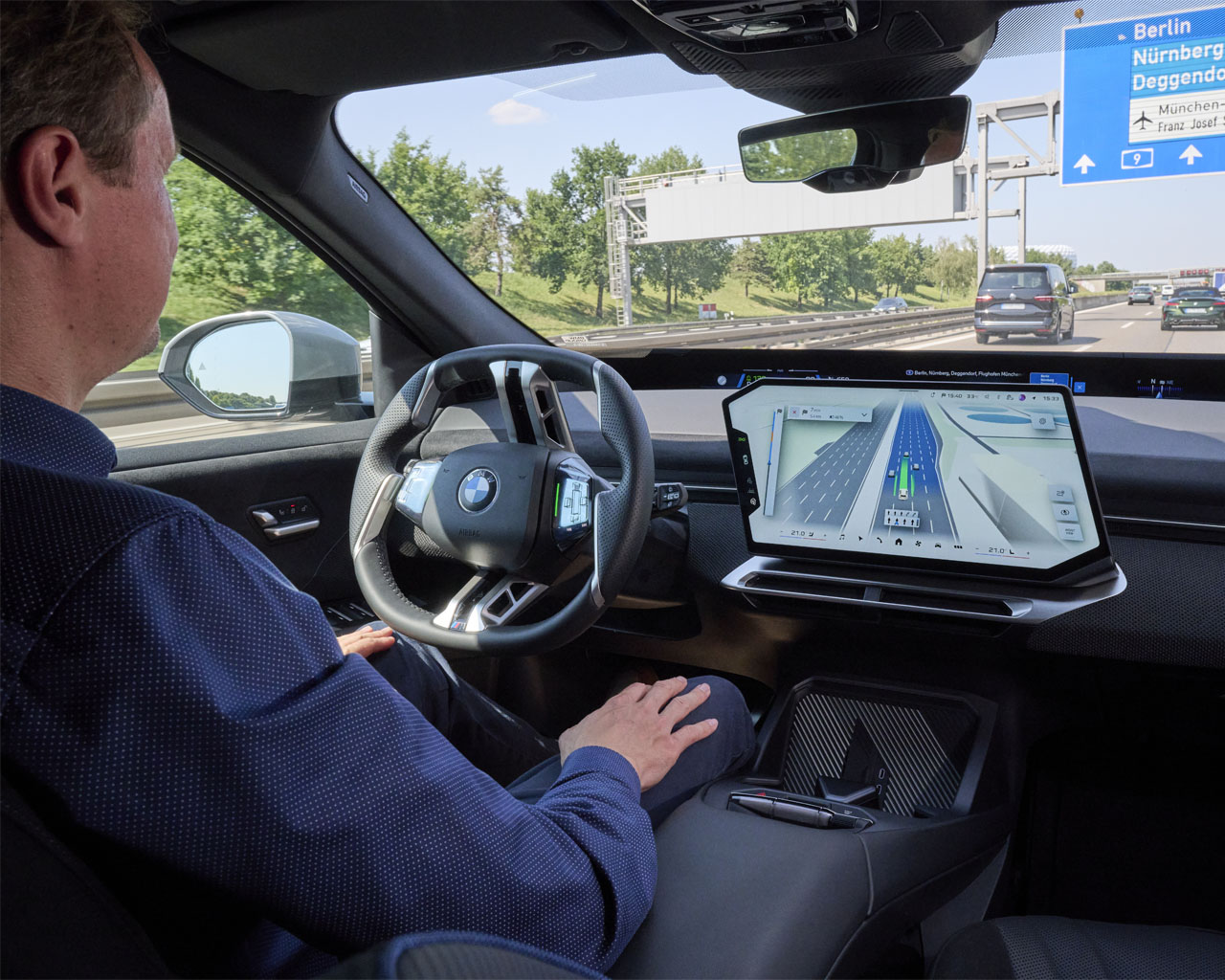
What the systems detect is made visible in an intuitive manner in BMW Panoramic iDrive. Depending on the situation, the intelligence behind BMW Operating System X shows the right information in the right place and at the right time. For example, warnings or visualizations of detected objects around the vehicle on the Central Display, in the Panoramic Vision, or in the 3D Head-Up Display. The sensors and the new high-performance computer are built into every vehicle equipped with the new driver assistance generation.


Where are these systems proven before they reach the road?
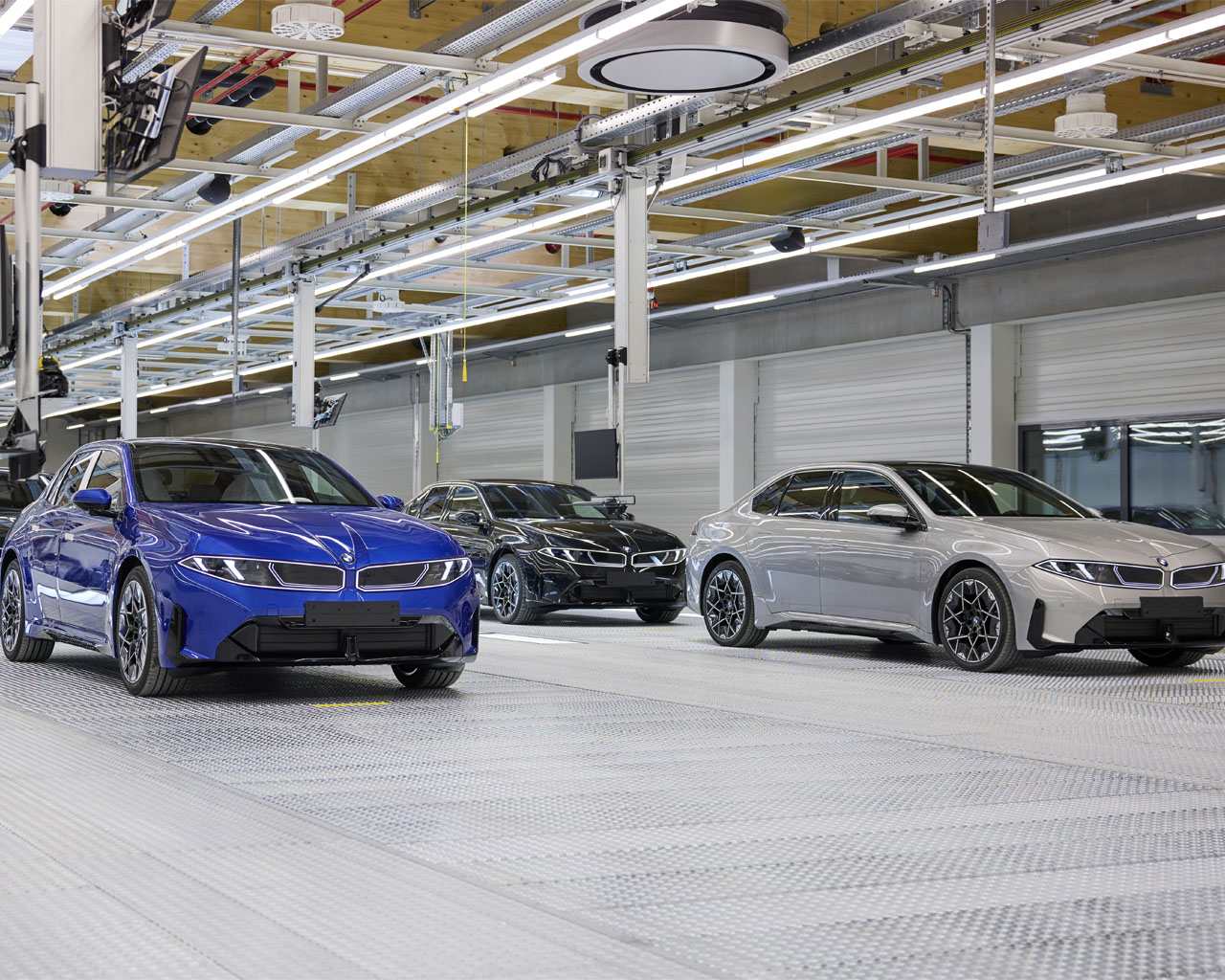
Active safety functions have to perform reliably across a great variety of real-world scenarios, which makes reproducible testing a decisive factor. The Future Mobility Development Center (FMDC) in Sokolov, Czech Republic, opened in 2023 and is the BMW Group’s largest proving ground worldwide. At around 600 hectares, it offers approximately 25 kilometers of test tracks and combines different road types, traffic scenarios, and even artificial weather conditions in a single facility.
Sokolov complements the validation chain rather than replacing it: virtual simulations and millions of test kilometers on public roads and other proving grounds around the world. What the facility adds is repeatability – a complex scenario can be recreated as precisely and as often as required before a function reaches the road.
The Future Mobility Development Center in Sokolov is much more than a proving ground for us. It is a central component of our development strategy enabling us to bring innovations in advanced driving assistance systems to series production quickly, safely and with a clear customer focus. This unique testing environment allows us to recreate real-world driving scenarios under highly demanding and reproducible conditions.
Summary
Where active safety goes from here.
In the new BMW model generation, starting with the BMW iX3 (2025), active safety functions come as standard more broadly than ever before. With BMW Symbiotic Drive, the technology reads the situation for helpful support instead of overruling the driver when it might feel inappropriate or even disturbing. The new sensor generation and the central high-performance computer provide the basis for the functions to be able to respond to critical situations. In addition, the Sokolov proving ground is an essential pillar in the BMW Group development strategy, where active safety functions are refined and validated before entering series production.
1 1.3 million BMW vehicles equipped with the previous generation of driver-assistance technology, whose owners have given their active consent to data collection.
2 According to the German Insurance Association (GDV), there were 392 "dooring" accidents in Berlin alone in 2024, accounting for just under 8 percent of all bicycle accidents in Berlin.
FAQ
Frequently asked questions about active safety at the BMW Group.
With its new generation of driver-assistance systems, BMW is offering even more active safety features as standard across all model lines. These systems support driving, parking, and exiting the vehicle safely. They provide reliable support when needed, while remaining discreet and non-intrusive in the background in everyday driving.
The new exit warning can detect approaching road users and actively delay the opening of the door if there is a risk of collision. This helps prevent dangerous “dooring” accidents, which occur when a car door is unexpectedly opened into the traffic lane. This is particularly dangerous for cyclists.
BMW Symbiotic Drive enables intuitive interaction between the driver and the driver assistance systems. All systems provide targeted support when a potential hazard is detected, while remaining quiet, intelligent companions in the background when no intervention is required.
The system understands the driver’s intentions through steering inputs and line of sight, enabling assistance functions to intervene only when necessary. As a result, functions such as the Lane Keeping Assistant only provide warnings or steering interventions when the vehicle detects an unintended lane departure or an imminent collision.
BMW Group tests real-world driving and traffic scenarios there under reproducible conditions. This supports the development and robust validation of new assistance systems.