







Petrol, diesel, plug-in hybrid and battery-electric, with hydrogen-powered to follow: the fifth-generation BMW X5 offers a choice of five different drive options in one and the same model. Technology openness made real, serving different mobility profiles, customer needs and market requirements worldwide.

Brands
30.06.2026
10 MIN
The new BMW X5: one model, five drives.
How the new BMW X5 combines everyday usability with the future.
When BMW first introduced the X5 in 1999, it marked the debut of a new vehicle concept: the SAV, or Sports Activity Vehicle. The SAV combines the presence of a large car with BMW’s signature driving dynamics, everyday practicality and long-distance comfort. The fifth generation now takes the concept one step further – with a new design, a stronger focus on sustainability and a drive portfolio that serves a variety of mobility profiles.
Customers can choose between petrol, diesel and plug-in hybrid versions, as well as the fully electric BMW iX5. New to the model family, the BMW iX5 will be joined at a later stage by the BMW iX5 Hydrogen. This makes the BMW Group’s technology-open approach tangible: the new BMW X5 family allows customers who charge regularly to cover many journeys electrically, while also meeting the needs of those who frequently travel longer distances and require extended range with short stops. For customers seeking locally emission-free driving, the same model family offers multiple options.
Production starts in August 2026 at BMW Group Plant Spartanburg, in South Carolina. The US plant is the BMW Group’s largest production facility worldwide and will also produce the new BMW iX5 from December 2026 – its first fully electric vehicle.

BMW iX5: More range, more options.
The BMW iX5 60 xDrive takes the BMW X5 into the fully electric future. Based on the sixth-generation BMW eDrive technology and an 800-volt architecture, it is the first model to feature the latest Gen6 cylindrical cells, each 120 mm high. By increasing the energy content of the high-voltage battery, the cells lay the foundation for the model’s provisional range of 645 to 845 kilometres (WLTP), depending on the equipment package. The provisional maximum charging rate is 460 kW. At suitable fast-charging stations, ten minutes of charging provides enough energy for up to 350 kilometres of range. Two electric motors deliver a combined system output of 425 kW/578 hp.
The plug-in hybrid X5 models combine petrol engines with an electric motor. The BMW X5 50e xDrive delivers a system output of 360 kW/489 hp and an electric range of up to 102 kilometres, according to provisional WLTP figures. The BMW X5 M60e xDrive offers 460 kW/612 hp and an electric range of up to 98 kilometres. Both can reach speeds of up to 140 km/h in purely electric mode.
The X5 family also continues to include petrol and diesel variants. The BMW X5 40 xDrive delivers 294 kW/400 hp, while the BMW X5 40d xDrive produces 230 kW/313 hp. In both models, 48-volt mild hybrid technology provides electric assistance to the combustion engine for more efficient pulling away and acceleration.
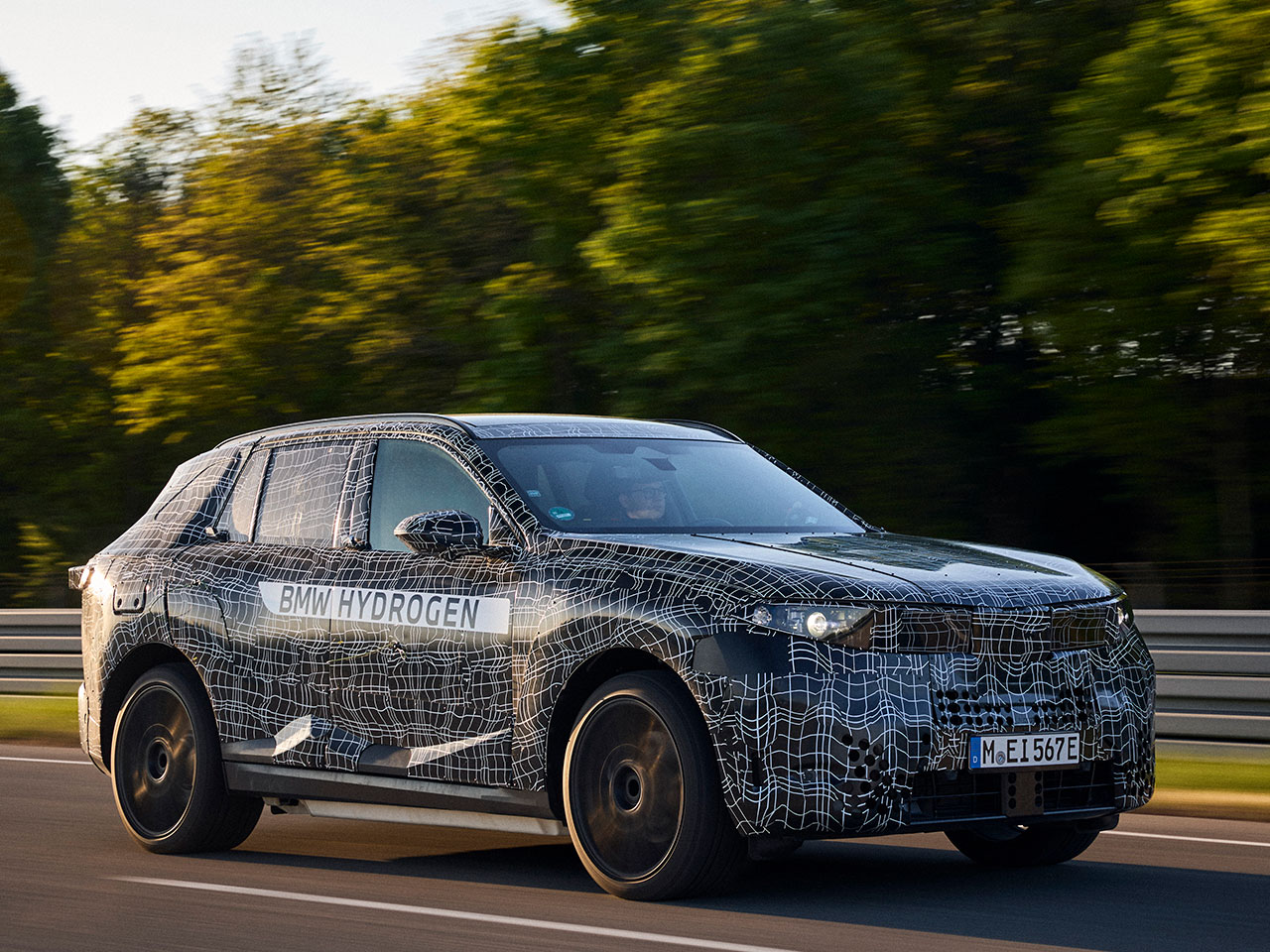
BMW iX5 Hydrogen: First fuel-cell series model by a global premium manufacturer.
With the BMW iX5 Hydrogen, the BMW Group is now the first global premium manufacturer to put a production fuel-cell vehicle on the road. The drive system features a third-generation fuel cell system co-developed with Toyota, as well as the new BMW Hydrogen Flat Storage and a state-of-the-art high-voltage battery. The BMW Hydrogen Flat Storage takes up the same package space as a Gen6 high-voltage battery, leaving cabin space uncompromised.

Clean exterior design creates a powerful presence.
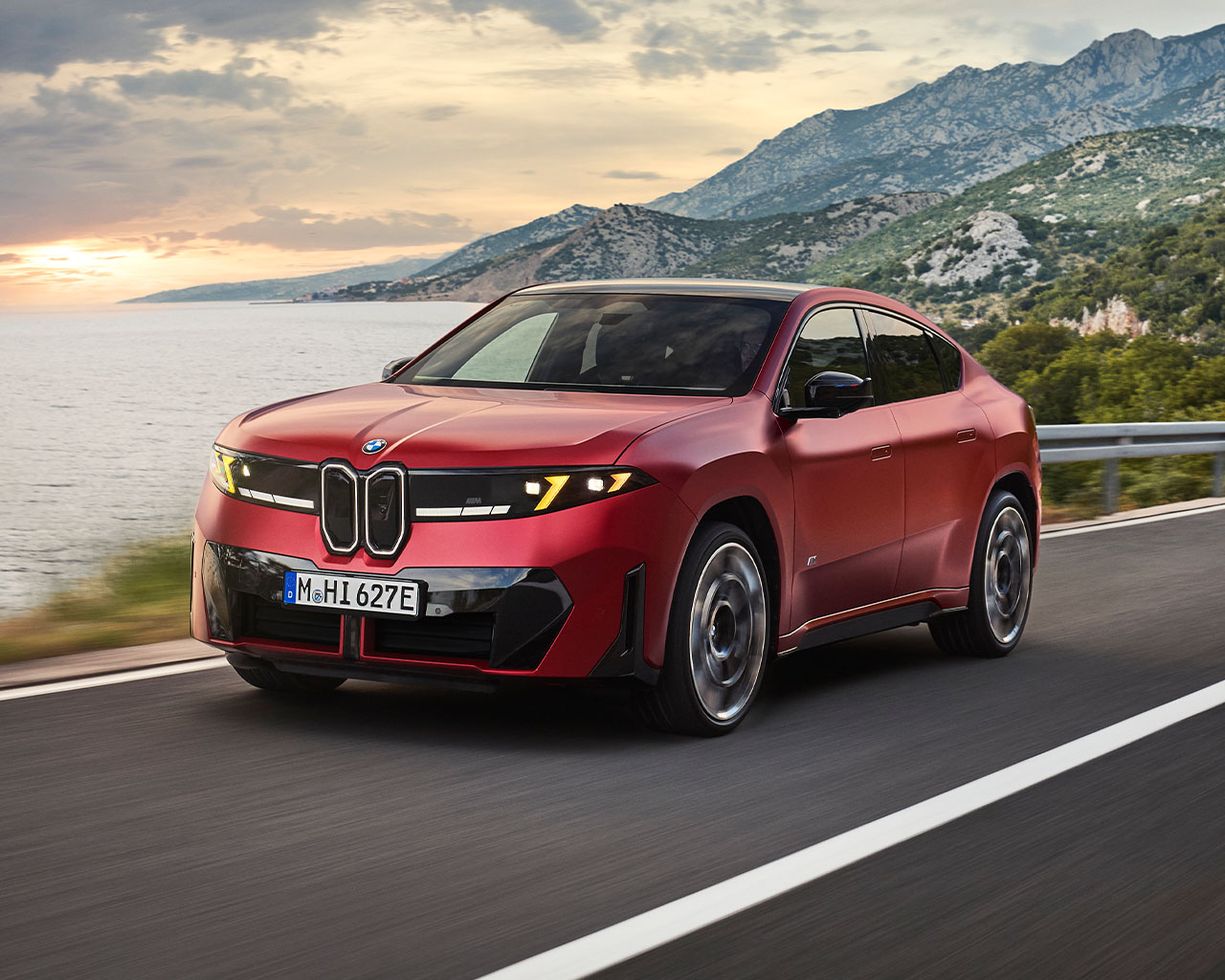
The new BMW X5 also ushers in a new chapter of BMW design, with a cleaner, more upright, monolithic exterior. The front-end is defined by a vertical BMW kidney grille and new “double-X” light icons, giving the BMW X5 an unmistakable presence day and night.
The side view is more strongly defined by smooth, uninterrupted surfaces, enabled primarily by the new BMW winglets: integrated into the B and C pillars, the black, high-gloss door handles allow for uninterrupted door surfaces and a calmer side view. This creates the impression of a vehicle formed from a single piece. Its iconic proportions remain, with muscular wheel arches, an elongated silhouette and a dynamic roofline.
The new model introduces a range of visual highlights, depending on the variant. The BMW X5 M60e xDrive, for example, features BMW M Yellow Lights in double-X style along with four tailpipes and 22-inch wheels. Eleven exterior colours are available in total, including four BMW Individual finishes, and the extensive wheel selection ranges from 21 to the newly introduced 23-inch variants.
Digital interior for a clearer focus.
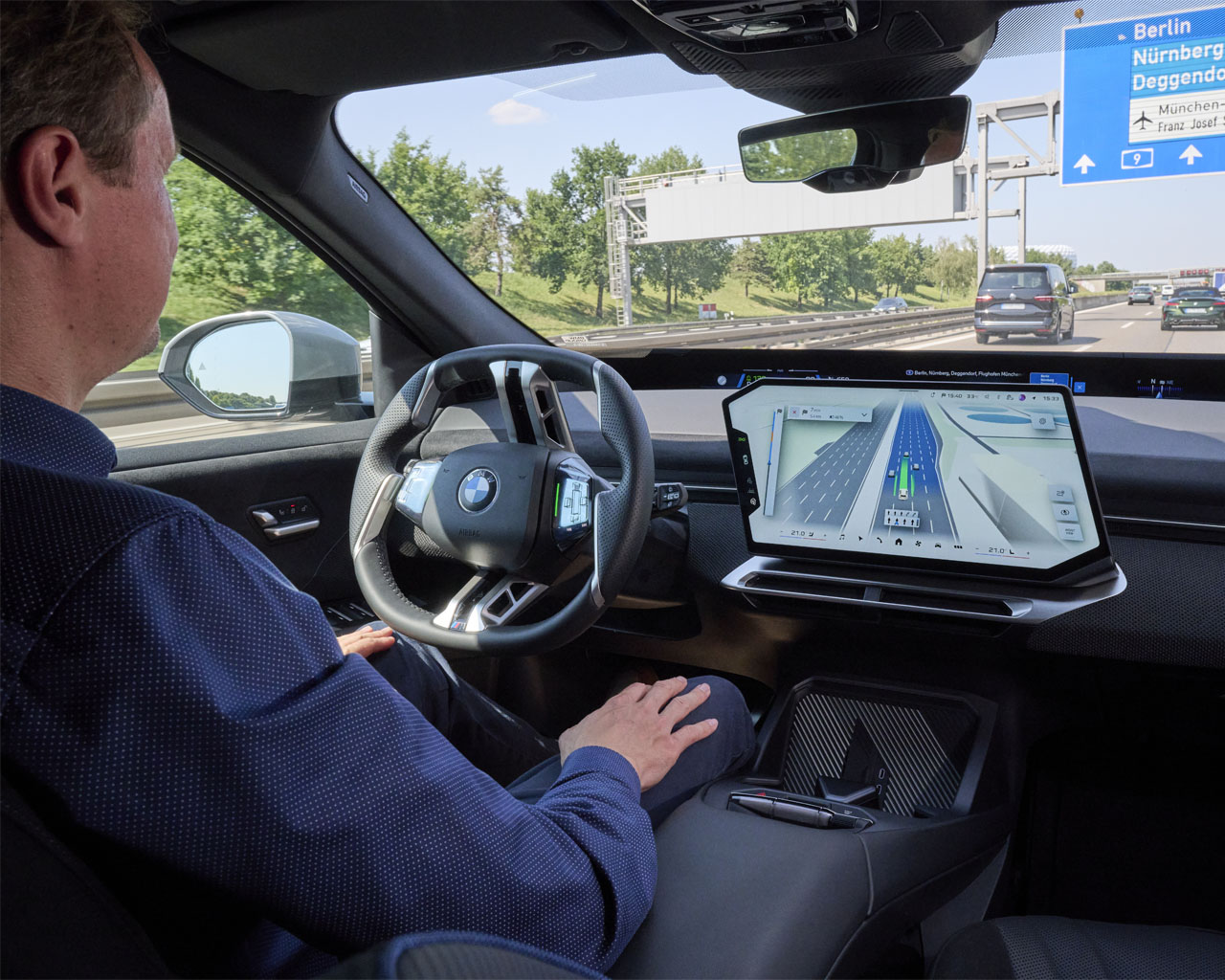
Markedly horizontal in its architecture, the interior features a wrap-around cockpit that encompasses both driver and front passenger, creating a sense of enclosure without restriction. Glass accents, the backlit ambient light strip and new materials contribute to the interior atmosphere.
Particularly striking is the use of slate – a first at BMW. Together with the glass accents and X stitching on the doors and dashboard, this natural material creates a luxurious interior ambience. Sports seats come as standard, while multifunction seats with ventilation and massage functions are available as an option.
The digital centrepiece of the car is the BMW Panoramic iDrive with BMW Operating System X. The BMW Panoramic Vision projects content across the full width of the lower windscreen, with key driving information positioned directly in the driver’s field of view. The system is complemented by the BMW 3D Head-Up Display, a 17.9-inch central display and the optional BMW Passenger Screen.
These displays are specifically designed to make information faster to absorb and the system more intuitive to use. Their digital concept follows a core BMW principle: placing the driver firmly at the centre of the experience. As a result, the interior becomes a dynamic space that adapts to the driving situation as well as to the occupants’ needs.
Sustainability in the BMW X5: holistic and across the product lifecycle.
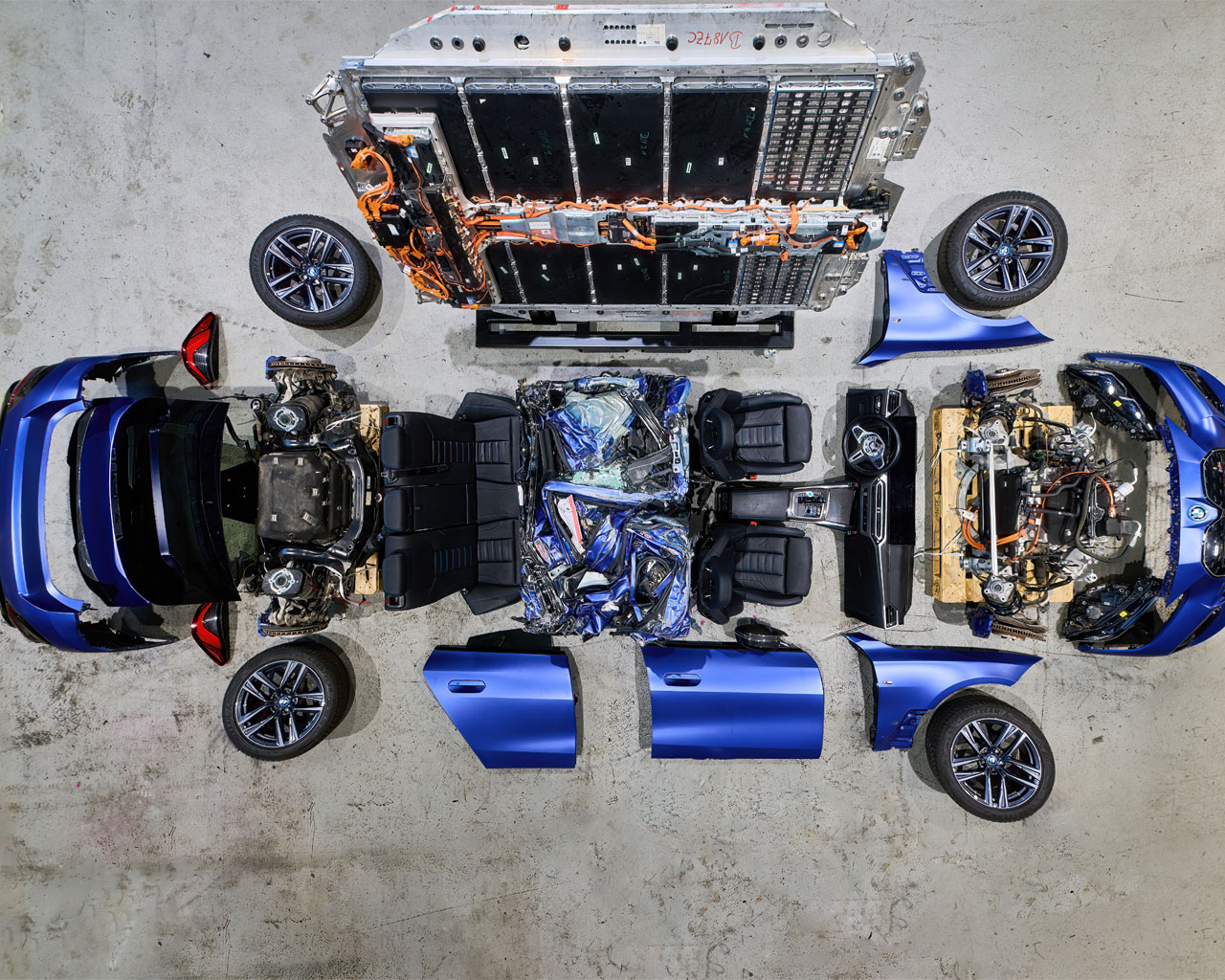
With the new BMW X5, the BMW Group takes a holistic approach to sustainability that extends across the vehicle lifecycle. From the supply chain to production and usage to end-of-life recycling, the focus is on decarbonisation, efficiency and the increased use of secondary materials. CO2e emissions associated with product development have fallen by around 40 percent1. The same commitment extends to manufacturing: at BMW Group Plant Spartanburg, energy sourced from third-party providers comes entirely from renewable sources. At the new high-voltage battery assembly facility in nearby Woodruff, normal operations are entirely fossil fuel-free.
The BMW Group has also made significant progress in terms of materials and components. Around half of the sheet steel used in the new BMW X5 is produced in electric arc furnaces, which operate with a high share of secondary raw materials and are powered by energy from renewable sources. The Gen6 battery cells in the BMW iX5 are also made in part from secondary cobalt, lithium and nickel. In addition, the production of anode and cathode materials is powered by renewable energy, as is cell production. As a result, CO2e emissions per watt-hour from production of Gen6 cells are now 28 percent lower than the emissions associated with the manufacture of the Gen5 cells in the BMW iX. The BMW iX5 60 xDrive now comprises about 940 kilograms of secondary materials accounting for about one third of the entire vehicle.2
Sustainability also plays a key role in everyday vehicle operations. BMW EfficientDynamics technologies continue to enhance efficiency during vehicle usage through measures such as aerodynamics, lightweight engineering, tyres with optimised roll resistance and energy management. In the fully electric BMW iX5, the Heart of Joy – the central high-performance unit controlling the drive and vehicle dynamics – recuperates more energy during deceleration.

How progress becomes tangible in the BMW X5.
Since 1999 the BMW X5 has combined driving dynamics, comfort and versatility in a single vehicle concept. Built in the US, its second generation was launched in 2006, followed in 2009 by the BMW X5 M, BMW M’s first SAV and its first model powered by a turbocharged engine. The third generation of the BMW X5 was launched in 2013, with improved aerodynamics and more efficient engines. In 2015 the BMW X5 xDrive40e iPerformance set an important milestone in electrification as the first series-produced plug-in hybrid BMW. In 2018 the fourth generation arrived. In 2021 the BMW Group unveiled the BMW iX5 Hydrogen, a pilot fleet of which has been undergoing testing worldwide since 2023.
Now in its fifth generation, the story of the BMW X5 continues. It remains the large-format vehicle for new ideas, demonstrating how key future topics at the BMW Group are coming together in a Sports Activity Vehicle: diverse powertrain options meet clear design and an even stronger focus on sustainability.
Five powertrain options, a crisper design, a digital interior and a more holistic approach to sustainability are the key aspects that come together in the new BMW X5, where progress means the power of choice – and technology that adapts to the realities of different lifestyles.

The new BMW X5 – FAQs.
The new BMW X5 is available with petrol and diesel engines, as a plug-in hybrid and as a battery-electric vehicle. For the first time, the BMW iX5 60 xDrive brings a fully electric variant to the family, to be followed at a later stage by the BMW iX5 Hydrogen with fuel cell technology.
The BMW iX5 60 xDrive is powered by sixth-generation BMW eDrive technology featuring an 800-volt architecture. For the first time, the BMW iX5 features the latest, Gen6 cylindrical battery cells, each 120 mm high. By increasing the energy content of the high-voltage battery, these cells form the foundation for the model’s provisional range of 645 to 845 kilometres (WLTP), depending on the equipment package.
The BMW iX5 Hydrogen will join the X5 family at a later date. It is powered by a third-generation fuel cell system co-developed by the BMW Group and Toyota. Its BMW Hydrogen Flat Storage unit occupies the same package space as a Gen6 high-voltage battery, ensuring that interior space is not compromised for vehicle occupants. The aim is to achieve a range of up to 750 kilometres. Binding fuel consumption figures according to the WLTP are not available as the vehicle is still in development.
Production of the new BMW X5 will start in August 2026 at BMW Group Plant Spartanburg in South Carolina. The US plant is the BMW Group’s largest production facility worldwide and will also produce the new BMW iX5 from December 2026 – its first fully electric vehicle.
1 The value shown is a preliminary forecast for the BMW X5 40d xDrive and BMW iX5 60 xDrive. The final figure will be published in the Vehicle Footprint (VFP) by SOP (start of production). The reported reduction is based on a comparison with industry-average values from an internationally recognised life cycle assessment (LCA) database.
2 The value shown is a preliminary forecast. The final figure will be published in the Vehicle Footprint (VFP) by SOP (start of production).