







Travelling long distances in an electric car requires one thing above all: a dependable plan. The BMW Group shows how intelligent route guidance, transparent charging costs and real-time data are making charging on the go simpler, so drivers can enjoy a more relaxing holiday in their electric BMW or MINI.

Innovation
10.08.2026
5 MIN
Relaxed electric vehicle holidays: How the BMW Group is making long-distance trips more predictable.
Before leaving: Smart planning – the right route with the right stops.
Before setting off, consider a typical scenario: the battery has 120 kilometres of range left, but your destination is 180 kilometres away. Where should you stop and charge – and how long will it take? What will it cost? And how dependable is your plan?
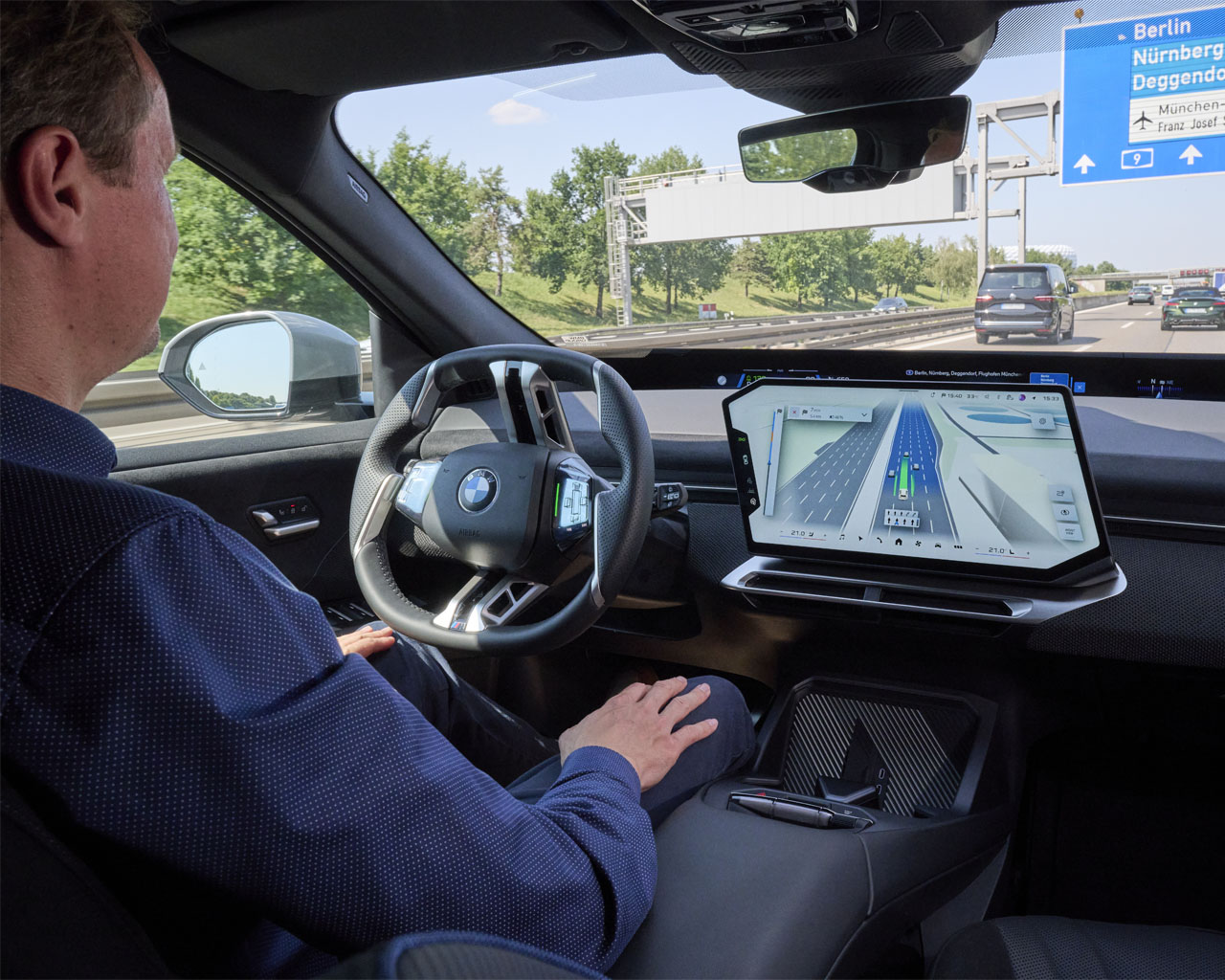
Digital services can answer these questions before you even leave home, creating a clear travel plan for you to follow. For long-distance journeys, automatic route and charging planning is one of the most valuable features in an electric vehicle. Drivers simply enter their destination and leave BMW Maps or MINI Navigation to work out not just the fastest route, but the charging stops along the way too.
Rather than just locating the nearest available charger, the system plans charging stops to make the journey as efficient as possible. On arrival at the destination – or charging station – drivers can specify their preferred charge-level in five-percent increments and even request their preferred energy provider. The result is a route that is optimised rather than compromised.
What’s particularly helpful is that drivers can prepare their journeys before they even get into the vehicle. With the My BMW and MINI apps, they can plan routes, locate charging stations and adjust their plans as desired – all from the comfort of home. The apps provide useful information, such as charging capacity, estimated charging times and, where available, charging costs. This way, drivers can virtually map out the entire trip in advance, before they do it for real.

Cost transparency before every stop.
At fuel stations, prices are visible right away. Public charging, however, has traditionally involved a little more uncertainty. Depending on the charging point, provider and selected tariff, costs often vary. Sometimes even a single charging station can offer different pricing options, adding an element of uncertainty, especially to long-distance journeys.
With the My BMW and MINI apps, drivers now have a much greater level of transparency. When searching for a suitable charging station, they receive a comprehensive overview of all the available charging points, charging capacities and applicable tariffs. If desired, they can even search for stations from providers other than BMW Charging[MG2.1], with all the relevant pricing information shown clearly. The same transparency is also available directly in vehicles with BMW Operating System 8.5 and in the latest MINIs.
Particularly helpful is the integration of tariffs saved in the driver’s personal Charging Wallet. Where available, drivers can also view the latest ad hoc prices from charging operators, making it easier to know in advance which charging point option best matches their route, charging capacity and tariff. The My BMW and MINI apps offer greater control and transparency, reducing unexpected costs along the way.
Adaptable routing for changes of plan.
On longer journeys especially, reliability is key. So the closer the driver gets to the charging station in the route plan, the more frequently the navigation system checks its availability. If chargers are unavailable, for example because they are occupied or out of service, the system automatically calculates a new route in time, with an alternative charging option. This happens seamlessly in the background, usually without the driver even noticing.
Cost control while charging.
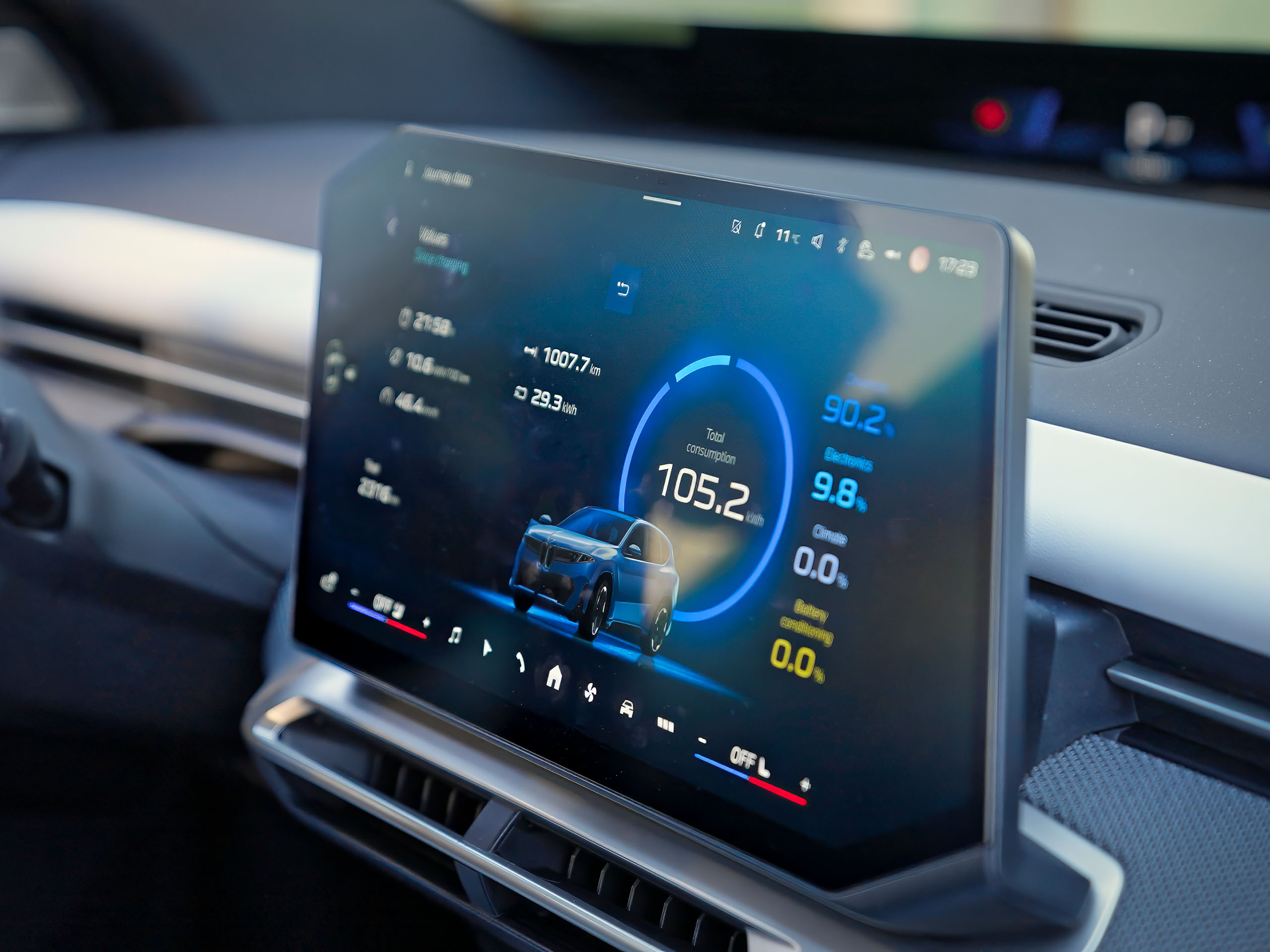
The BMW Group also brings greater transparency to the charging process itself. A new feature in both the vehicle and the app shows how much energy has been delivered so far along with the associated costs. Information is displayed in much the same way as on a fuel pump, with running totals for the energy delivered and the cost throughout the charging session. Instead of having to rely on abstract charging data, drivers now have a clear overview of charging information while they are out on the road.
This feature is available in BMW Neue Klasse vehicles equipped with BMW Operating System X.
BMW Maps and MINI Navigation pre-condition the battery for faster charging.
Here’s an important detail: if BMW Maps or MINI Navigation has included a direct current (DC) charger in the route plan, the vehicle automatically pre-conditions its high-voltage battery on the approach. This brings the battery to the optimum temperature for fast charging, enabling it to absorb energy as efficiently as possible. Pre-conditioning not only shortens charging times; it can also help preserve battery performance over the longer term. Pre-conditioning can be activated manually, if desired.

Background: How it all works. Millions of cars deliver better data.
Successful intelligent planning depends heavily on reliable data. And that’s a key advantage of the BMW Group: with millions of vehicles gathering real-time information every day, the BMW Group fleet generates a wealth of data on the reliability and capacity of charging stations, as well as potential issues.
Route planning is powered by a wide range of charging data, including insights from completed charging sessions, charging capacities and charger performance. It also integrates live data from charging station operators, including reports of faulty or unavailable charging points, maintenance work and network congestion.
All of this contributes to greater peace of mind for drivers, as the system prioritises stations that have proven reliable in everyday use and fit seamlessly into the route. Rather than relying on theoretical calculations, drivers receive the best options based on real-world performance.
3.1 million chargers worldwide, 1.1 million in Europe.
The BMW Group Charging network currently comprises around 3.1 million charging points worldwide. In Europe alone, BMW and MINI drivers can access around 1.1 million, including approximately 200,000 in Germany.
Why does this matter? Because the denser the charging network, the easier route planning becomes. As the number of charging points continues to grow, the probability of finding a convenient option increases. Moreover, with a larger pool of charging locations to choose from, drivers can benefit from more flexible routing and enjoy a more reassuring travel experience.
An additional benefit is the Preferred Partner Network, which offers discounted charging with selected premium charging operators for customers using the Active Tariff. Around 21 percent of BMW Group Charging points in Europe are already part of this network.
Digital planning for peace of mind.
The BMW Group’s approach is clear: electromobility should be not only locally emission-free, but also convenient, transparent and practical, including on long journeys. Together, intelligent route planning, clear pricing, real-time data and charging-stop optimisation are already making electric travel more accessible and predictable.
The more convenient electromobility becomes, the more naturally drivers will embrace it, as uncertainty is reduced, costs easier to manage and many decisions are handled automatically during route planning. So rather than wondering if a journey is possible in an electric vehicle, drivers can now set off with confidence, knowing that everything is already planned.

FAQ: Electric travel with BMW Group vehicles.
Automatic route and charging planning is primarily available in newer models. However, the My BMW and MINI apps offer information on charging stations, charging speeds and tariffs across BMW Group vehicles. To find out exactly which features your vehicle supports, please check the app or contact your BMW or MINI dealer.
That depends on several factors, such as battery size, the vehicle’s current state of charge and the charging capacity available at the charging station. A BMW iX3 can typically be charged from 10 to 80 percent in about 21 minutes, providing enough energy for the next stage of the trip. On long journeys, the quickest option is to charge to around 80 percent on multiple shorter stops rather than 100 percent on one longer one. This is because charging speeds naturally decrease at higher states of charge. BMW Maps will indicate roughly how long the next charging stop is expected to take.
Yes. Throughout Europe, the My BMW app displays all the tariffs that are saved in your Charging Wallet, provided they are supported by the charging station. Drivers can also filter searches to show only the charging stations that offer their saved tariffs.
Yes. The navigation system immediately recalculates the new route, including any charging stops along the way, based on the vehicle’s current range, the distance to the new destination and the chargers available en route. The route updates in moments, with drivers barely noticing as most adjustments are made in the background.
Customers in Europe currently have access to around 1.1 million BMW Group Charging points, approximately 200,000 of them in Germany[MG13.1]. The network continues to grow.
The Preferred Partner Network offers customers with the Active Tariff access to further discounted charging rates from selected premium charging operators. In Europe around 21 percent of BMW Group Charging stations are already part of the network. If you have the Active Tarif, you can filter your search in the app to show only stations in the Preferred Partner Network.
Yes. When BMW Maps or MINI Navigation plan a stop at a DC charger, the high-voltage battery is automatically pre-conditioned on the approach to the charging station. This optimises charging speed and helps preserve battery performance over the longer term. Pre-conditioning can also be activated manually.
At public charging stations, prices may vary depending on the provider, tariff and charging point. Sometimes even a single charger can offer different prices. Greater transparency and advance information reduce this uncertainty, especially on longer journeys.