






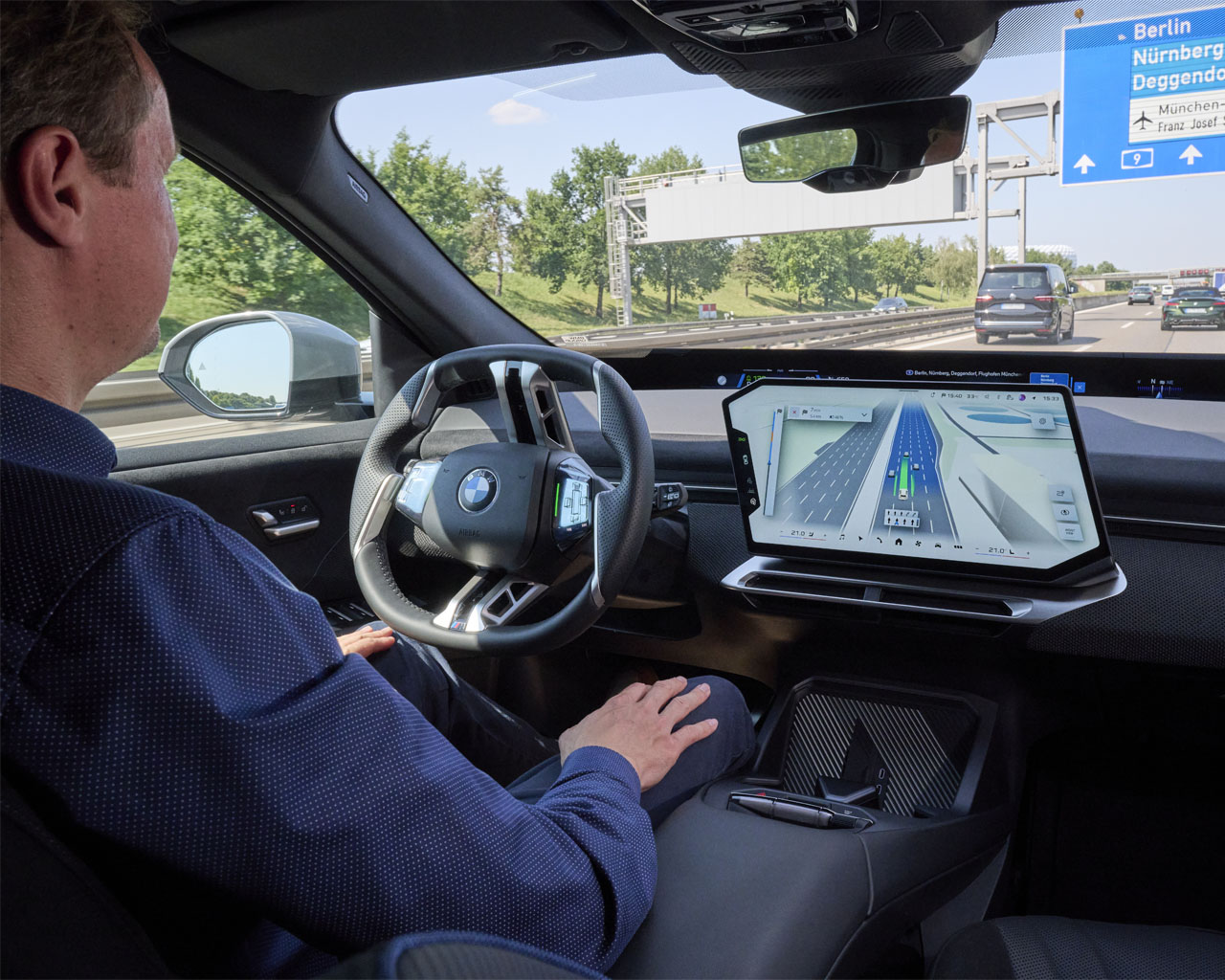
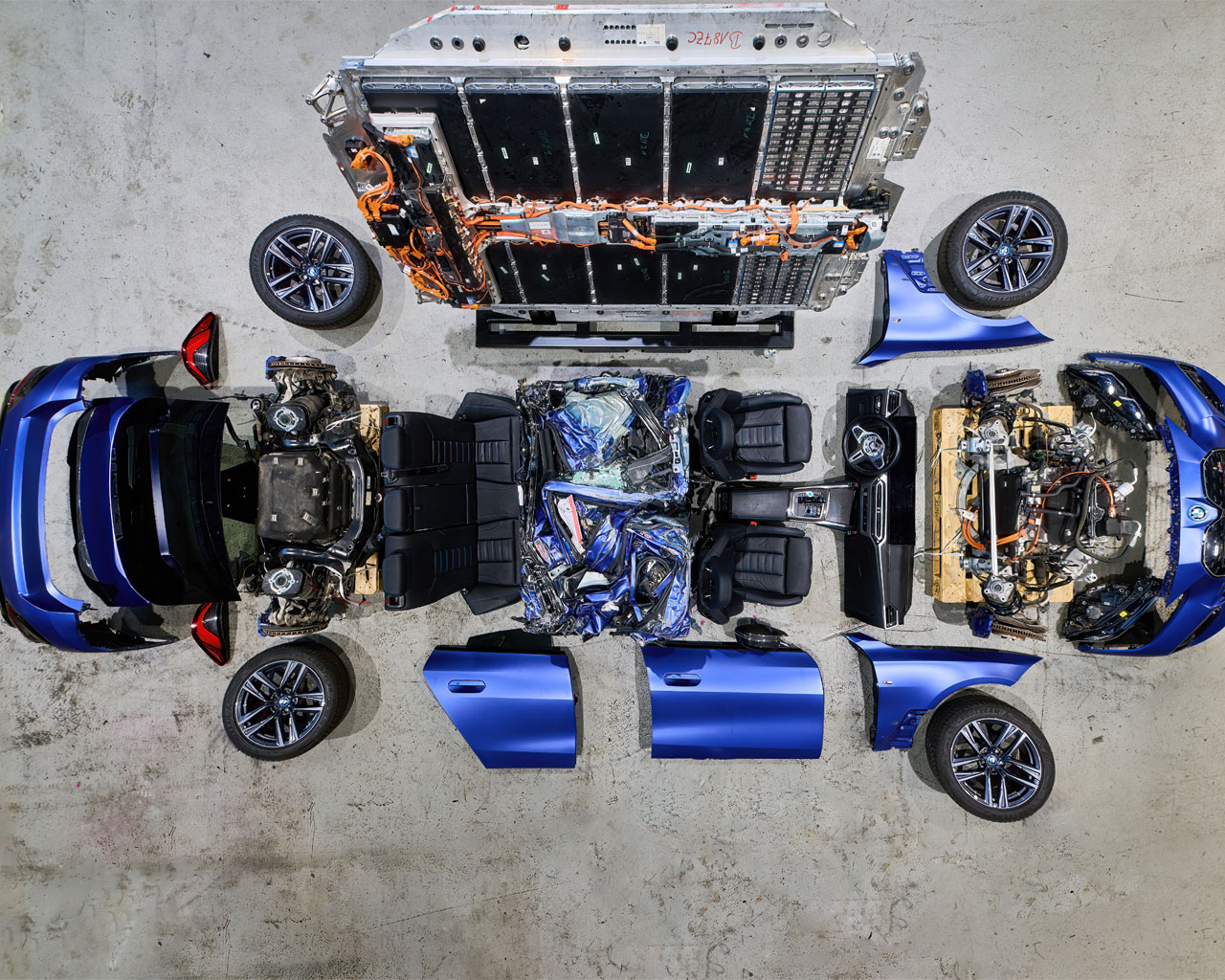
Stable earnings power and active cost management were the BMW Group’s key success factors in 2025. At the Annual Conference on 12 March 2026 in Munich, the company reported solid financial results. With the new BMW iX3 and BMW i3 models and a significantly expanding range of battery-electric vehicles by the end of 2026, the BMW Group is also taking the next major step in electric mobility. Chairman of the Board of Management Oliver Zipse sees the company as being strategically well positioned for the future.

Company
12.03.2026
6 MIN
Stable Group earnings thanks to consistent strategy: BMW Group on track.
Strategic foresight, reliable performance.
Consistency and resilience: The BMW Group maintained its course in 2025, despite substantial headwinds. Thanks to its attractive model line-up across all drive technologies, its growing and globally balanced business model and disciplined cost management, the BMW Group once again achieved Group earnings before tax of over € 10 billion. Despite significant additional tariff headwinds, the company reported a stable Group EBT margin of 7.7% (2024: 7.7%). As in the previous year, Group net profit totalled more than € 7 billion, laying the foundation for a proposed dividend payment in line with the 2024 figure.
“Strategic vision, strong operating performance and high reliability have always been hallmarks of the BMW Group. We set our course for the company’s future success early on, relying on three strong pillars: our technology-neutral approach, our extensive global footprint and our inspiring brands and products,” said Oliver Zipse, Chairman of the Board of Management of BMW AG. “Over the past years, we have adopted the right strategic positioning. We are benefiting from that today: In a challenging environment, we do not need to change direction but can maintain our course and continue implementing our strategy systematically.”
Technology-neutral approach as key success factor in global competition.
The diversity of its product range remains a key success factor for the BMW Group: With a broad drive train portfolio spanning internal combustion engines, plug-in hybrids, battery-electric drive trains and, from 2028, hydrogen fuel cells, the company is laying the foundation to meet globally diverse requirements and customer needs, both today and in the future.
At the same time, this approach is also key to effective CO₂ reduction: In 2025, the company slightly overfulfilled the ambitious targets of the European Union (EU 27+2), with fleet emissions of 90 grams per kilometre – without relying on instruments such as pooling or temporal staggering. This underlines once again how a technology-neutral approach and climate protection go hand in hand at the BMW Group.
Battery-electric vehicles (BEVs) remain growth driver for BMW Group.
In financial year 2025, the BMW Group increased its BEV sales worldwide to 442,056 units (+3.6%), representing 17.9% of its total sales. This means that one in six BMW Group vehicles sold was fully electric. At MINI, the percentage was even higher, with one in three vehicles already fully electric.
Plug-in hybrids (PHEVs) also remain an essential component of the technology-neutral approach and the electrification of the model range: In total, the BMW Group delivered 642,071 electrified vehicles, including plug-in hybrids (PHEVs and BEVs) in 2025, meaning that one in four vehicles was electrified. In Europe, the proportion was even higher, where 40 percent of BMW Group vehicles were either fully electric or plug-in hybrids.
2026 electrification milestone: Two million BEVs delivered to customers.
In 2025, the BMW Group reached two major electrification milestones since the debut of the BMW i3 and BMW i8 in 2013: In June, the 1.5-millionth fully-electric vehicle was handed over to its new owner. This was followed in August by the three-millionth electrified vehicle. The next milestone will come this year, with the two-millionth fully-electric vehicle.
“With our wide range of electrified vehicles, we have secured ourselves a strong competitive position. We remain true to our role as pioneers and continue to expand our BEV line-up: By the end of this year, we will offer our customers 20 fully-electric cars,” said Zipse.
Strong brands and attractive product line-up with diverse drive train portfolio.
With 2,463,681 premium vehicles delivered to customers in financial year 2025, BMW Group sales reached the same high level as in 2024 (2024: 2,450,854 units; +0.5%). Thanks to its globally balanced footprint, the company was able to offset its decline in sales in China (-12.5%) with gains in other regions, reporting solid growth in Europe (+7.3%) and the Americas (+5.6%).
The main growth drivers included the BMW 5 Series, with sales up by more than a quarter, and the compact BMW X2, which rose by 33%. For the 14th consecutive year, BMW M GmbH deliveries reached a new all-time sales high of 213,449 units (2024: 206,587 units; +3.3%), with the BMW M2 Coupé and the M3 family as the best-selling models. For the first time, one in ten BMWs delivered was a BMW M model. On the fully-electric side, the BMW i5, BMW iX2 and BMW iX1 models all saw significant growth.
In 2025, the top-selling model in the rapidly growing MINI family, with a total of 288,278 deliveries (2024: 244,925 units; +17.7%), was the MINI Countryman. The MINI Aceman, the new MINI Convertible and the fully-electric MINI Cooper models led the MINI brand to significant growth. With more than 105,000 BEVs delivered to customers, fully-electric vehicles accounted for over 36% of sales.
The Rolls-Royce luxury brand matched the level of the previous year, with 5,664 deliveries (2024: 5,712 units; -0.8%). The Rolls-Royce Cullinan and fully-electric Spectre models were the most in demand.
BMW Group meets 2025 targets.
As projected, the BMW Group achieved its business objectives for 2025. Thanks to its attractive line-up, the BMW Group reported revenues of € 133,453 million for the full year (2024: € 142,380 million; -6.3%; adjusted for currency translation effects: -3.9%). This reflects the intense competition in the automotive sector, particularly in China. Furthermore, negative currency translation effects, primarily from the US dollar, Korean won and Chinese renminbi, also had an impact.
Lower R&D spending and capital expenditure as planned.
As previously announced, the BMW Group’s investments in the future have declined from their peak: Research and development spending totalled € 8,319 million in 2025 – a moderate decrease from the previous year (2024: € 9,078 million; -8.4%). Expenditure for research and development is largely focused on digitalisation and electrification of the vehicle fleet across all model series. It also includes spending for the development of Neue Klasse models, such as the BMW iX3 and the successor models to the BMW X5 and BMW 7 Series. The R&D ratio for the full year decreased to 6.2% (2024: 6.4%).
As planned, capital expenditure for the full year also declined significantly to € 7,237 million (2024: € 9,056 million; -20.1%), with a capex ratio of 5.4%. The BMW Group was also able to reduce sales and administrative expenses in line with forecasts, lowering costs by 6.1% to € 10,606 million (2024: € 11,296 million).
“Our disciplined active cost management strengthened our performance in 2025: Compared with the previous year, as promised, we were able to streamline our cost structures in line with planning, by reducing R&D expenditure, sales and administrative expenses as well as manufacturing and material costs. A total reduction in expenses of € 2.5 billion has benefited our profitability. We will continue systematically lowering costs this year, in line with our planning," said Walter Mertl, member of the Board of Management responsible for Finance.
Group EBT margin in line with previous year.
In 2025, despite significant tariff headwinds, the BMW Group once again achieved Group earnings before tax (EBT) of more than € 10 billion (€ 10,236 million; 2024: € 10,971 million; -6.7%). The Group EBT margin of 7.7% (2024: 7.7%) was on a par with the previous year. Group net profit once again exceeded € 7 billion, at € 7,451 million (2024: € 7,678 million; -3.0%).
Neue Klasse ramp-up begins in 2026.
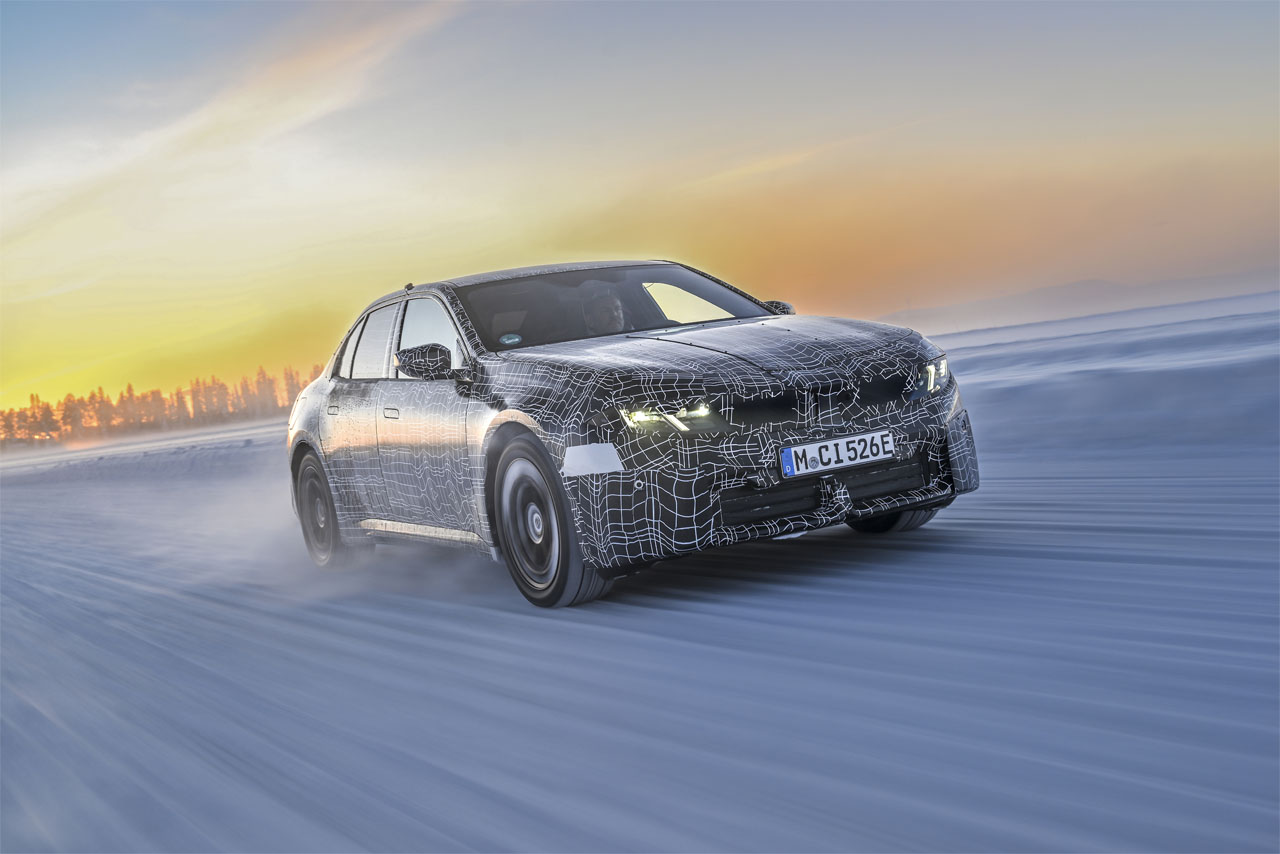
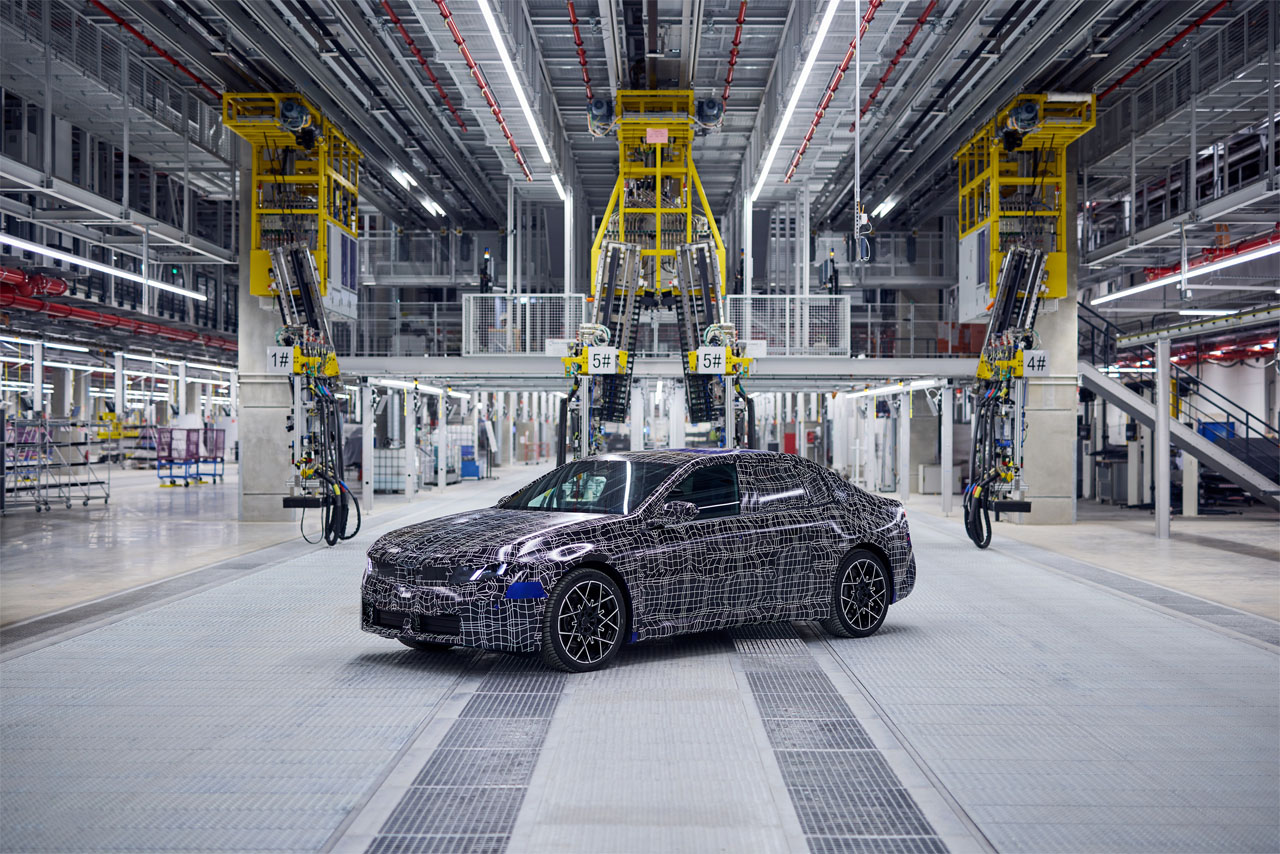
During the current financial year, the ramp-up of the Neue Klasse will gain speed, starting out with two models at the heart of the BMW brand: Since its world premiere at the International Motor Show (IAA) in September 2025, the fully-electric BMW iX3 has seen extremely strong demand – among pre-ordered fully-electric BMW vehicles in Europe, one in three orders is for a BMW iX3. Due to the high demand, the plant in Debrecen, Hungary, is already operating in two shifts. The second Neue Klasse model – the fully-electric BMW i3– will celebrate its design premiere next week in Munich.
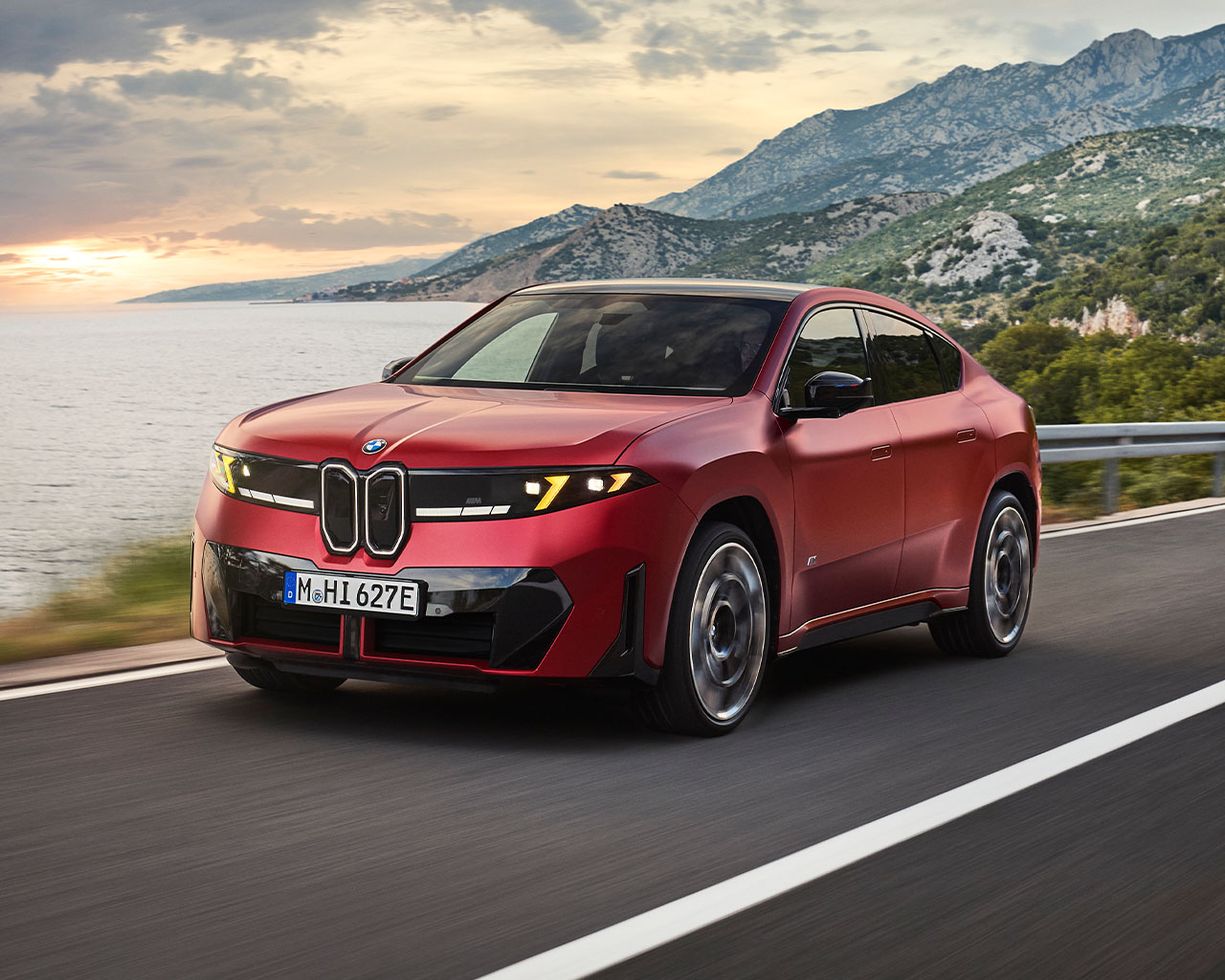
“With the successful launch of the Neue Klasse, we demonstrated in 2025 that we are leading the BMW brand into the future, with new technology clusters and a fresh design language. The extraordinarily high demand for the first model, the BMW iX3, proves that pioneering spirit, innovation and courage deliver results,” said Zipse. “We will maintain the high pace of our innovation rollout as we introduce the technologies of the Neue Klasse across our entire portfolio: Between now and 2027, we will present more than 40 new or updated models. These will also include the BMW 3 Series and BMW X5: two all-new models in two of our key segments, offered with all drive train variants. In this way, we are ushering in a new era of technology neutrality at the BMW Group.”
Forecast for financial year 2026.
The BMW Group anticipates the following developments during financial year 2026: Given the current economic outlook for 2026, the global automotive markets are expected to develop in a stable manner. The company anticipates growth potential overall for Europe and the USA. Based on the average sales volume of recent months, sales in China are expected to remain approximately at the previous year's level.
Globally, the company forecasts that deliveries will be on a par with the previous year and that fully-electric vehicles will account for the same share of sales as last year. For financial year 2026, the BMW Group assumes that headwinds from higher tariffs will further impact the EBIT margin in the Automotive Segment by about 1.25 percentage points. Mitigation measures have already been considered.