






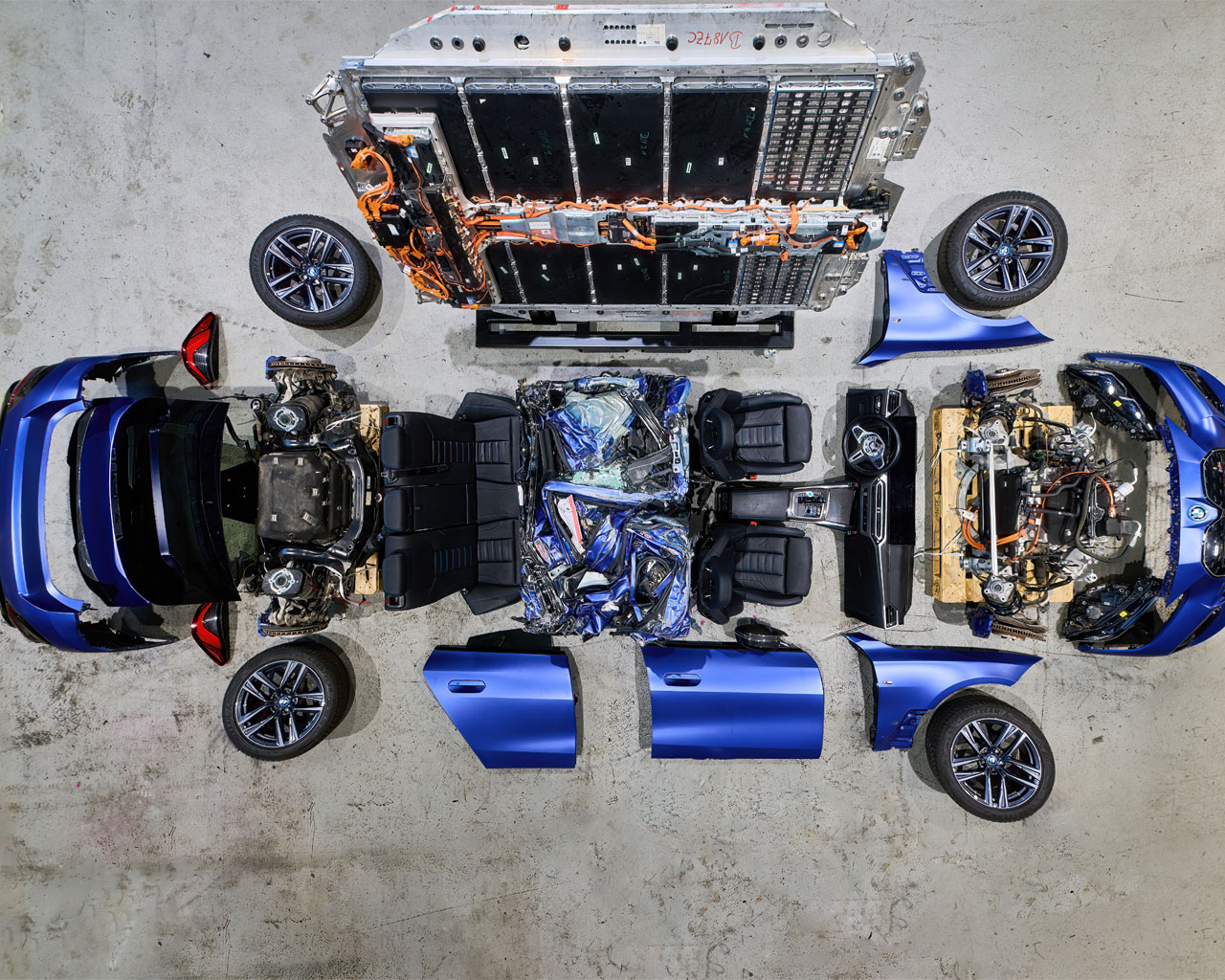

Less trial and error, earlier clarity on what works: at the BMW Group’s Battery Cell Competence Centre (BCCC), AI models are being piloted that could save significant amounts of time, money and raw materials in battery cell production. We offer a glimpse of how one technology is turning insights into practice faster, accelerating progress in battery cell production.
Innovation
08.05.2026
5 MIN
Advances in battery cell production: How the BMW Group uses AI.
Finding out faster what works.
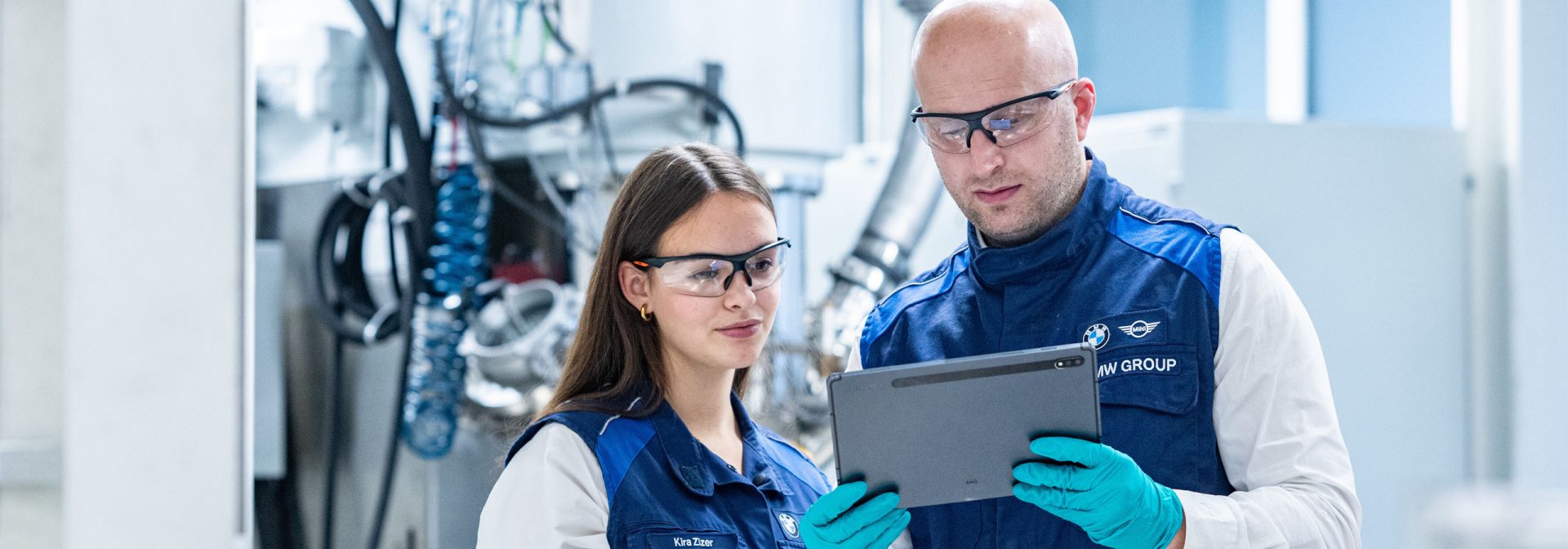
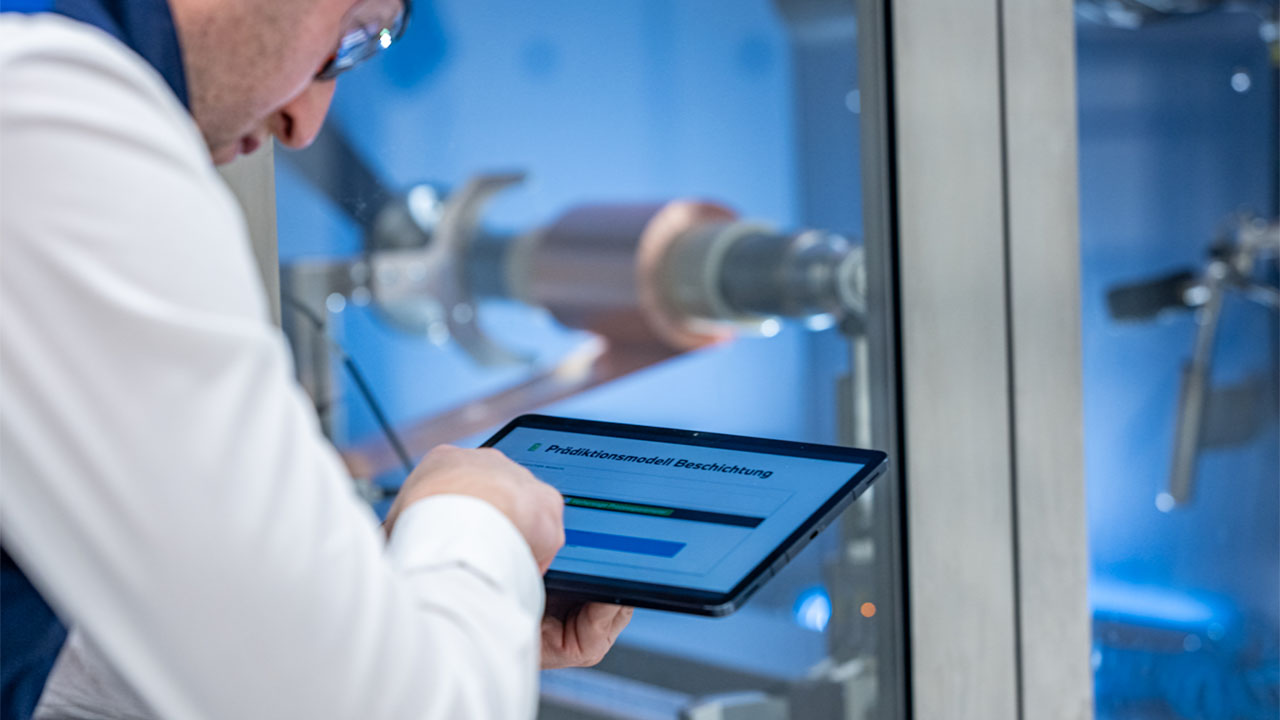
Developing battery cells can feel like a marathon of test runs. Every change to the process – no matter how small – must prove its worth. This not only takes time but also ties up equipment and consumes valuable resources. At the BMW Group, however, artificial intelligence is now entering the equation, as the BCCC in Munich trials AI models designed to make battery production faster, more precise and more efficient.
The models concerned use existing real-time and test data from production to predict process parameters and subsequent battery cell performance. As with an experienced chef, successfully managing ingredients, temperature and timing is key to achieving good results faster. This learning curve is now being transferred to battery cell production – with the help of AI.
More insights, less testing.
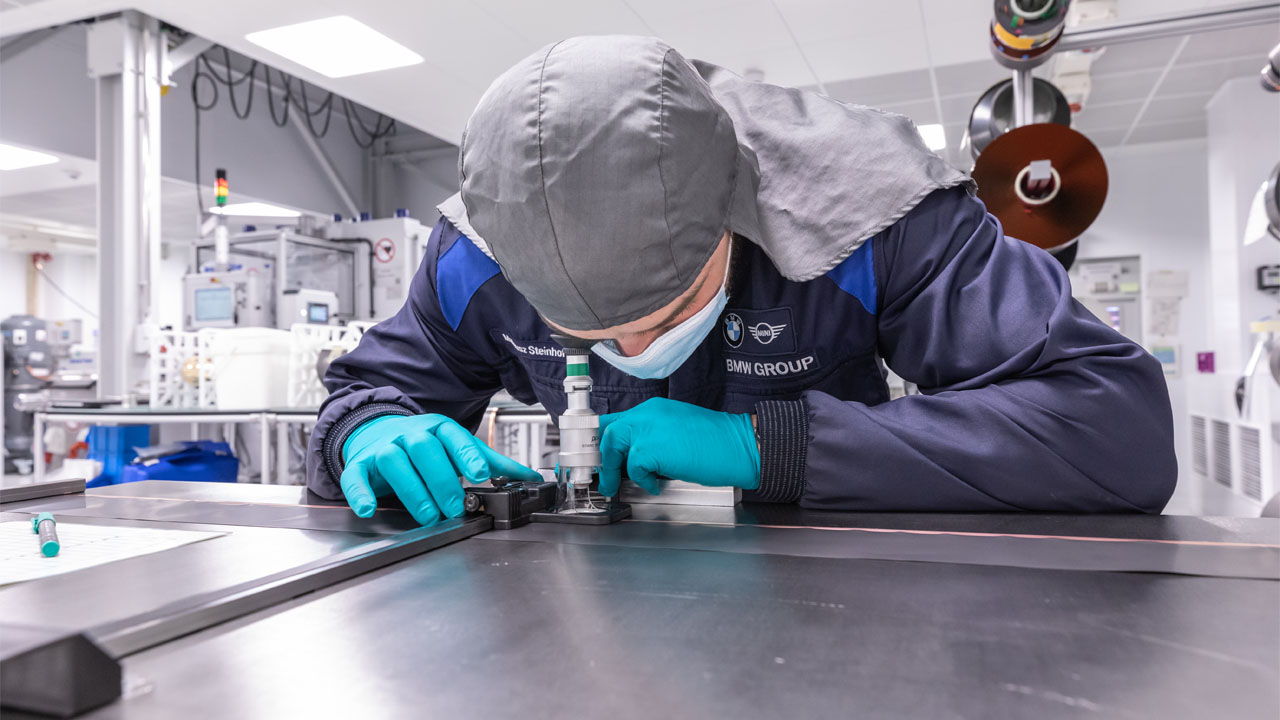
Developing battery cells inevitably involves a certain number of test runs, as these reveal how cell chemistry, production processes and quality can be improved. And that’s where the newly developed AI models come in: they are reducing the time and material required for the individual process steps by more than 50 percent – which not only saves resources and costs but also speeds up progress in the development of future battery cells.
Above all, AI helps make processes more robust. The models quickly identify which parameters lead to which outcomes, enabling more targeted quality assurance. As a result, battery cell development becomes less a matter of trial and error and more a data-supported process.
Shorter storage times thanks to fast AI.
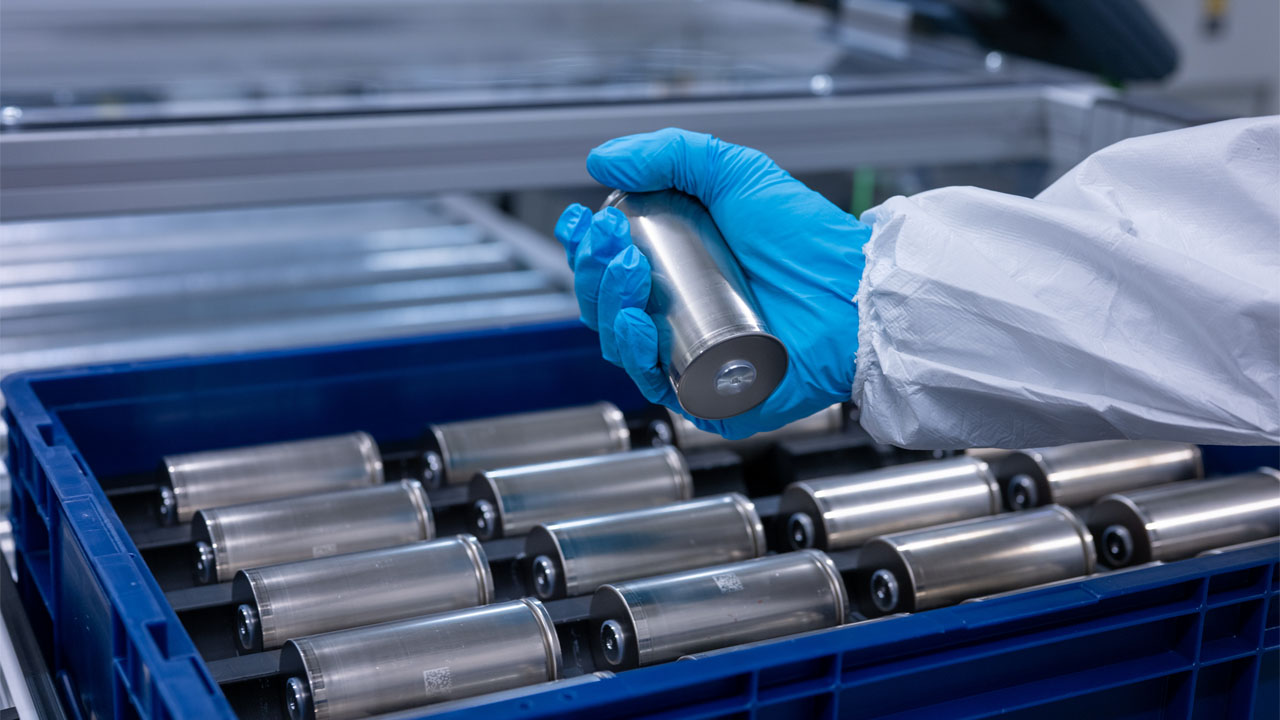
Particularly exciting is the fact that the prediction models do more than shorten test runs: they also have the potential to fundamentally transform one of the stages in the production process. Until now, battery cells had to be stored at a specific temperature after initial charging, before further processing could take place. This storage period – known as “quarantine” – costs both time and storage capacity.
In the future, however, AI systems may be able to fully analyse battery cells at a much earlier stage. If successful, this could make quarantine largely obsolete – marking a significant step forward in production.
How data support better decisions.
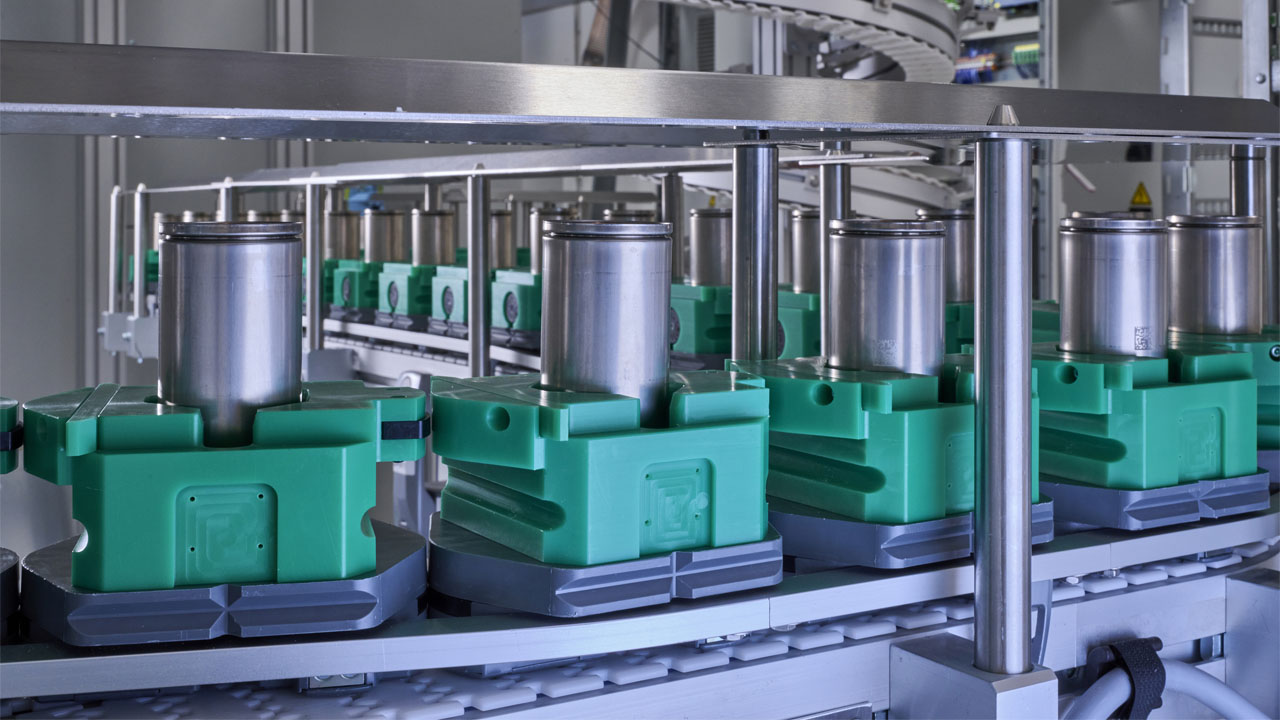
At the heart of this AI-driven approach lies a very clear idea: a deeper understanding of production data enables more precise control of production. Patterns within the data reveal how specific settings affect performance, quality and costs, allowing predictions to support better-informed decisions.
This is particularly relevant in battery cell production, where even the tiniest deviation from defined standards can ultimately impact a cell’s performance, efficiency and stability.
From pilot to practice.
The BMW Group is already thinking beyond pilot operations. “We are working on scaling the newly developed AI models from the prototype environment,” explains Christian Siedelhofer, Head of Technology Development Lithium-Ion Battery Cells at the BMW Group. Another option, he adds, is to enable cell producers to apply the process themselves. “We are also examining to what extent these models are suitable for additional use cases within our production network.”
The BMW Group shows clearly that AI is not an isolated research area, but a tool for industrial practice. If the models prove their worth at scale, they could be deployed at multiple points along the value chain.

Battery cell expertise across every stage of the process.
The BMW Group is laying the foundation for this approach through its consolidated expertise along the value chain. At the BCCC in Munich, battery cells of the future are developed; the Cell Manufacturing Competence Centre (CMCC) in Parsdorf transfers the best battery concepts into near-series production; and the Cell Recycling Competence Centre (CRCC) in Salching and its partner Encory GmbH are advancing direct recycling together.
The BMW Group, then, brings together its expertise in development, production and recycling. And it is within this integrated context that AI can realise its full potential – not only optimising individual process steps, but also making knowledge available for use across the entire chain.
Collaboration with the University of Zagreb: Research meets practice.
These advances come as part of Insight, a joint research project with the Centre of Excellence for Robotic Technology (CRTA) at the University of Zagreb, running since 2024. Based in the Croatian capital, the university contributes expertise in engineering, electrical engineering and IT. Doctoral candidates and undergraduate students structure production data and use it to develop AI models that optimise performance, quality and costs.
Beyond technological innovation, the Insight project also supports talent development. “Our joint project gets doctoral candidates and students interested in AI and battery cells, and in the exciting work we do at our battery cell competence centres,” says Stefan Kershcer, head of Technology Development Battery Cells at the BMW Group. “We are delighted when young talents decide to embark on a career with our company.”