DE
News Media Careers
News Media Careers
Contact
Split image: Left – An Alphabet employee at her desk looks at a screen displaying digital processes and data. Right – Two BMW Group experts use specialised tools on a large metal component  in a workshop, viewed from above.
Innovation 22.05.2026

How agentic AI is making life easier
at the BMW Group.

When technologies deliver tangible benefits, progress is the result. At the BMW Group, agentic systems are taking artificial intelligence (AI) to the next level: by automating processes and establishing new routines, they free employees to focus on higher-value activities. This is especially evident in areas that have traditionally required detailed coordination, extensive validation and significant manual effort.

Two examples – from our customer fleet business and specialised-tool inventories – demonstrate just how powerful agentic AI can be.

When AI creates space
for new ideas.

AI has long been more than just a digital tool running in the background: it writes texts, organises information and answers questions. What’s more, a particularly advanced form is currently on the rise: agentic AI.

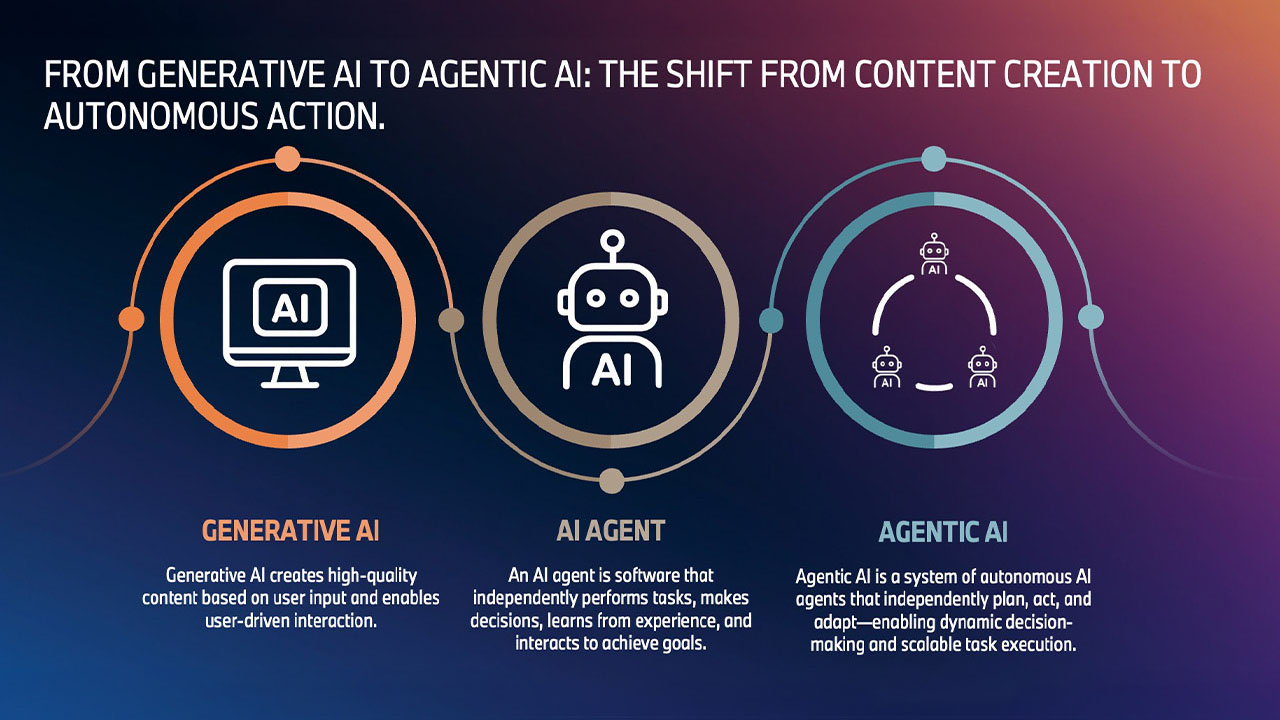
Infographic showing the three stages of AI development: Generative AI (left) interacts with users and generates content based on prompts. AI agents (centre) act autonomously, making decisions and learning from experience. Agentic AI (right) combines multiple intelligent systems to solve complex tasks through coordinated, flexible, scalable collaboration.

The principle is simple: agentic AI not only helps generate content but also initiates workflows, collates information and manages repetitive tasks within complex processes. This makes it even more powerful than the generative AI we have come to know from our everyday interactions with chatbots.

This is precisely where its value lies: agentic AI supports teams, accelerates processes, and frees employees to focus on strategic thinking, creative solutions and considered decision-making.

Two examples from the BMW Group illustrate this clearly: one in the offer process at Alphabet, the other in fully automated specialised-tool inventory management within Purchasing. 

From email to
automated workflow.

When it comes to ordering large numbers of vehicles for company fleets, enquiries are rarely ‘standard’. They are handled by our European fleet business, which BMW Group Financial Services has consolidated under the Alphabet name. The teams here support corporate customers with fleets of more than 50 vehicles.

As the number of enquiries increases, so too does their complexity. Emails from fleet managers are often unstructured, requesting customised, multi-brand vehicle solutions as well as details on mileage models or contracts. Until recently, processing these enquiries required significant manual effort: each one was reviewed individually, and relevant information was drawn together from multiple systems.

Thanks to agentic AI, this is now changing. A dedicated agent developed in-house now supports the process, largely through automation. Within the new workflow, the system autonomously transfers data to internal applications and directly initiates the necessary steps. This replaces around 90 percent of previously manual tasks – significantly streamlining workflows and freeing capacity for direct customer engagement and support.

Prepared by AI,
decided by people.

Despite the high degree of automation, control over content remains firmly with Alphabet’s team members. They review the AI’s proposals, refine them as needed and intervene where necessary. So, while the technology handles the preparation, decision-making remains firmly with humans.

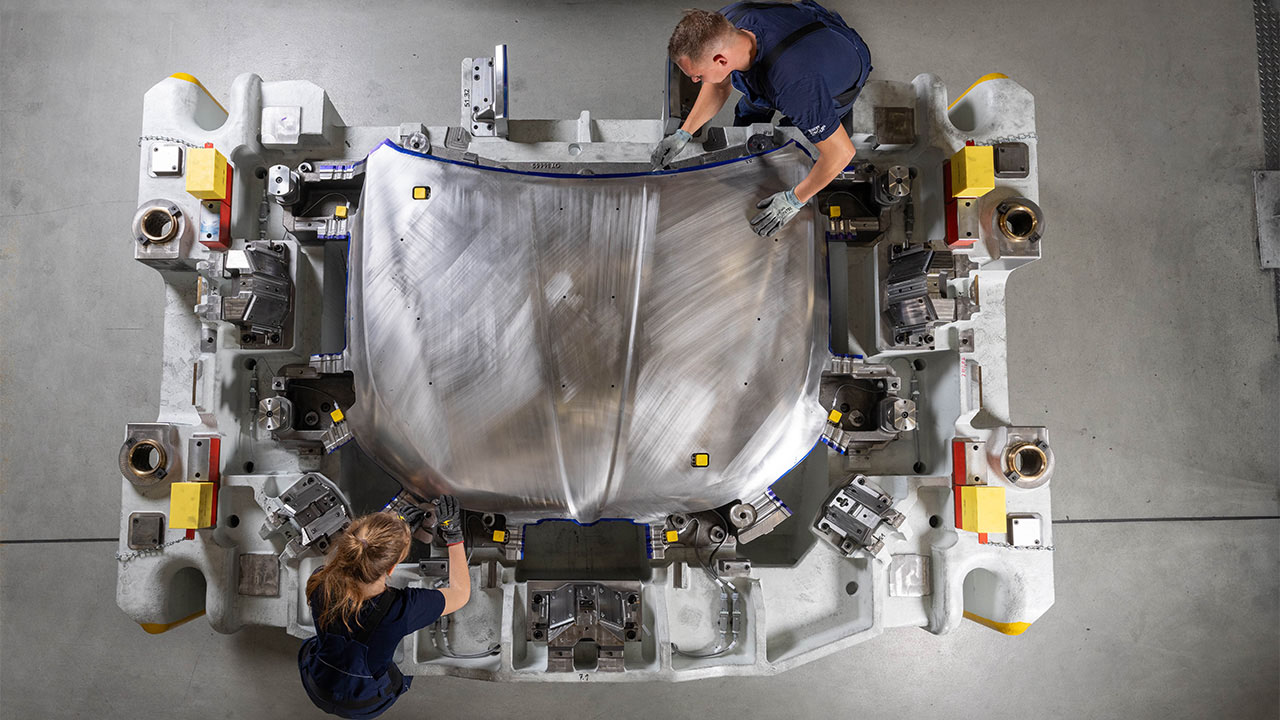
Two BMW Group employees oversee the inventory and management of specialised tools, supported by agentic AI.

250,000 special tools,
one much leaner process.

Another example, this time from Purchasing and Supplier Network, further illustrates the potential of agentic AI: the BMW Group manages approximately 250,000 specialised tools worldwide, ranging from casting moulds and models to templates. These tools are used in areas where precision is critical – in component production and the maintenance of large machines at suppliers’ facilities.

Until recently, inventorying them was time-consuming, labour-intensive and complex. Today, however, an agentic system supports Purchasing teams by automatically drafting inventory orders, sending them to suppliers, reviewing responses and approving unproblematic cases. Crucially, this new approach eliminates many of the repetitive aspects of the process, requiring human intervention only where specialist understanding and expertise are needed.

The new system is built on Purchasing and Supplier Network’s primary AI application, the multi-agent system Alconic. This interconnects various data sources, creates tasks, verifies output and provides transparency across all process steps. It makes inventorying considerably leaner, more transparent and more efficient – as well as less labour-intensive.

Technology with clear benefits.

In its use of AI, the BMW Group focuses on processes that are already effective in daily business – because that’s where agentic AI can fully realise its strengths. It not only automates complex workflows to a large extent but also supports employees and improves the quality of outcomes.