BMW Art Cars – three little words that stand for the legendary fusion of automotive icons such as the BMW M1 or the BMW Z1 with world-renowned artists of the calibre of Roy Lichtenstein and Jeff Koons. Most recently, it was the turn of painter Julie Mehretu to shape the 20th landmark edition. Discover which artist designed which BMW model – and the stories behind each collaboration.
50 Years of BMW Art Cars
Rolling sculptures by Calder, Lichtenstein, Warhol, Holzer, Hockney, Koons, Rauschenberg, Mahlangu, Eliasson, Baldessari, Cao Fei, Mehretu – ever since the first BMW Art Car by Alexander Cader took part in the legendary 24-hour race of Le Mans in 1975, BMW Group has given artists the opportunity to express their fascination with cars via the BMW Art Cars, combining art and design, technology and innovation, racing and engineering.
The collection of the 20 BMW Art Cars that have been created up to now showcases a wide spectrum of the last five decades in art history, bringing together minimalism, pop art, magical realism, abstraction, concept art, and digital art. At the same time, the BMW Art Car collection celebrates 50 years of artistic freedom and visionary design.
To mark this anniversary, the BMW Art Car World Tour will visit all five continents, with a host of accompanying events. It will culminate in the summer of 2026 with the largest show in the history of the collection taking place in the BMW Welt.
© 2025 Calder Foundation, New York / Artists Rights Society (ARS), New York

When people talk about Art Cars, they mean of course the BMW driving works of art. And when asked to name a particular BMW Art Car, often people will rave about Andy Warhol’s Pop Art BMW M1. Focusing on this one model alone, however, does not do justice to the unique and varied collection of 20 BMW Art Cars created in collaboration with renowned international artists since 1975.
When French racing driver Hervé Poulain came up with the idea of having a racing car designed by an artist in 1975, no one could have predicted what it was starting: the most consistent fusion of automobiles and art ever seen. The principle is simplicity itself: A renowned artist is commissioned to use their creativity to design a BMW racing car (later to include production cars). Limits and specifications? None. The BMW vehicles that have been turned into works of art using a wide variety of graphic and artistic techniques are as different as the artists themselves are: from pure racing thoroughbreds to production vehicles and rare sports cars. The results are all vastly different. No two vehicles are alike. Each artist had complete freedom to use the technique of their choice.
© 2025 Calder Foundation, New York / Artists Rights Society (ARS), New York
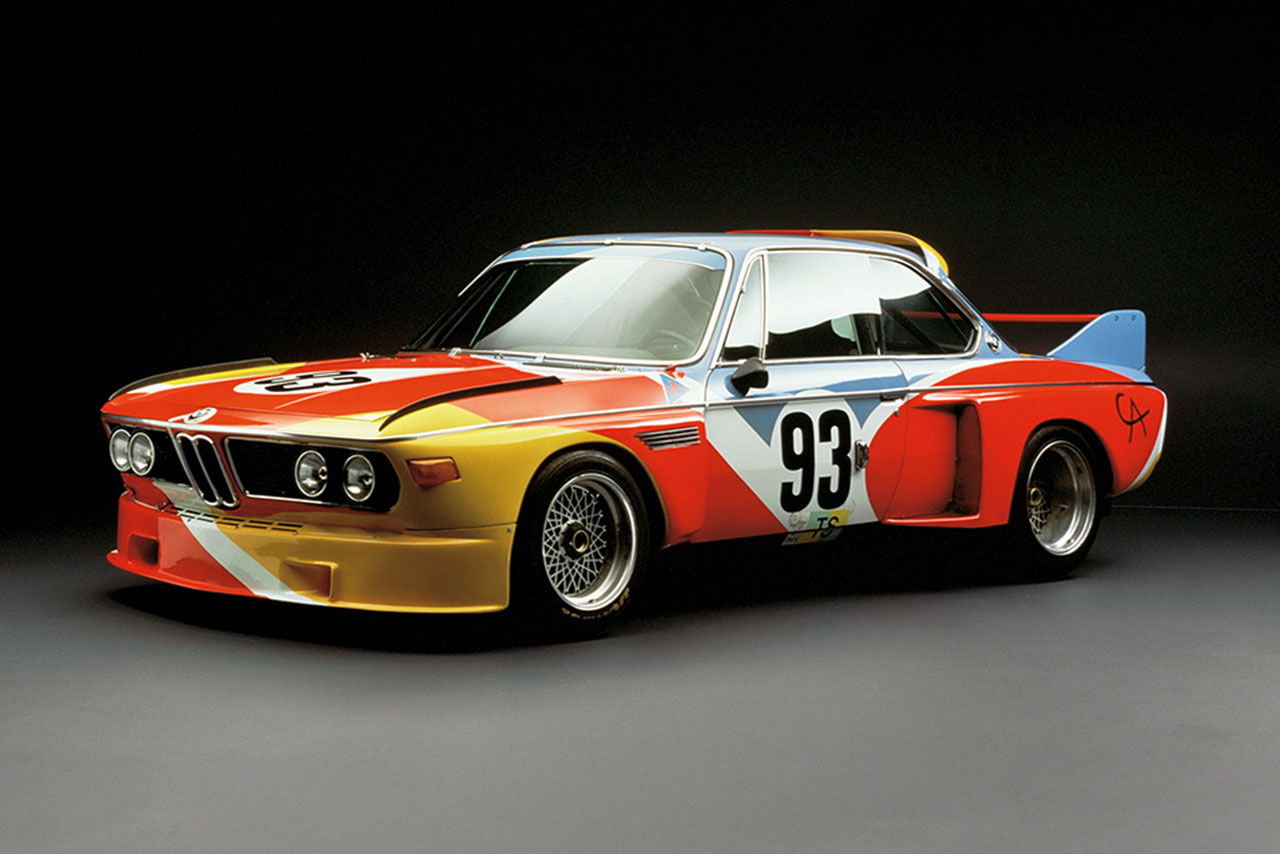
#1 Alexander Calder / BMW 3.0 CSL / 1975.
„Hervé, win... But drive carefully!“– Alexander Calder
Getting artists to design cars, and then racing those cars, was the idea of auctioneer and racing driver Hervé Poulain and the BMW Motorsport Director Jochen Neerpasch. The first artist Poulain asked was none other than Alexander Calder, the renowned inventor of kinetic sculptures - those colourful shapes known today as "mobiles". Calder, then aged 77, understood at once, agreed, and promptly came up with a design for the BMW 3.0 CSL, patterned in red, yellow, blue, and white, making it the world's first BMW Art Car. This gaudy masterpiece was the star of the 24 Hours of Le Mans in 1975. Calder himself was enthused: "The entire press - not just the art press, but the sports press, too - chose our car as their favourite at Le Mans, because it was beautiful to look at, playful, and thereby remarkably efficient. Can you imagine that?!"
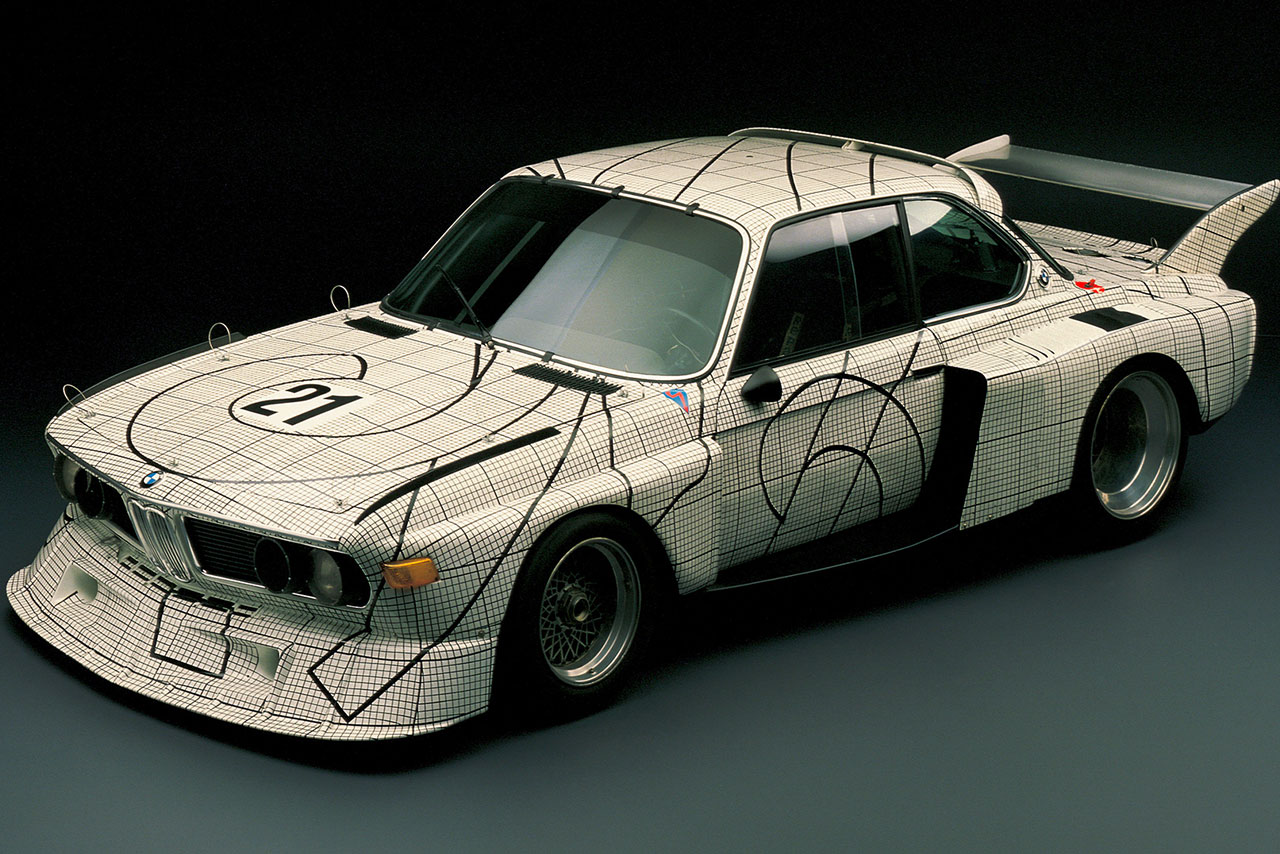
#2 Frank Stella / BMW 3.0 CSL / 1976.
"My design is like a blueprint transferred onto the bodywork." – Frank Stella
Although Frank Stella had already moved on from his Abstract Minimalist "Black Paintings" by 1976, he nonetheless returned to his artistic roots for his Art Car. When creating his design for the BMW 3.0 CSL, Stella sought inspiration from the racing coupé's precision engineering and created an exact black-and-white grid, reminiscent of oversized graph paper. This design, which took hundreds of hours of painstaking work to apply, accentuates the contours and lines of the car - an artistic reflection of technical precision. Stella's Art Car is thus a mobile sculpture, marking his turning point towards working with three-dimensional forms.
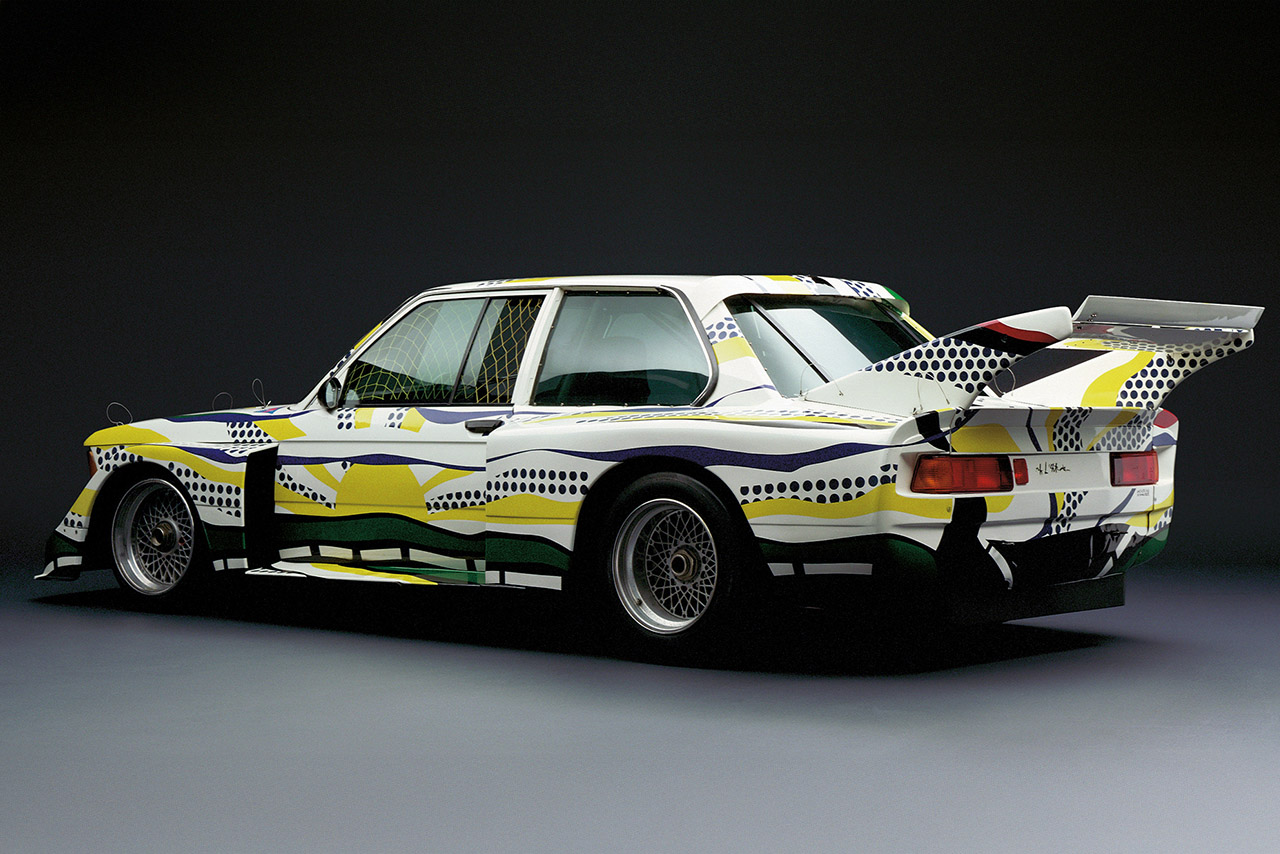
#3 Roy Lichtenstein / BMW 320i Turbo / 1977.
"I pondered on it for a long time and put as much into it as I possibly could." – Roy Lichtenstein
"I wanted the lines I painted to be a depiction of the road, showing the car where to go," said Roy Lichtenstein about his design of the BMW 320. His design visualises the movement of the car, even when it is stationary: the lines on the bodywork represent the road, while the abstract depictions of light and landscape are reminiscent of passing scenery. Both of the car's doors are resplendent with images of the sun - rising on one and setting on the other - a play on the 24 Hours of Le Mans, as if Lichtenstein were there, preparing the car for that very race. Lichtenstein's typical Ben-Day dots, best known from his comic-like paintings, add to the impression of dynamism and speed, and the car itself becomes the canvas - a vehicle that reflects an entire journey before ever taking to the road.
#4 Andy Warhol / BMW M1 / 1997.
"I love that car. It has turned out better that the artwork." – Andy Warhol
The individual meets the mass-produced in Andy Warhol's art. But instead of covering the prototype BMW M1 with quotations from pop culture, Warhol reached for his paintbrush and left his own, very personal signature on the car, which had only recently left the drawing board of design legend Giorgio Giugiaro. With broad brushstrokes and in just 28 minutes, Warhol covered the car in colours and textures that clearly reveal his artistic gestures, even today. "I have tried to give a vivid depiction of speed. If a car is really fast, all the contours and colours will become blurred," he said. Hervé Poulain, the founder of the BMW Art Car Collection, witnessed Warhol painting the car and compared it to a live dance performance.
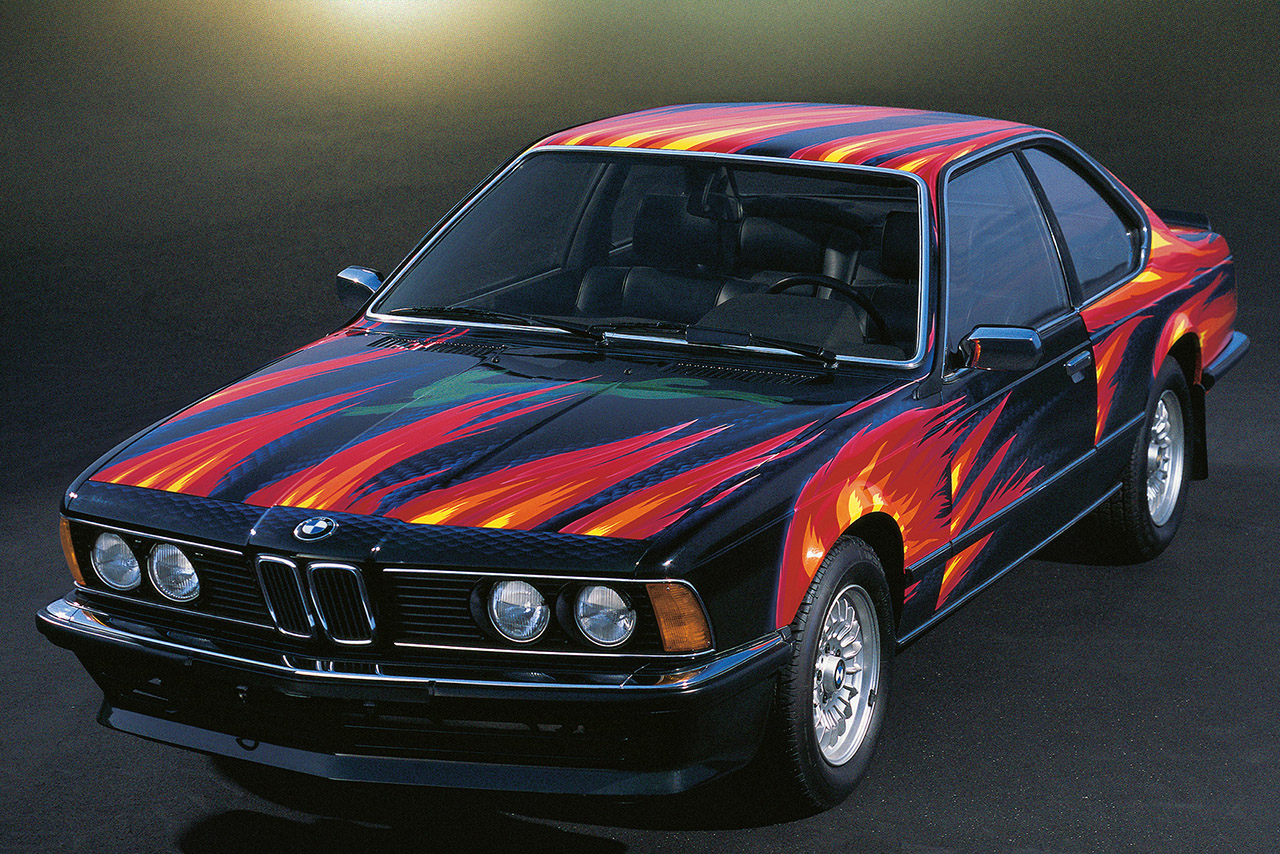
#5 Ernst Fuchs / BMW 635 CSi / 1982.
"A machine should not be made to look better. It has its own aesthetics." – Ernst Fuchs
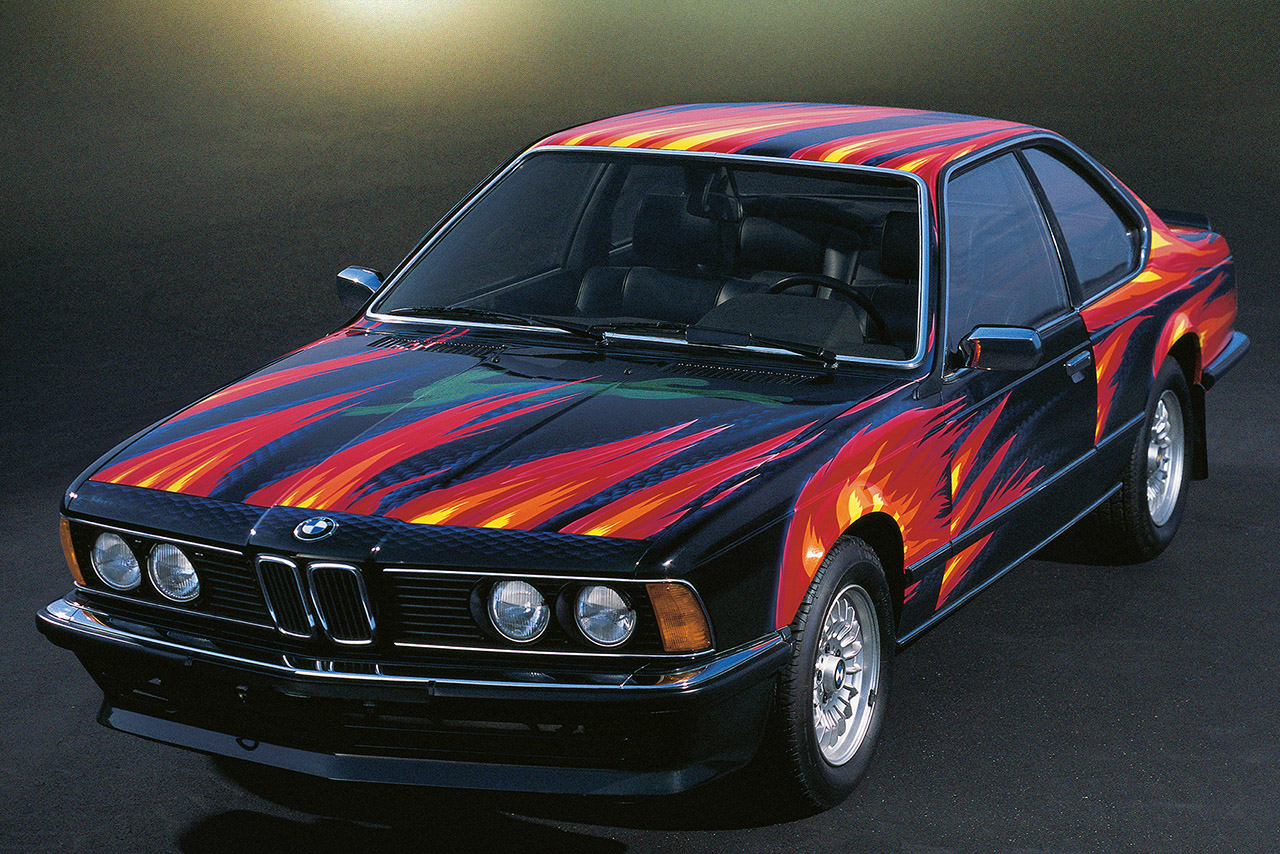
The BMW 635CSi, designed by Ernst Fuchs, was the first Art Car based on a production vehicle and pays homage to mythology, speed, and spiritual symbolism. Fuchs transformed the car into a flaming, motorised allegory of euphoria: reds and yellows blaze across the bodywork, with a green hare on the bonnet leaping through a sea of flames. This surreal scene is typical of Fuchs, fusing a dream world, the metaphysical, and the dynamic. For the artist, this car was more than just a vehicle; it was a magical object symbolising power and transcendence, as well as a place to project ideas. Fuchs, who often called himself "Feuerfuchs" ("fire fox"), named his Art Car "Fire Fox on a Hare Hunt".
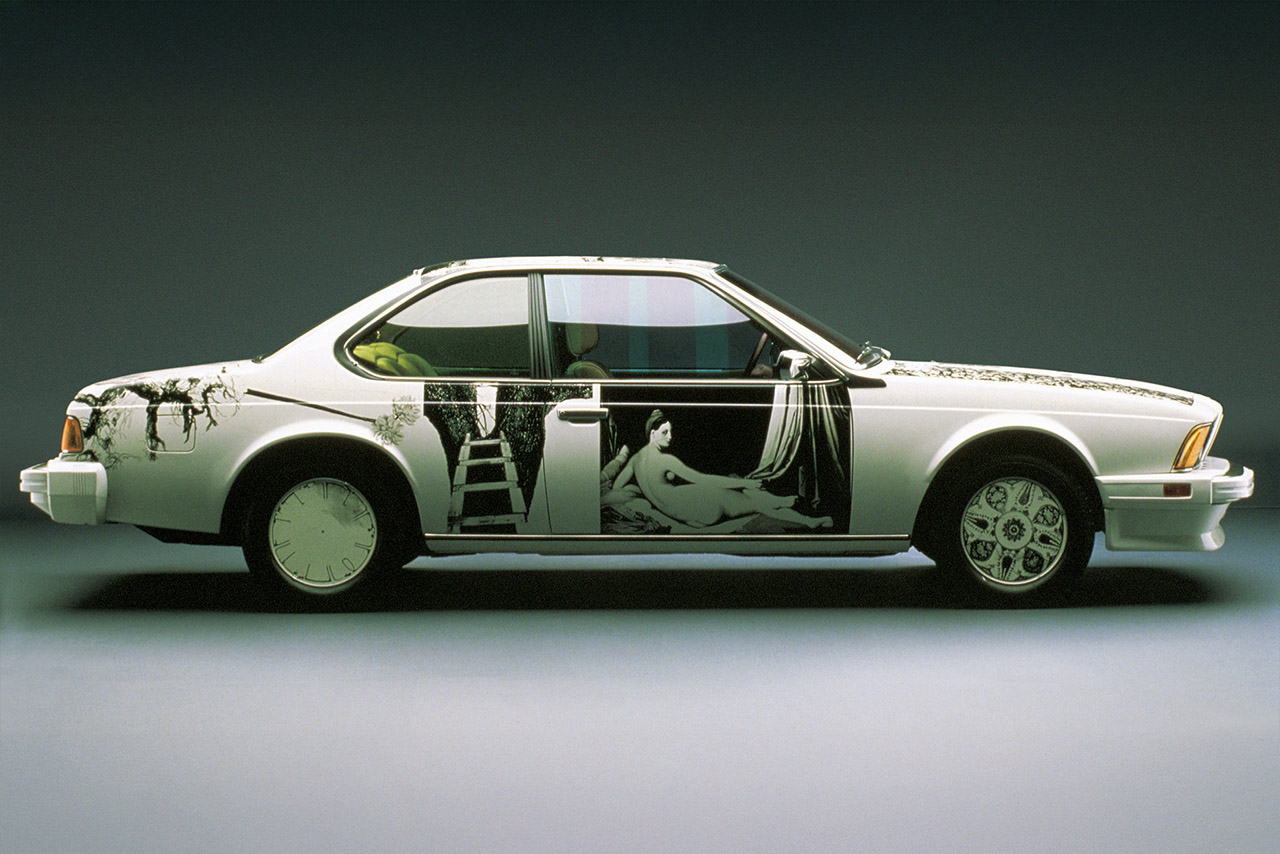
#6 Robert Rauschenberg / BMW 635 CSi / 1986.
"Drivable museums would be great. This car is a dream come true to me." – Robert Rauschenberg
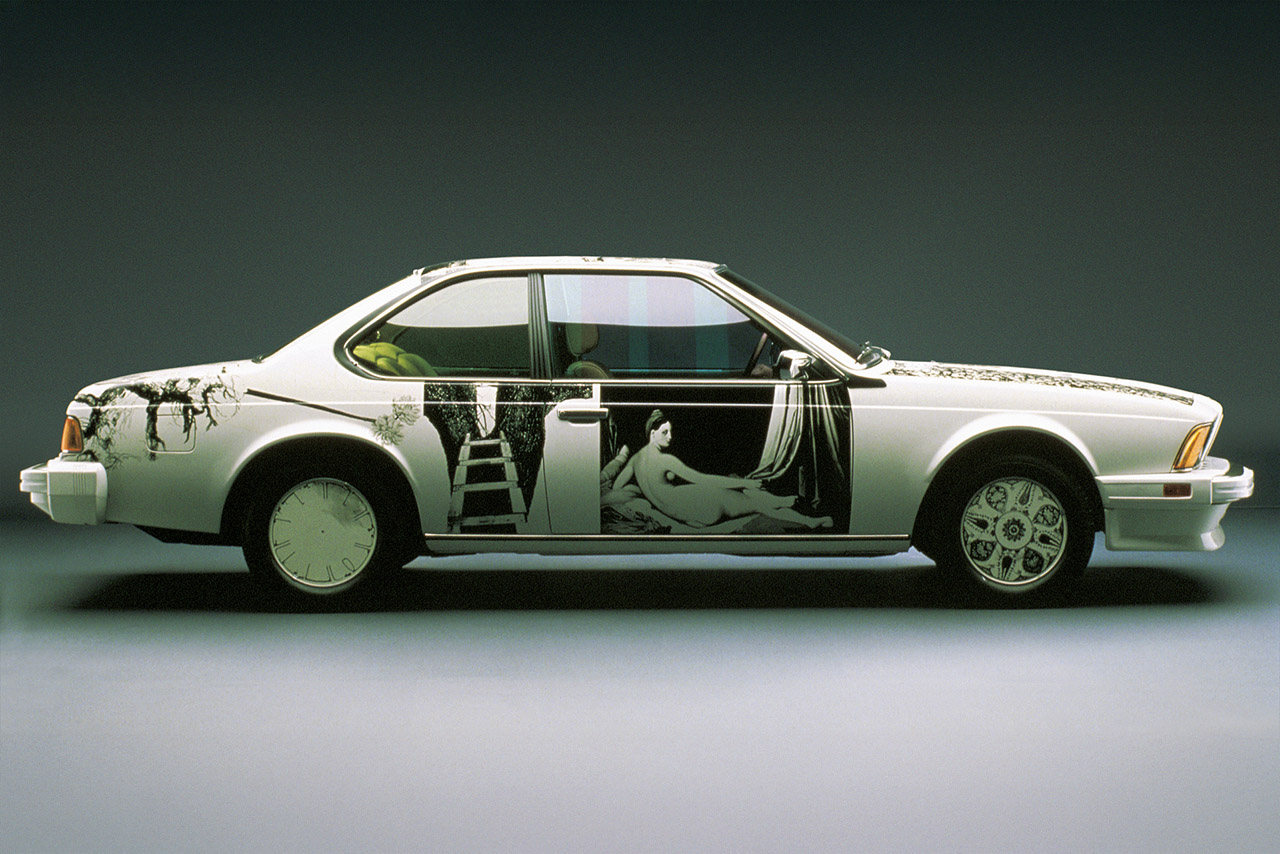
Robert Rauschenberg transformed this BMW 635CSi into a collage of art history, photography, and everyday culture. Rauschenberg was the first to use other artists' works on his car, using photographic techniques to edit these images and project them onto the vehicle. For example, on the left-hand side of the car, we see Bronzino's "Portrait of a Young Man", and on the right, a painting by Jean-Auguste-Dominique Ingres. Even the hubcaps make reference to art history, featuring photographs of antique plates. All these elements are joined by Rauschenberg's own photographs of trees and swamp grasses - a subtle comment on the environmental challenges associated with the motor car. But other than this, the sporty six-cylinder saloon looks like any other production car, just as could be seen in any car park back in 1986 - a car straight off the production line, a part of everyday culture. And precisely this fact makes this Art Car a perfect embodiment of Rauschenberg's lifelong aspiration to break down the boundaries between art and everyday life.
#7 Michael Jagamara Nelson / BMW M3 Group A / 1989.
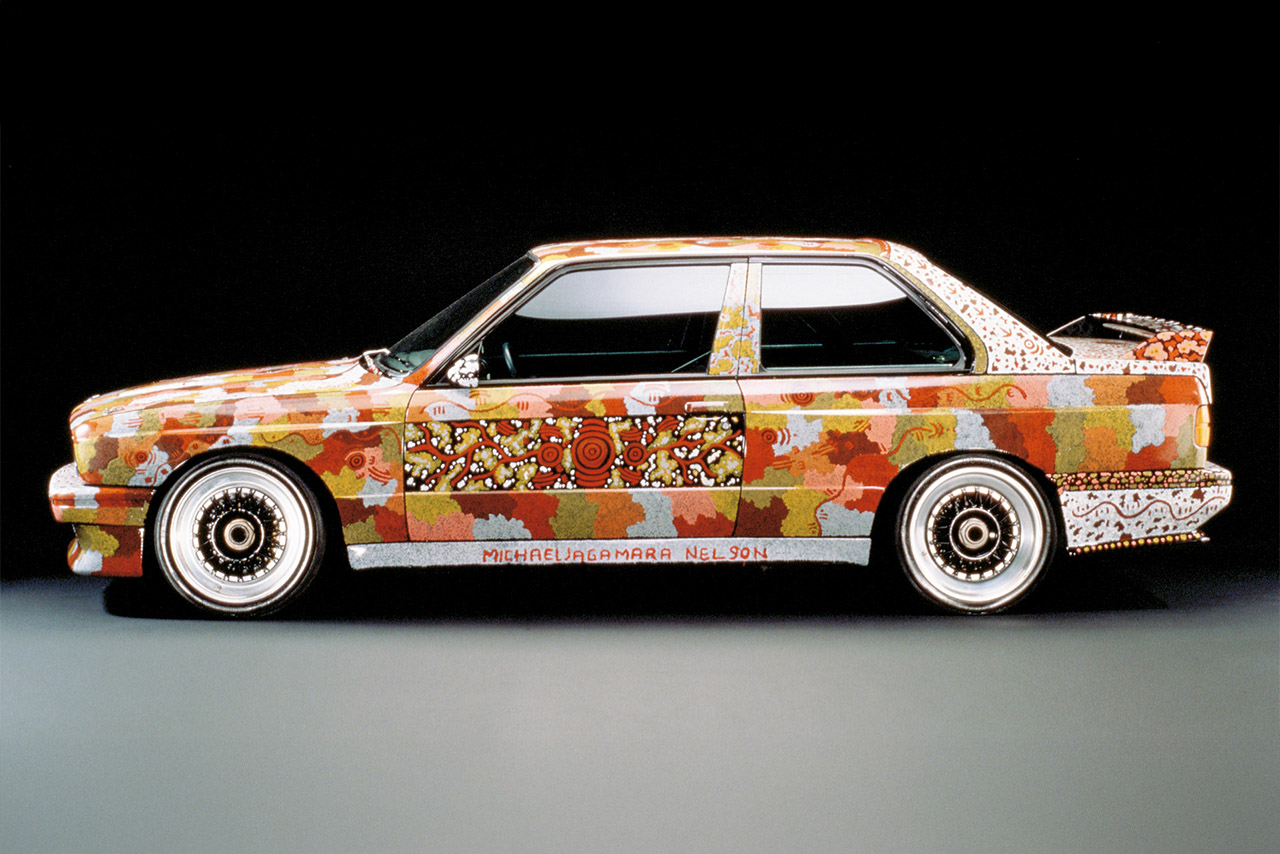
"The car is a landscape like you'd see from a plane – I included the water, the kangaroo, and the opossum." – Michael Jagamara Nelson
Two artists from Australia were invited to design a BMW Art Car in 1989: pop artist Ken Done and Michael Nelson Jagamara, then one of the leading exponents of Aboriginal art.
Over the course of nearly four weeks, Jagamara painted Aboriginal Dreamtime animals, tracks, and stories on the BMW M3 by hand. Once finished, he signed his name on the driver's side of the car, using the style of writing he had learned as a child at a missionary school in the Northern Territory. This BMW Art Car thus bears witness, proud and moving - both literally and figuratively - to the culture, art and history of Aboriginal Australians.
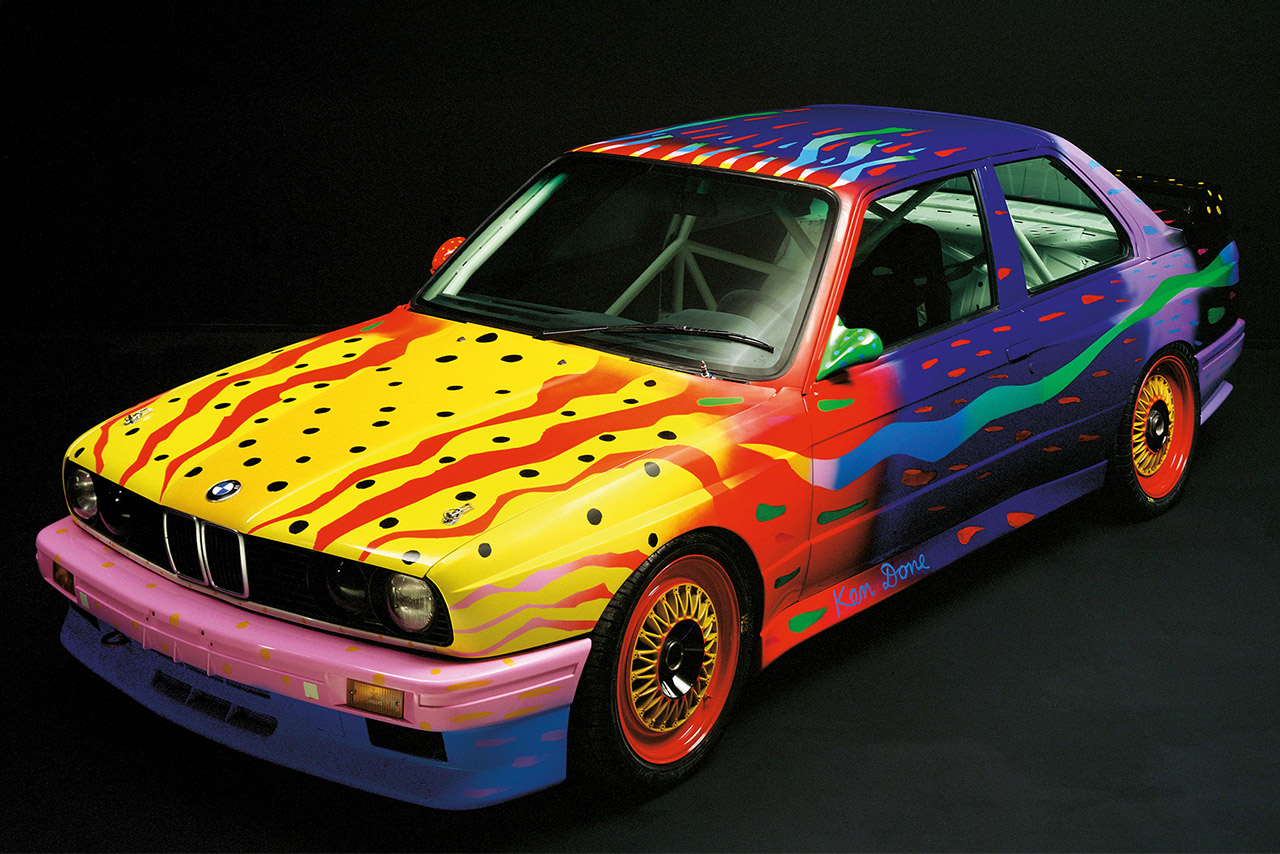
#8 Ken Done / BMW M3 Group A / 1989.
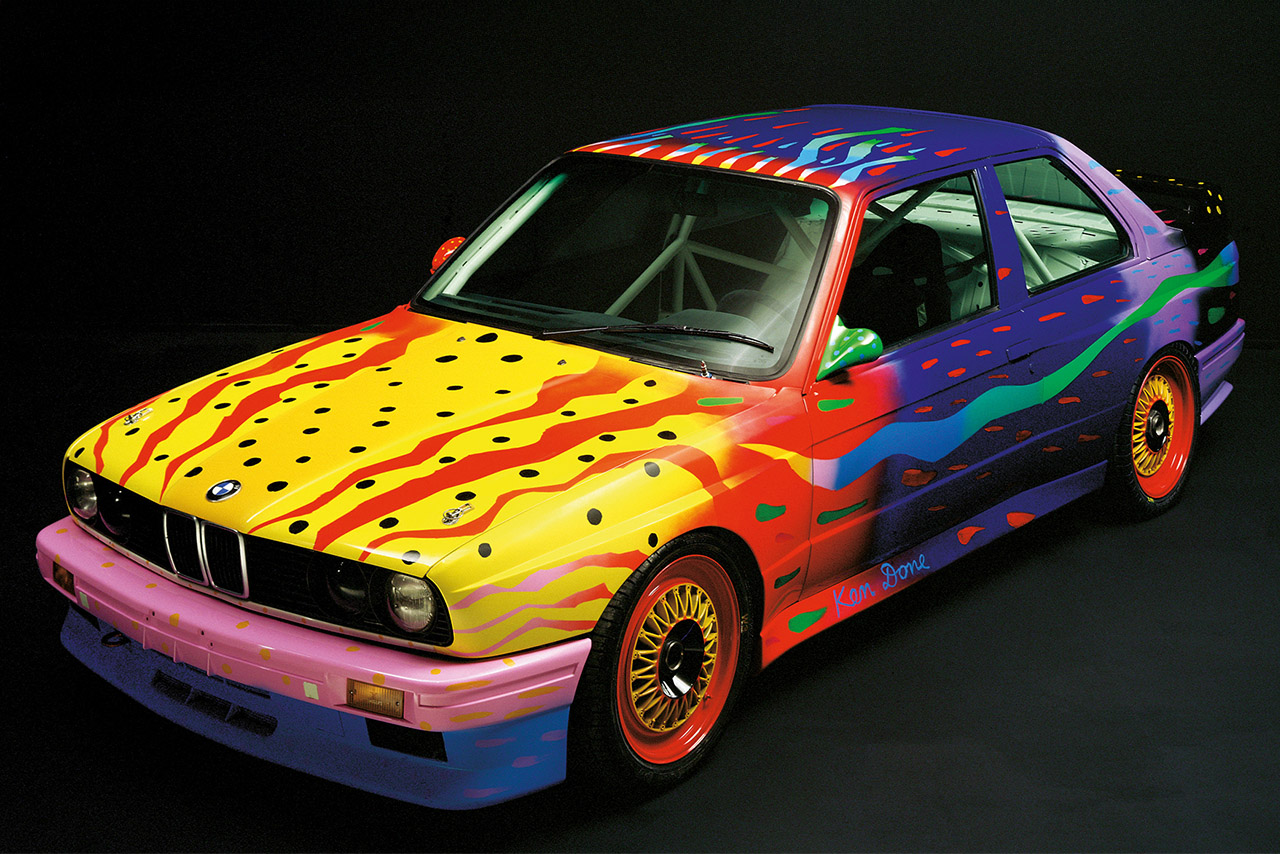
"I wanted to base it on the kind of parrots I saw every morning. Even when they are standing still, the parrots really look as if they are about to move very fast." – Ken Done
From the word go, Ken Done knew exactly what he wanted his design for the BMW M3 to be like. He wanted the paintwork to be typically Australian, reflecting the vitality of his homeland. So he drew inspiration from the bright and lively Australian natural world and used the colours of parrots and parrotfish. In his view, these have two things in common with the BMW M3: beauty and speed. In his own words, "I wanted to give the car something of that feeling, of things that look beautiful when they move."
#9 Matazo Kayama / BMW 535i / 1990.
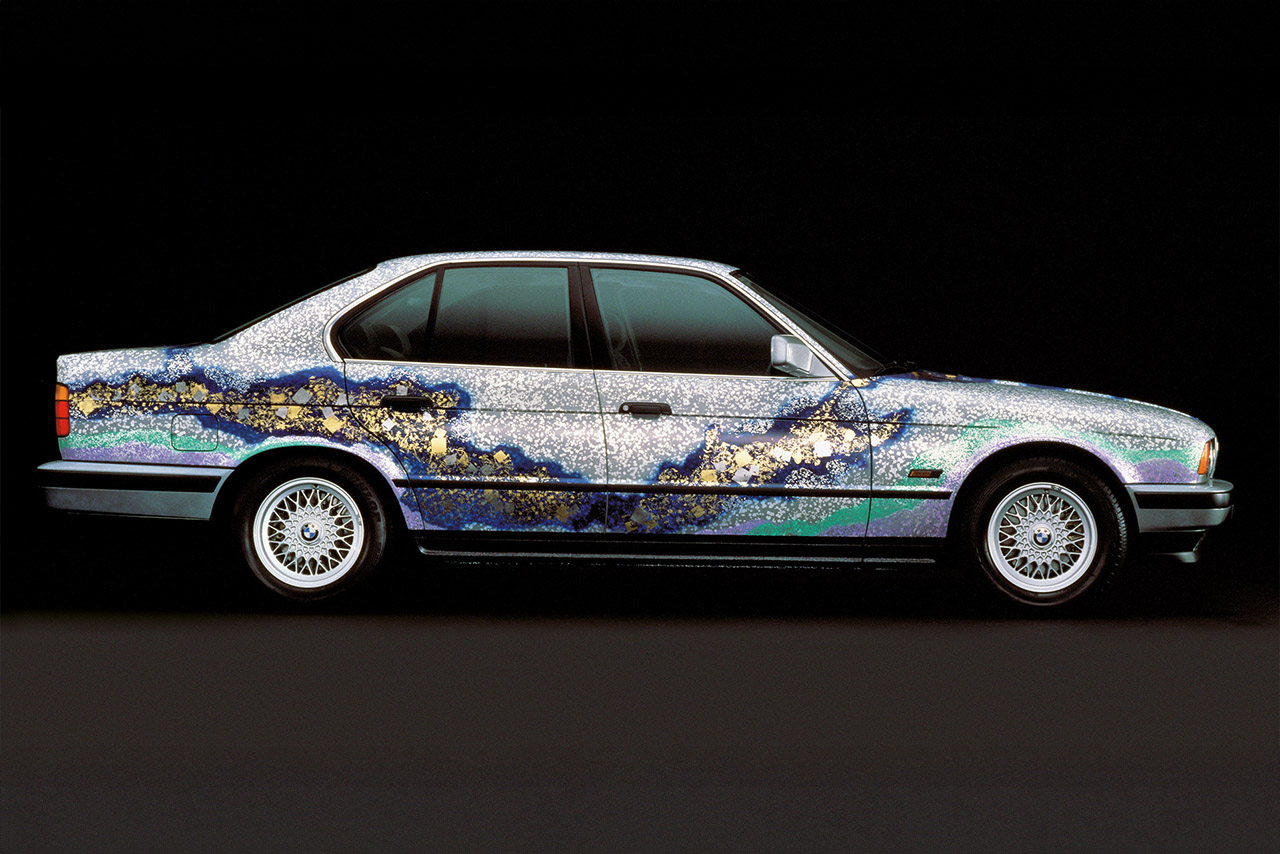
"I became most aware of the clear lines of the BMW, once the car was completely covered with the colorful design." – Matazo Kayama
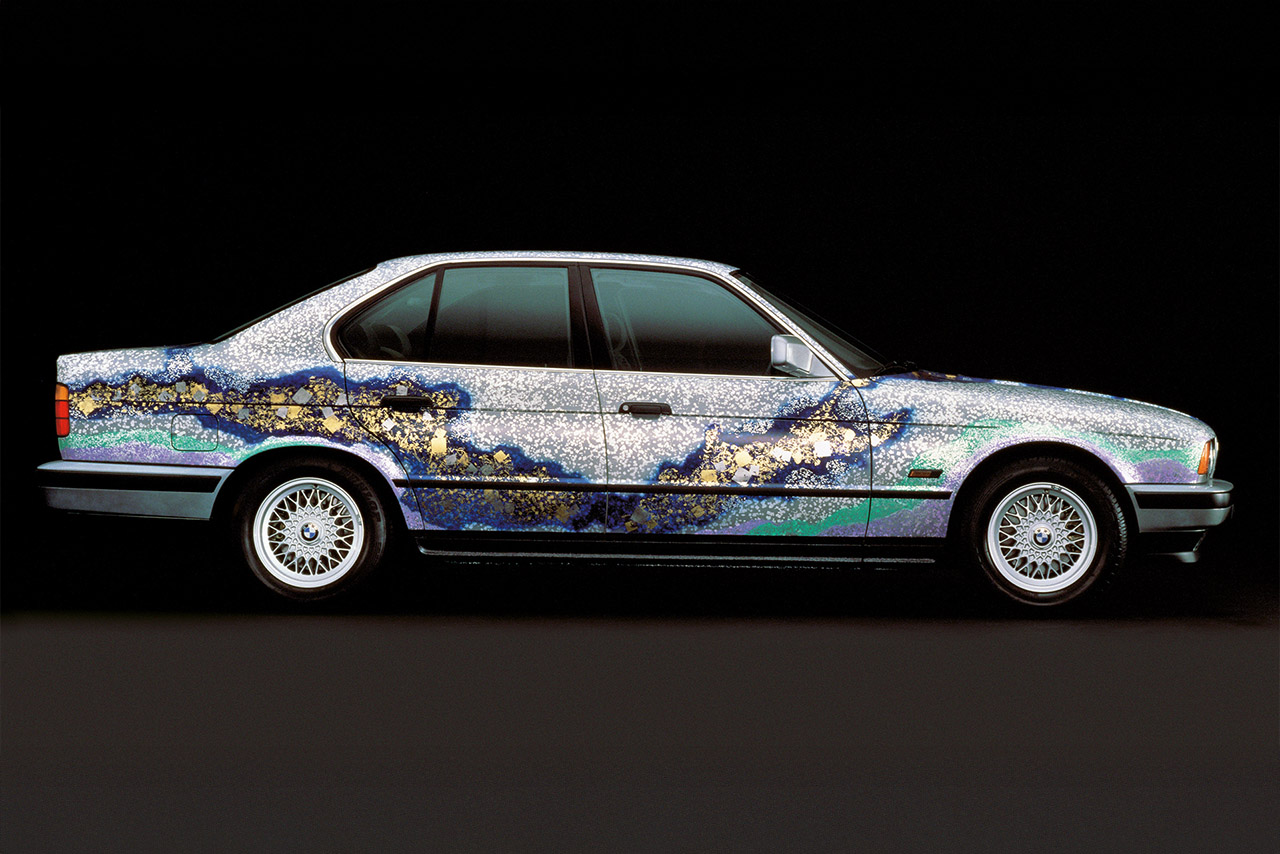
Matazo Kayama's design for his BMW Art Car is inspired by the snow, moon, and cherry blossom of traditional Japanese artworks, reinterpreted through the modern medium of airbrushing. Delicate blue shading on the car's silver body creates a whole world of light and motion. The airbrushed part of the design is complemented by the techniques of "kirigane" and "arare", both of which involve applying wafer-thin pieces of silver, gold, and aluminium leaf to the car. Kayama thus managed to create the perfect harmony of precision, clarity, and ornamentation, making his Art Car a homage to Japanese artistic craftsmanship.
#10 César Manrique / BMW 730i / 1990.
"I tried to use an aesthetic concept to express in a single object the idea of speed and aerodynamics." – César Manrique
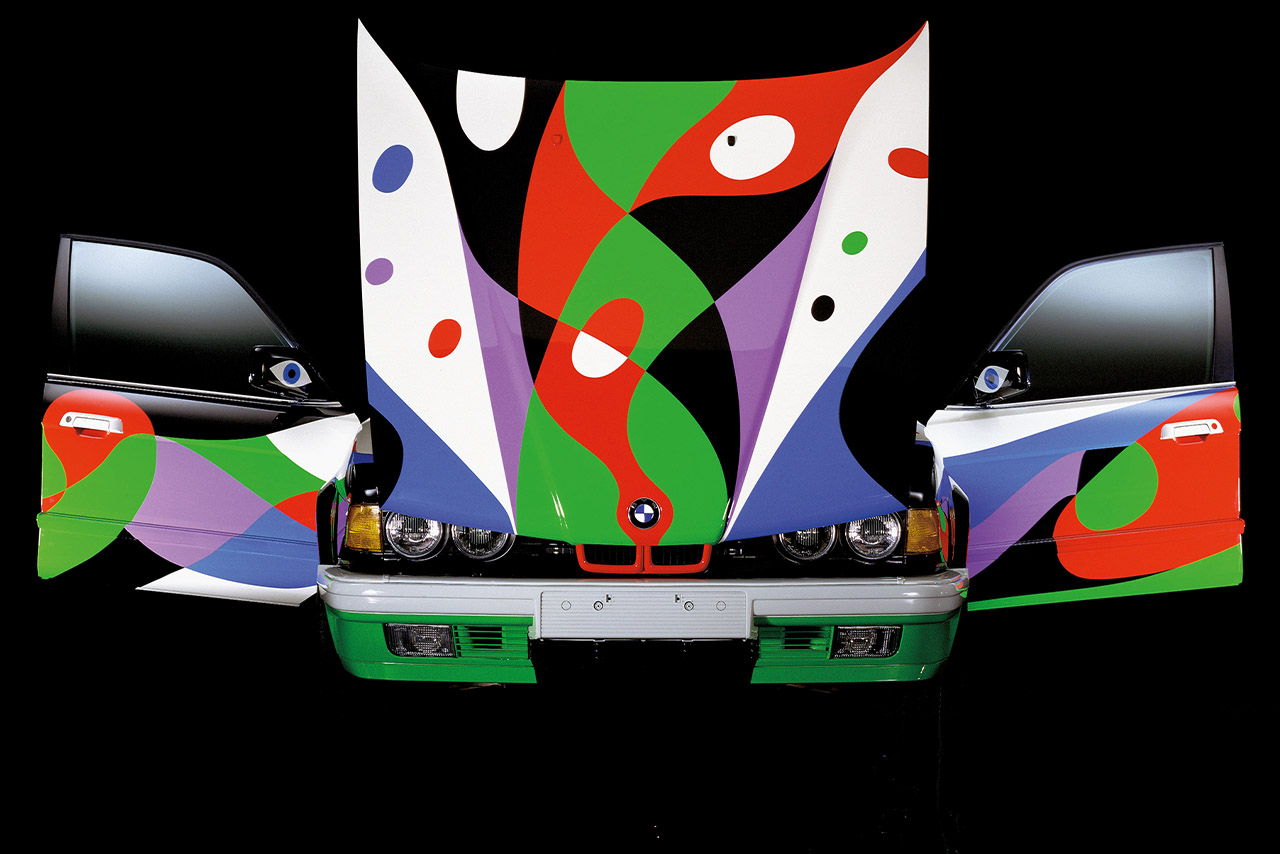
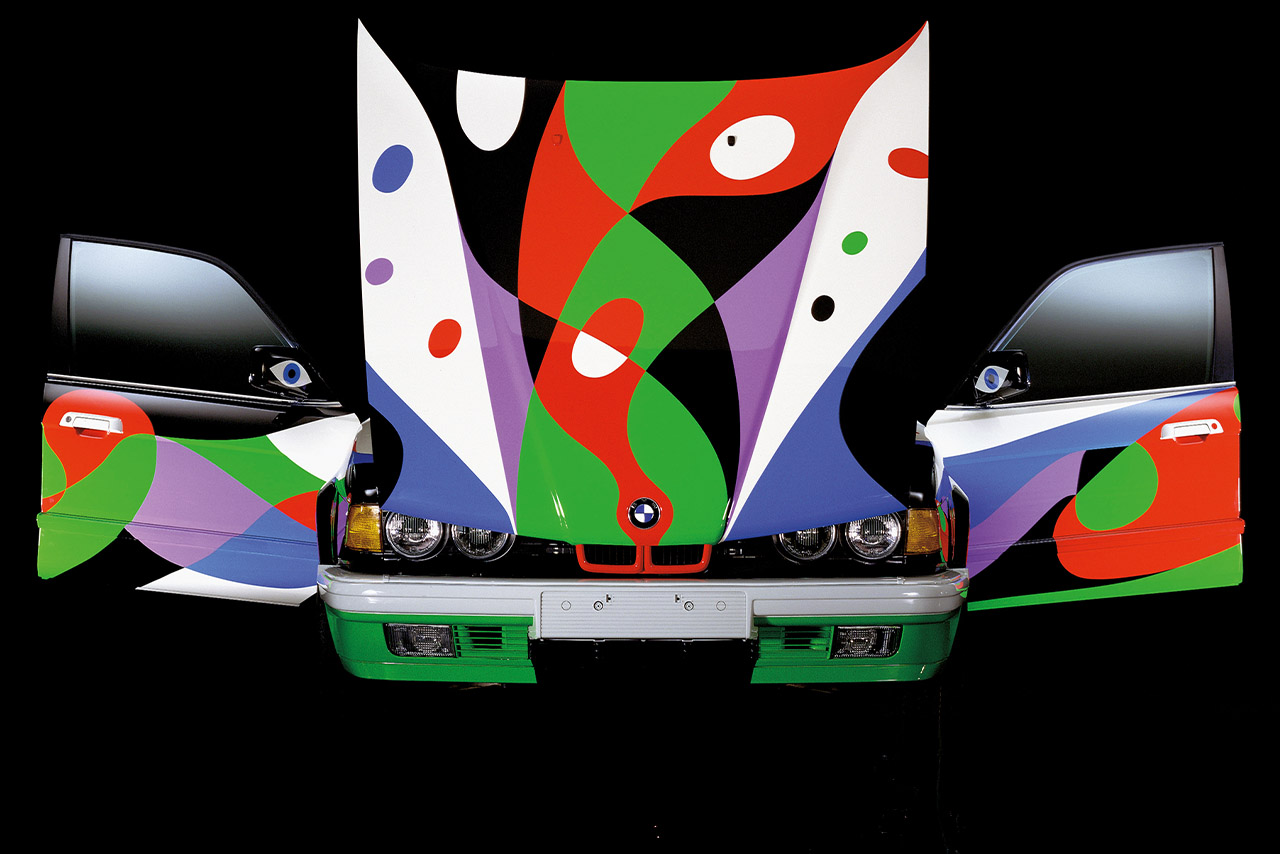
César Manrique's creative output focused on creating harmony between art and the environment. His Art Car, a 1990 BMW 730i, reflects this approach: inspired by the natural world of his native Lanzarote - in particular, birds in flight - he used dynamic reds, blues, greens, and purples to represent movement and lightness. Manrique's contribution to the BMW Art Car series also demonstrates his ability to blend machine and art, with bright colours and sweeping lines visualising speed and aerodynamics. In his own words: "I wanted to give the car a shape that would create the impression that it was gliding effortlessly space."
#11 A.R. Penck / BMW Z1 / 1991.
"Art on art, art on technology – was interested in that – especially on a three dimensional object." – A.R. Penck
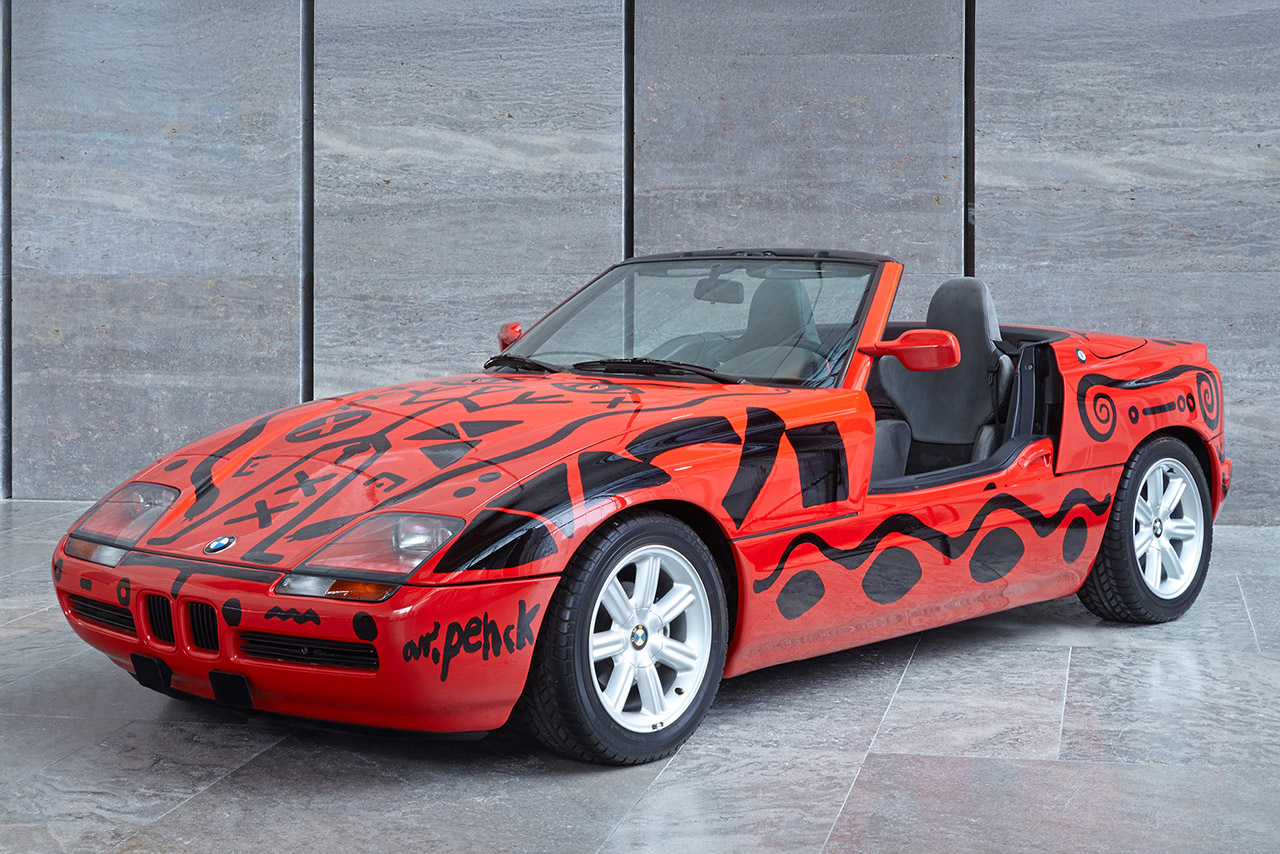
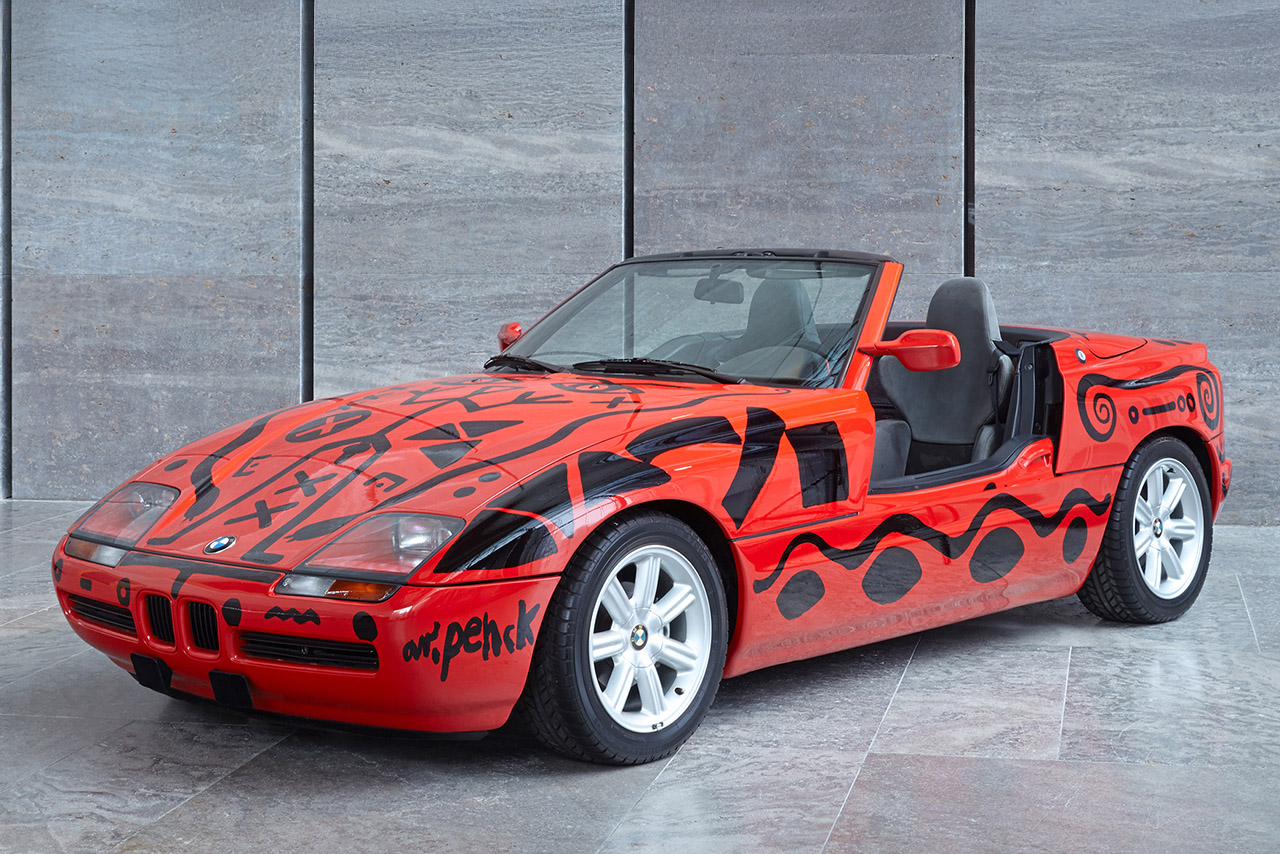
To A. R. Penck, the BMW Z1 was already a work of art in itself, worthy of being called an Art Car, as it reflected the creativity and imagination of its designers and engineers. So, Penck drew inspiration from the car's design and challenged it with his own cosmos, his own sign language. In its simplicity, his artwork is reminiscent of prehistoric cave paintings, yet it also challenges the observer, as the figures and symbols, devised in a long process of abstraction, are codes to be deciphered: a matchstick man representing humanity; an all-seeing eye; a snake as a stand-in for the natural world. These symbols are combined across the car in an endless variety of ways.
#12 Esther Mahlangu / BMW 525i / 1991.
"The patterns I used in the BMW design bring together our heritage and the modernity of the car." – Esther Mahlangu
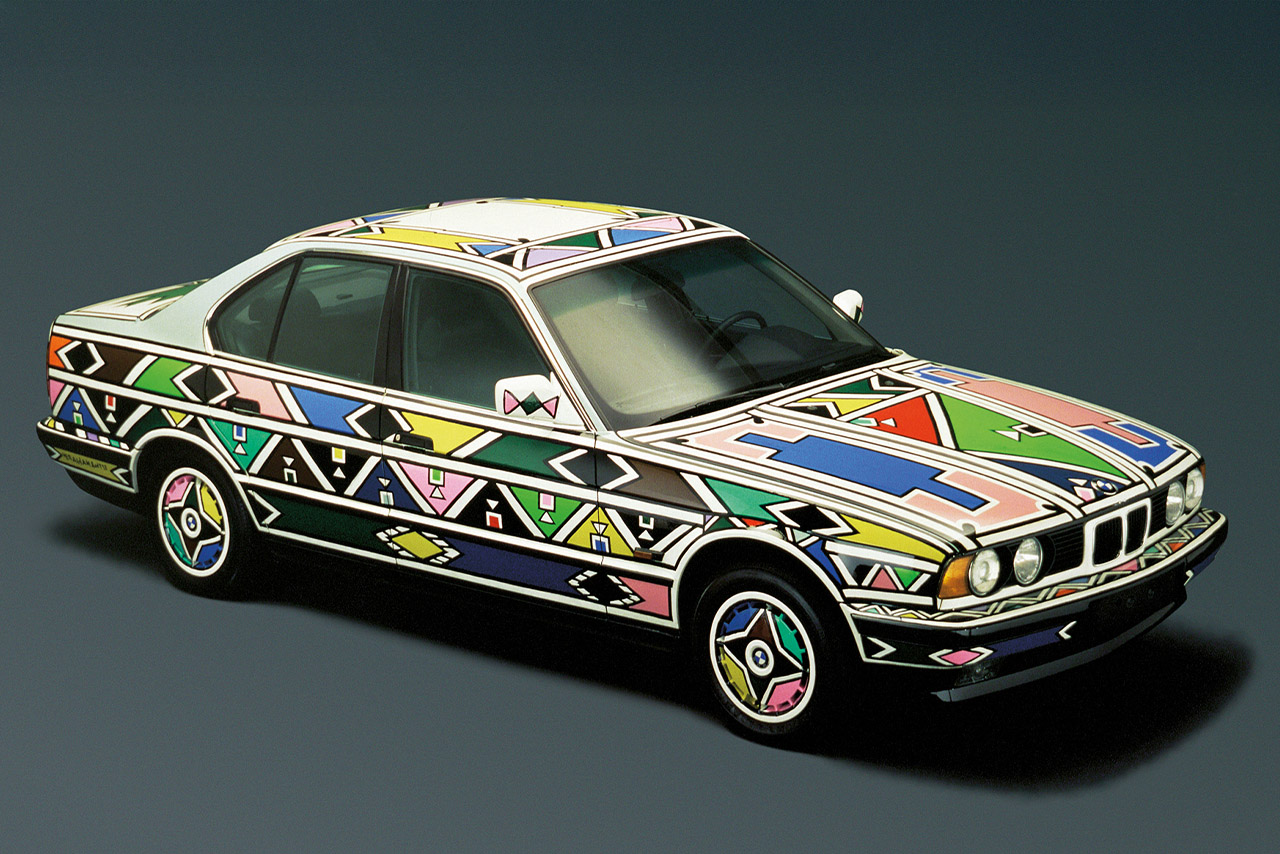
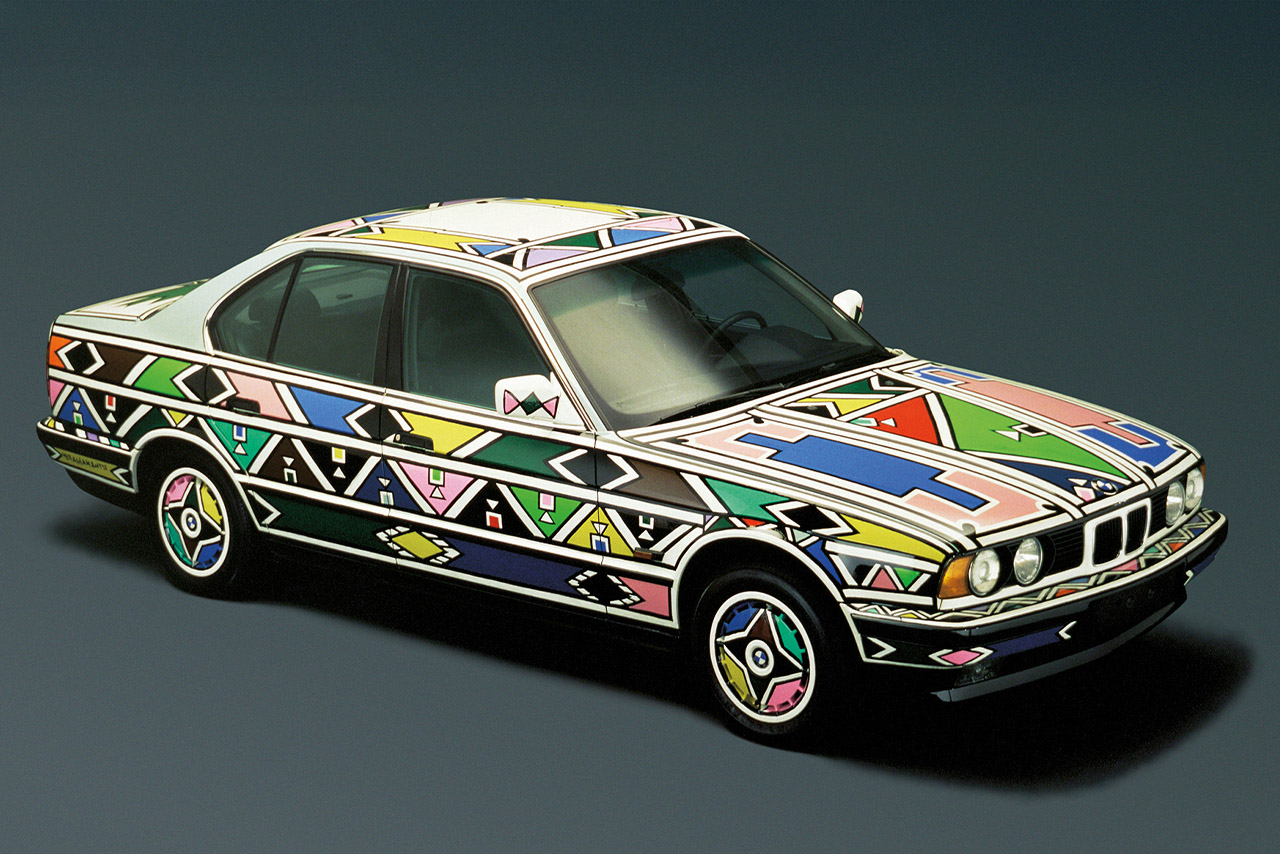
South African painter Esther Mahlangu's Art Car design translates traditional Ndebele painting onto an object representing modern technology. "My art has evolved from our tribal tradition of decorating our homes," she said of her work - the characteristic geometric patterns and vivid colours that adorn the BMW 525i are usually found on the façades of houses. In order to develop a feel for the completely new medium, Mahlangu initially painted the door of another BMW before she started on the Art Car, which she transformed into a masterpiece of Ndebele art in just a week. Mahlangu was the first woman and the first African artist to design an Art Car.
#13 Sandro Chia / BMW M3 GTR / 1992.
"I created both a picture and a world. Everything that one looks at closely turns into a face. A face is a focus, a focus of life and the world." – Sandro Chia
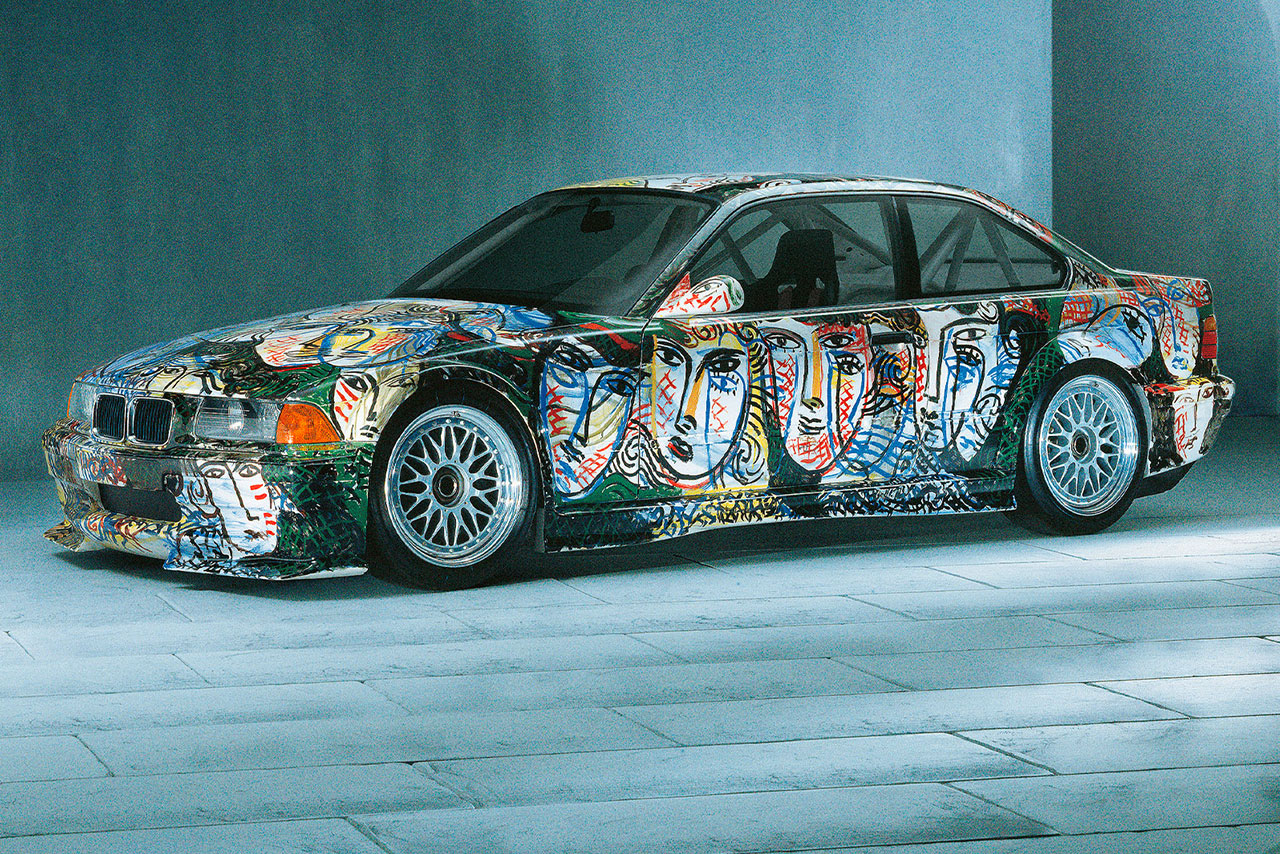
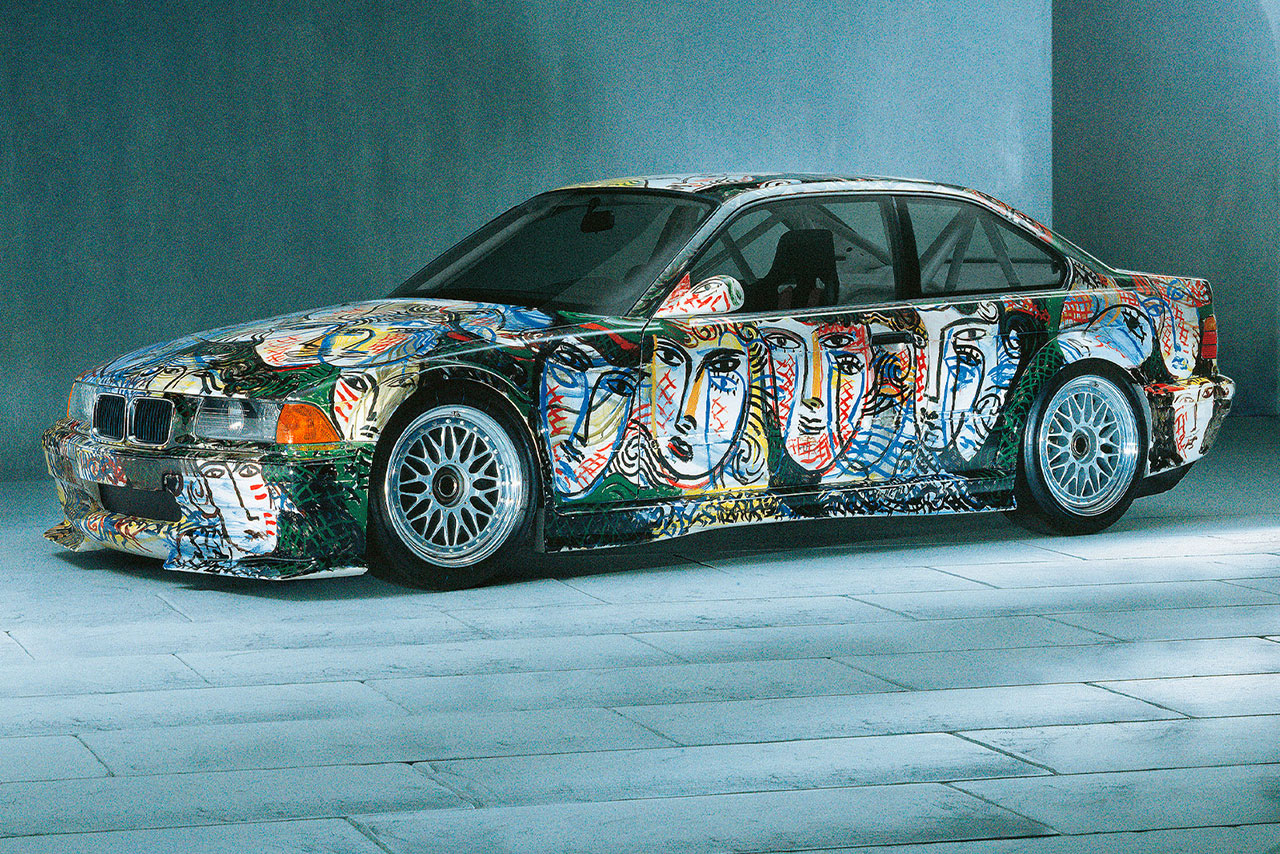
"Paint me, paint me!" the car's bodywork had called out to him, said Sandro Chia. So he discarded all his sketches and just started to paint, covering the body of the BMW M3 GTR with faces and a sea of intense colours until it was completely adorned. "The automobile is a coveted object within our society," commented Chia on his work. "This car here meets the people who look at it like a mirror. It is an interchange of beauty." Chia found the BMW Art Car particularly challenging - not least because some of his artistic idols, such as Warhol and Lichtenstein, had painted Art Cars before him.
#14 David Hockney / BMW 850 CSi / 1995.
"The car has wonderful lines, which I followed" – David Hockney
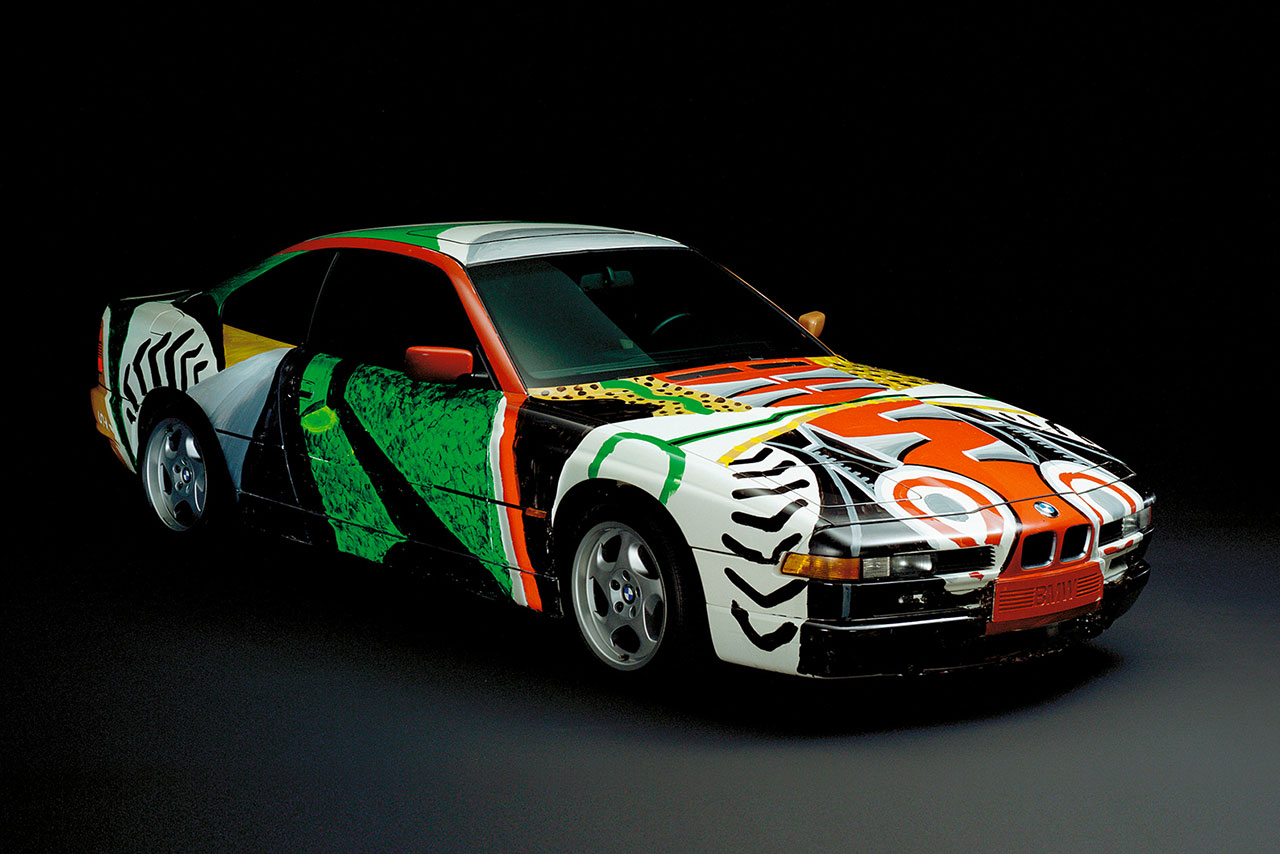
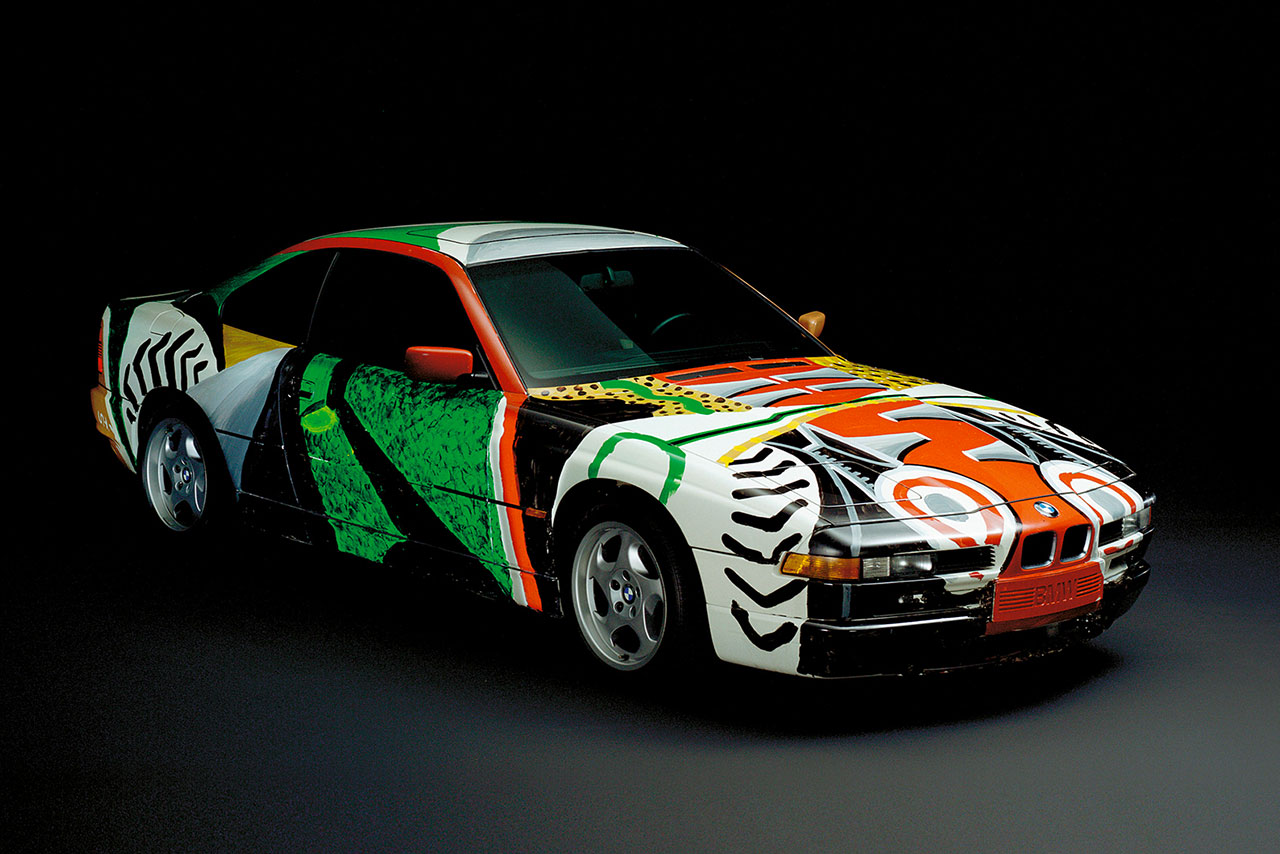
David Hockney's Art Car design puts a new spin on the traditional idea of a car's paintwork by effectively turning the car inside out. "I thought it would be a good idea to show the car as if one could see inside," he said. Like an X-ray, Hockney's design reveals the anatomy of the car and its occupants: the door sports an outline of the driver, and Hockney's loyal dachshund, Stanley, can be seen sitting on the back seat, referencing the artist's love of his dogs. Stylised engine components are depicted on the bonnet, while expanses of green sweep across the body - a visual metaphor for the passing scenery, movement, and time.
Hockney's visual language melds the car's interior and the outside world to create a new and unusual perspective on motoring.
#15 Jenny Holzer / BMW V12 LMR / 1999.
"I wanted to choose text that would at least make people laugh or maybe be a little anxious." – Jenny Holzer
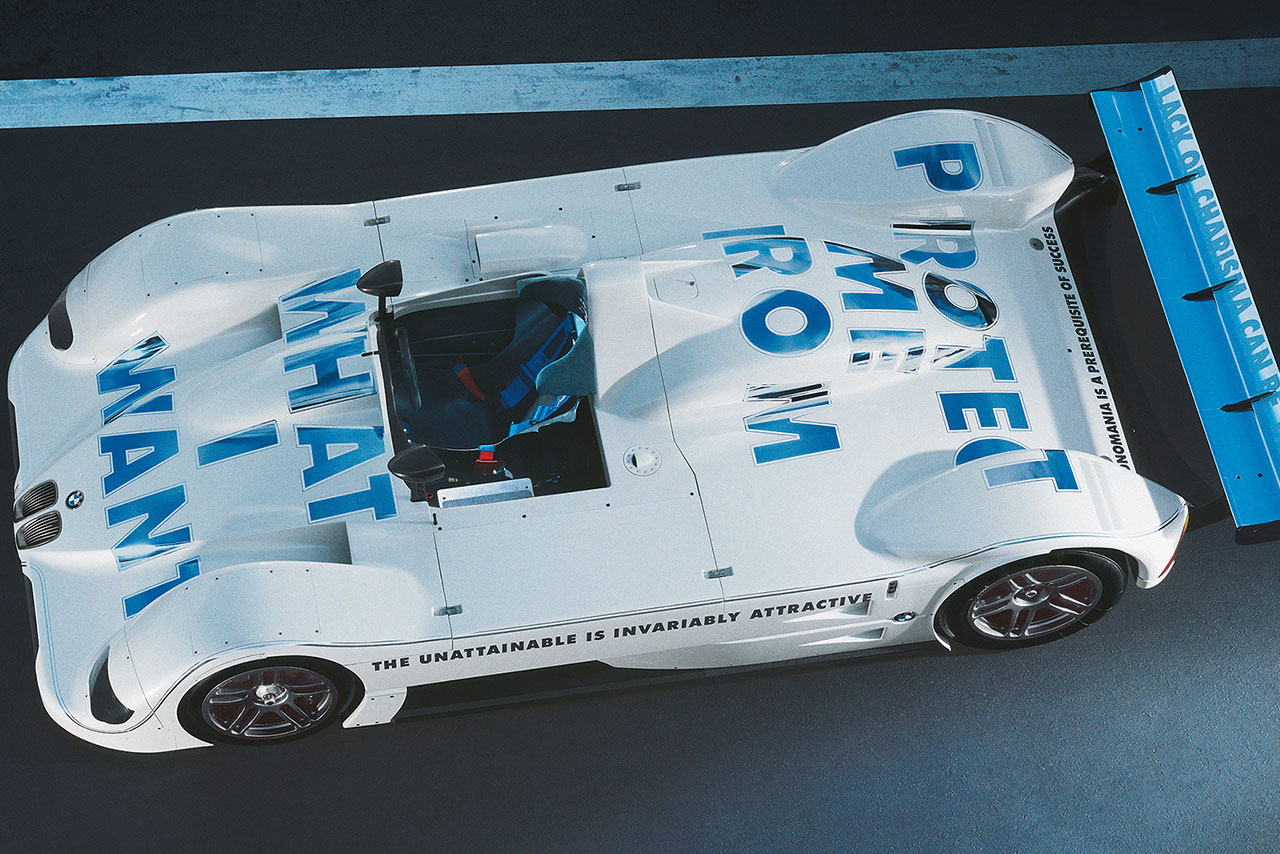
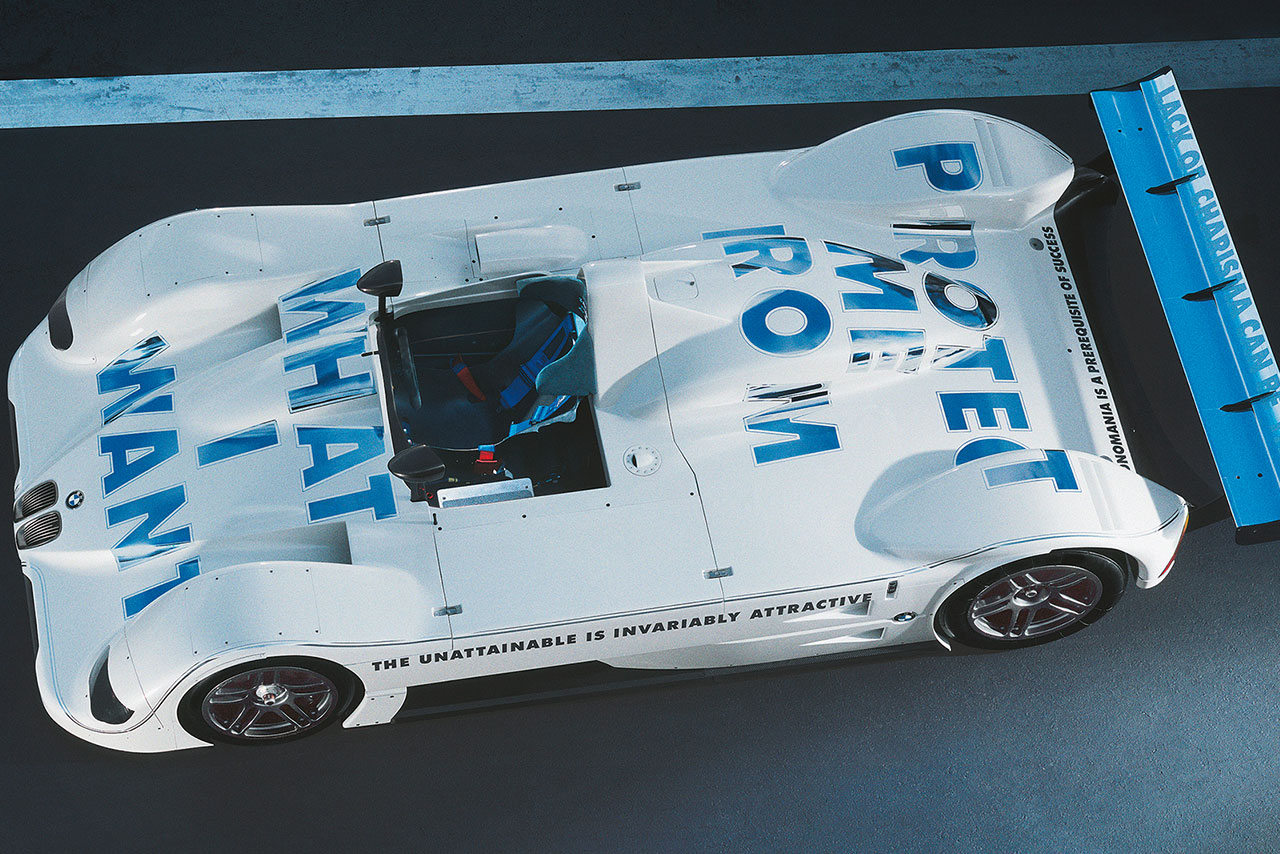
PROTECT ME FROM WHAT I WANT
THE UNATTAINABLE IS INVARIABLY ATTRACTIVE
YOU ARE SO COMPLEX YOU DON'T RESPOND TO DANGER
LACK OF CHARISMA CAN BE FATAL
MONOMANIA IS A PREREQUISITE OF SUCCESS
WHAT URGE WILL SAVE US NOW THAT SEX WON'T?
American conceptual artist Jenny Holzer's Art Car is adorned with laconic messages, much like those of the "Truisms" series that made her world-famous - a collection of one-line aphorisms, somewhere between platitudes and highly political statements. One slogan on the car's bonnet stands out above all: "PROTECT ME FROM WHAT I WANT", Holzer's most famous message. And what better place to project this warning against the endless cravings of capitalism than a 580-bhp, 340-km/h racing car? To keep these one-liners visible during the 24 Hours of Le Mans, Holzer used reflective chrome letters and phosphorescent paint. The letters reflect the sky during the day, and at night they emit the daylight they have absorbed - in BMW blue.
#16 Olafur Eliasson / BMW H2R / 2007.
"Mobility in space implies friction: not only wind resistance, but also social, physical, and political friction." – Olafur Eliasson
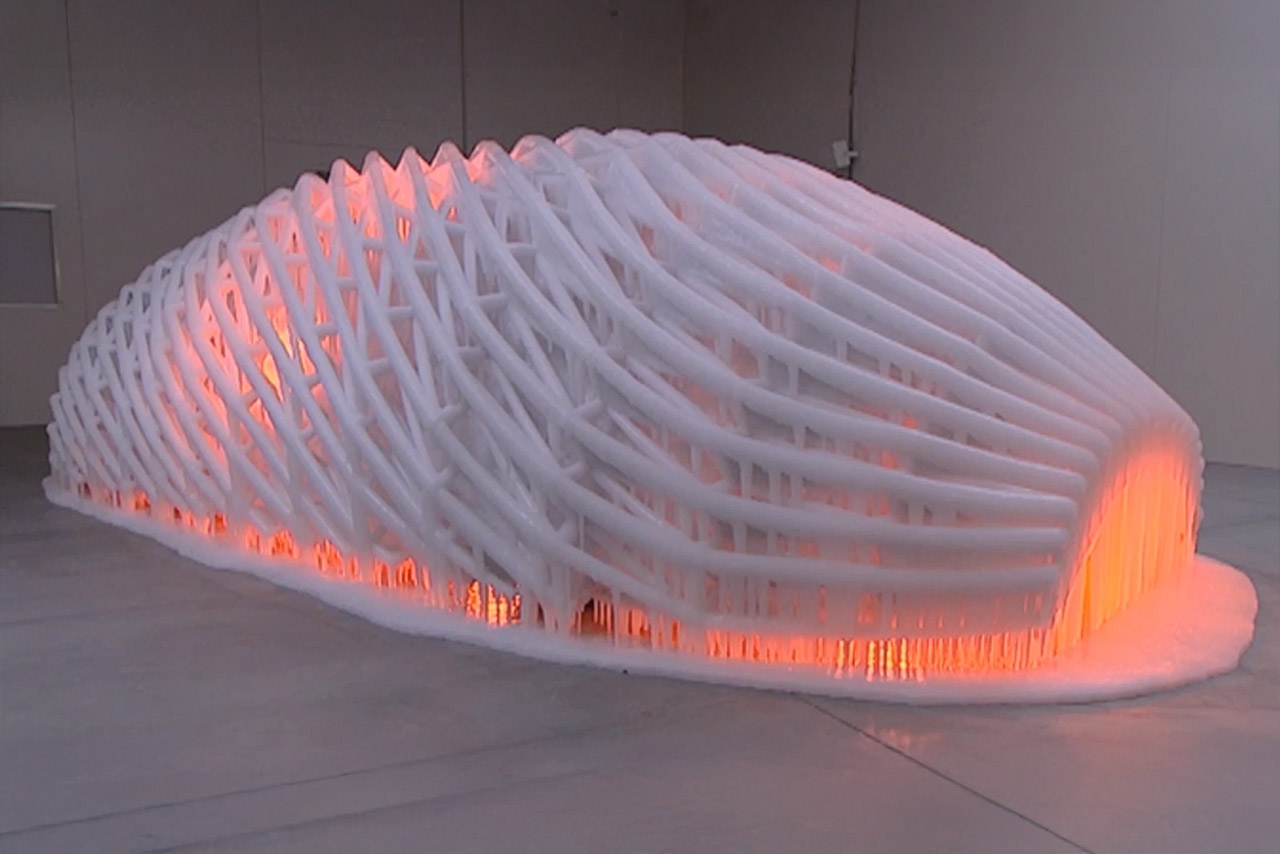
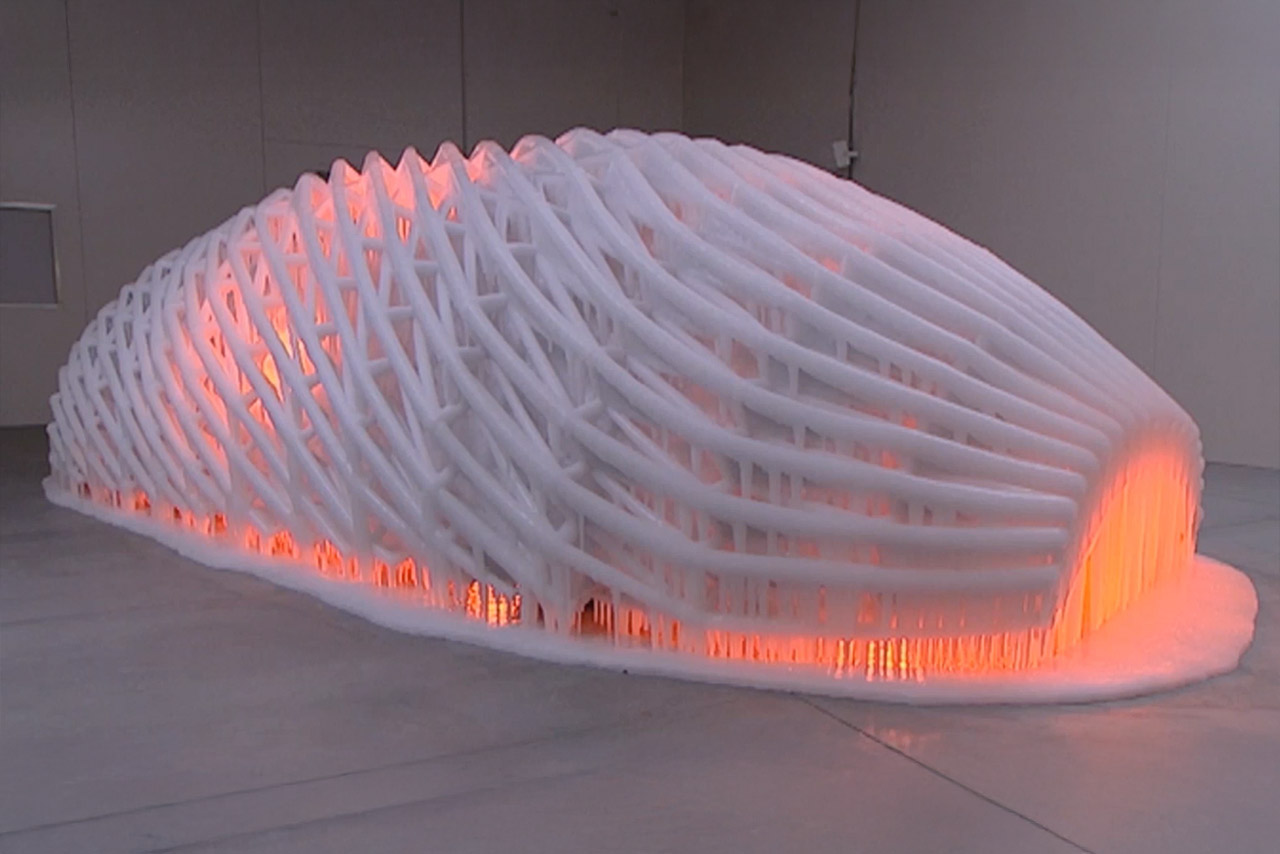
Danish-Icelandic artist Olafur Eliasson is well-known for turning things upside down: a waterfall that flows backwards in the middle of New York, a blazing sun inside a museum - and now a racing car literally frozen to create an ice sculpture. For his Art Car, Eliasson removed the body of the HR - a high-performance, hydrogen-powered prototype - and replaced it with a delicate outer skin comprising two layers of reflective wire mesh that span the entire car. The mesh was then covered with several layers of ice. Eliasson thus transformed an example of advanced automotive technology into a work of art which seems to be frozen in time. The entire artwork weighs around two tonnes and is internally illuminated - a poetic reflection on sustainability, transience, and the automotive industry's environmental responsibility.
#17 Jeff Koons / BMW M3 GT2 / 2010.
"These race cars are like life, they are brimming with power and enormous energy. My ideas should meld with it – it is all about opening up to it completely." – Jeff Koons
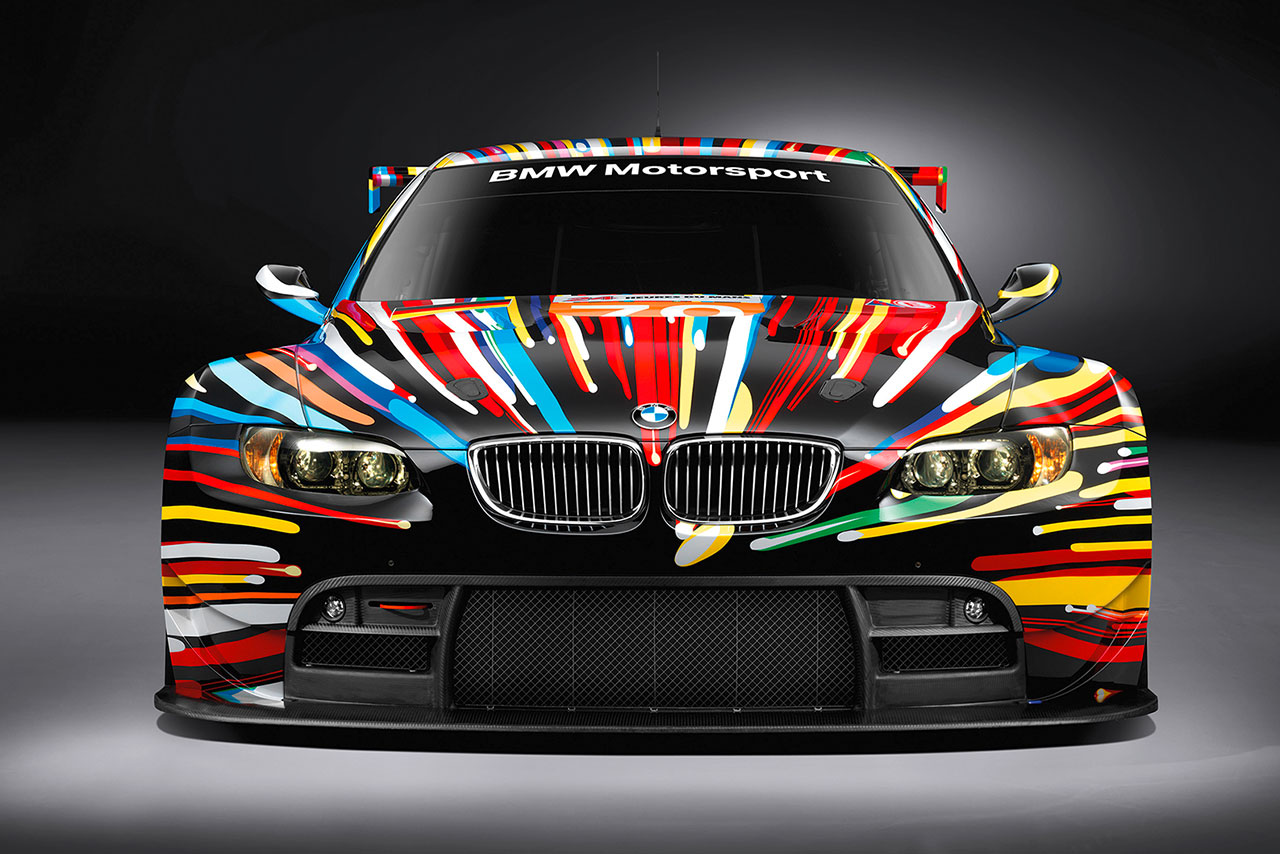
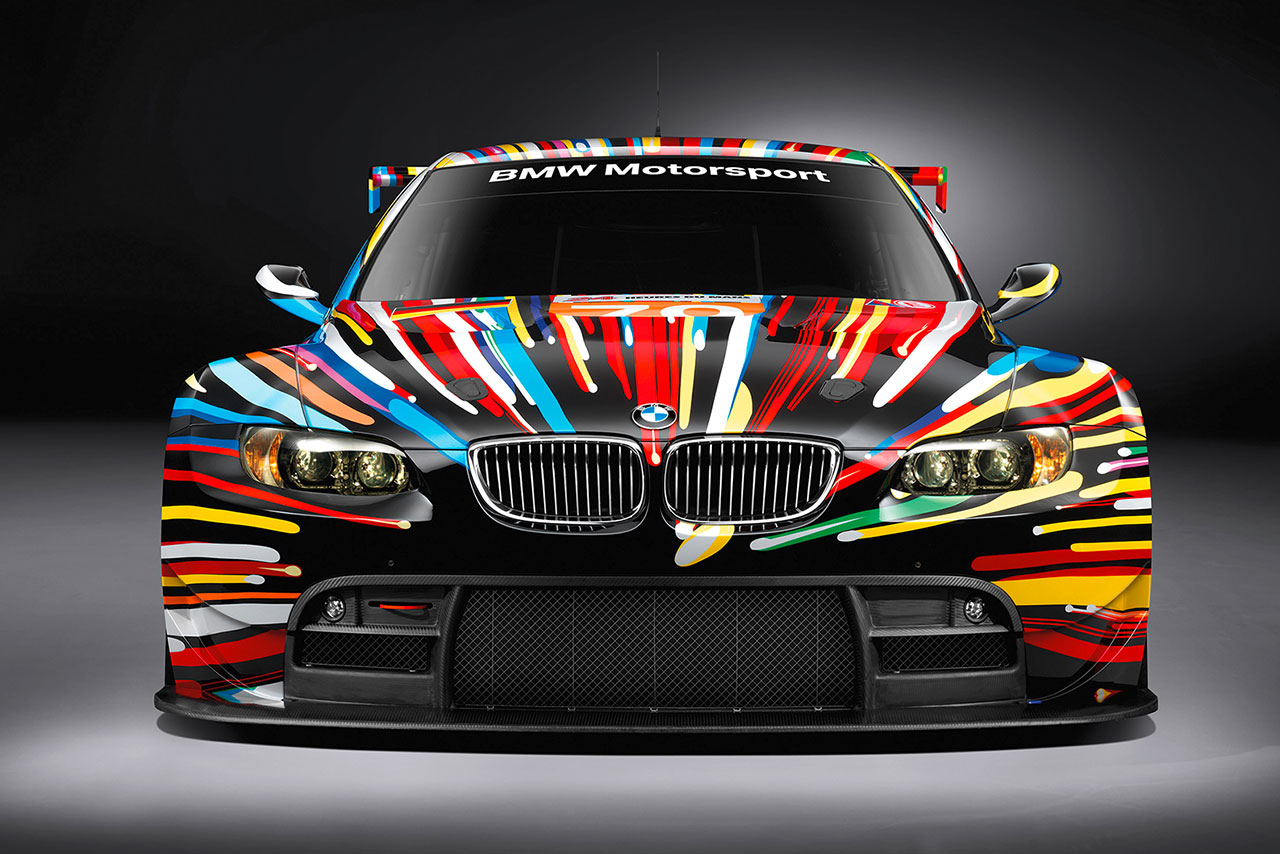
The 17th BMW Art Car is a homage to speed, power, and pure passion for racing. Inspired by images from the world of motorsport, Jeff Koons - himself an avid driver - produced a design that captured the dynamics of the BMW M3 GT2 in bright colours and pulsating streaks of light. Vivid clusters of lines suggesting speed and kinetic energy stretch across the bodywork, while graphic explosions at the rear symbolise the raw power of the engine.
Koons selected 20 eye-popping Pantone colours, which were reproduced as accurately as possible using state-of-the-art digital printing techniques. The search for the brightest and most luminous possible white as a base colour on the special vinyl wrap proved particularly challenging. In this Art Car, Koons transposed his typical aesthetic of flawlessly glossy surfaces to the racetrack.
#18 Cao Fei / BMW M6 GT3 / 2016.
"We are entering a new age where we can directly control objects with our minds. The 18th Art Car explores the limits of human thought. – Cao Fei
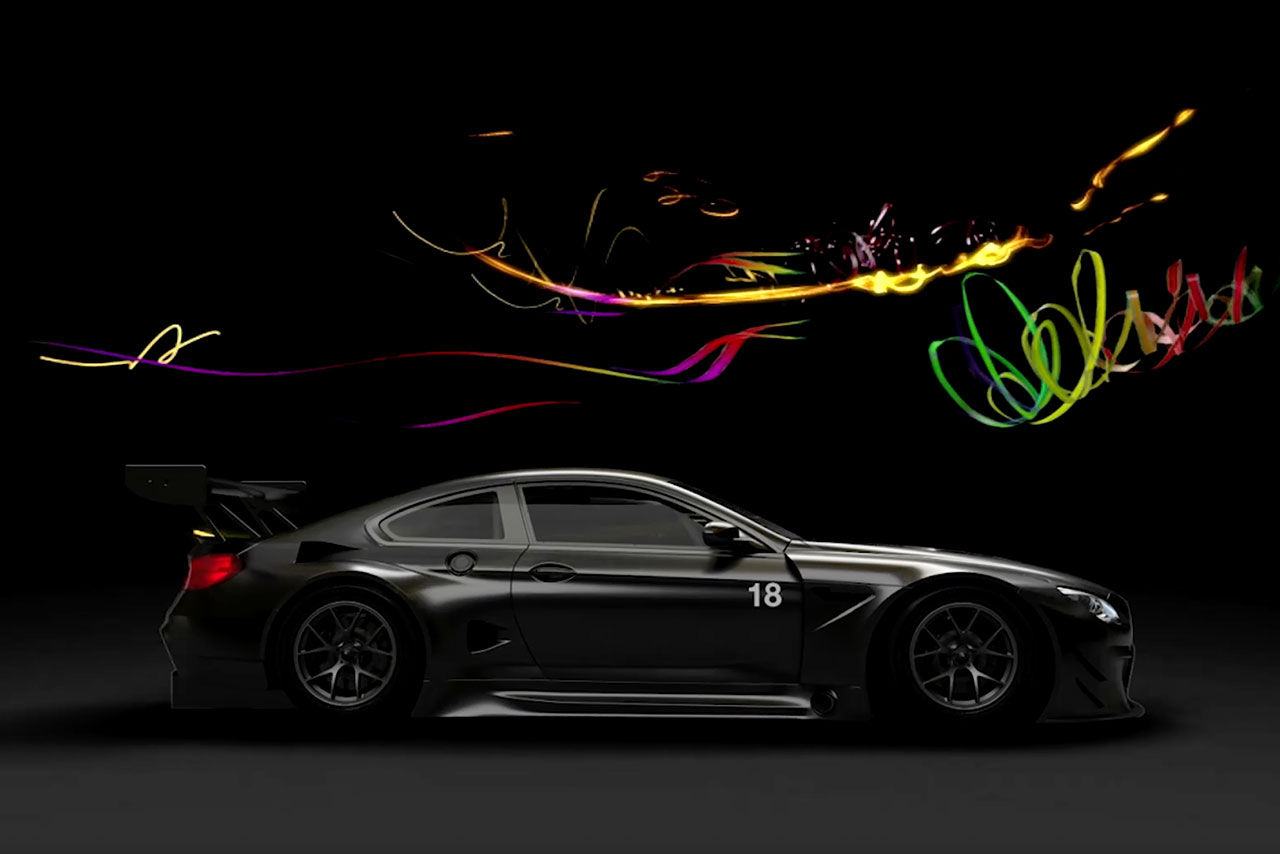
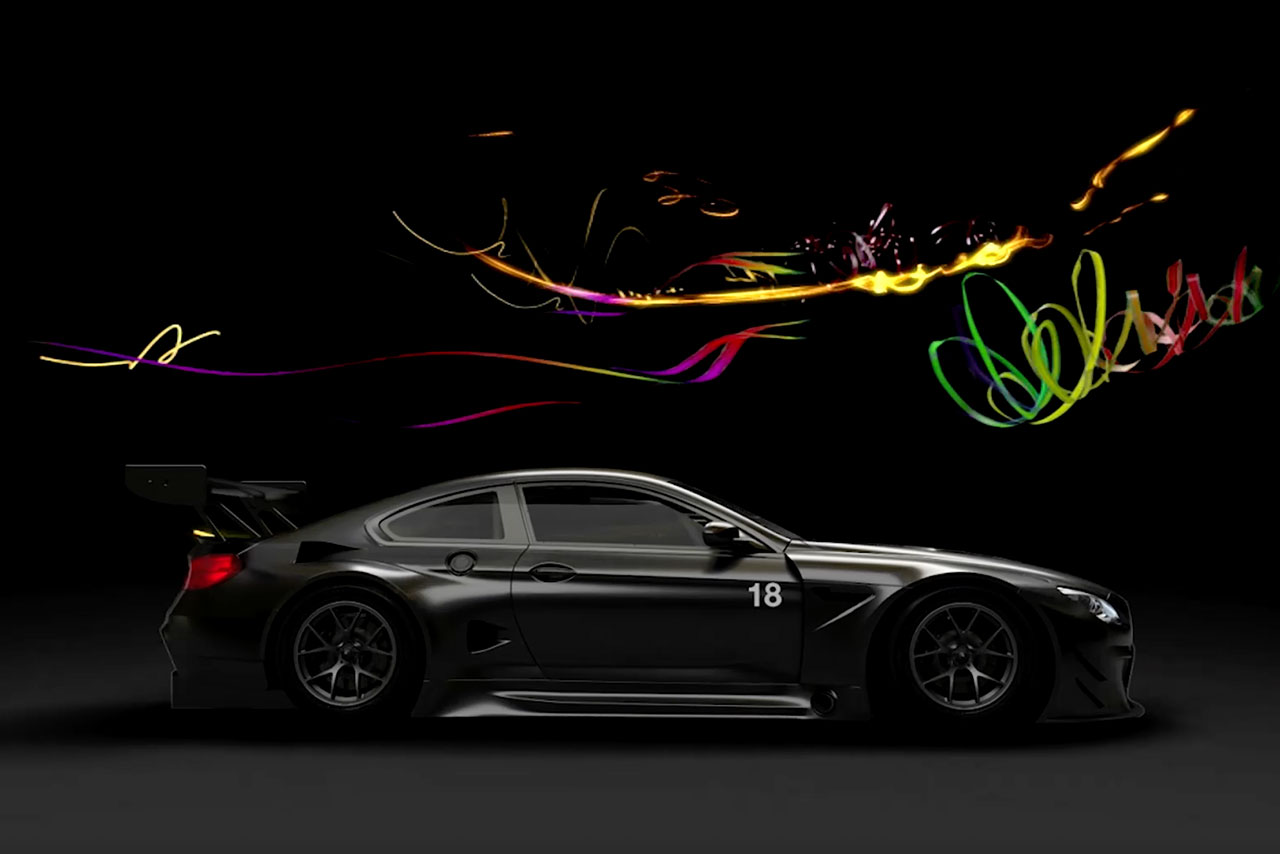
Cao Fei's Art Car brought the collection into the 21st century: her work was the first-ever digital BMW Art Car, using both physical and virtual elements - the latter including augmented reality (AR) and video - to create a multimedia parallel universe. This serves as a reflection on the rapid pace of technological change in China and bridges the divide between tradition and modernity. Cao's work comprises three elements: a six-minute film that follows a spiritual time-traveller on a journey through the past, present, and future; an app-powered AR installation that conjures up vivid streaks of light above the car; and the car itself, a BMW M6 GT3 racing car painted carbon black. In accordance with Chinese tradition, the car was ritually blessed before being sent out to race at the FIA GT World Cup in Macau. Cao Fei and the car's driver, Brazilian Augusto Farfus, also blessed the car again in Macau before every race.
#19 John Baldessari / BMW M6 GTLM / 2016.
"My Concept highlights some of the trademark ideas that I use. So you can say the BMW Art Car is definitely a typical Baldessari. And the fastest artwork I ever creadted!" – John Baldessari
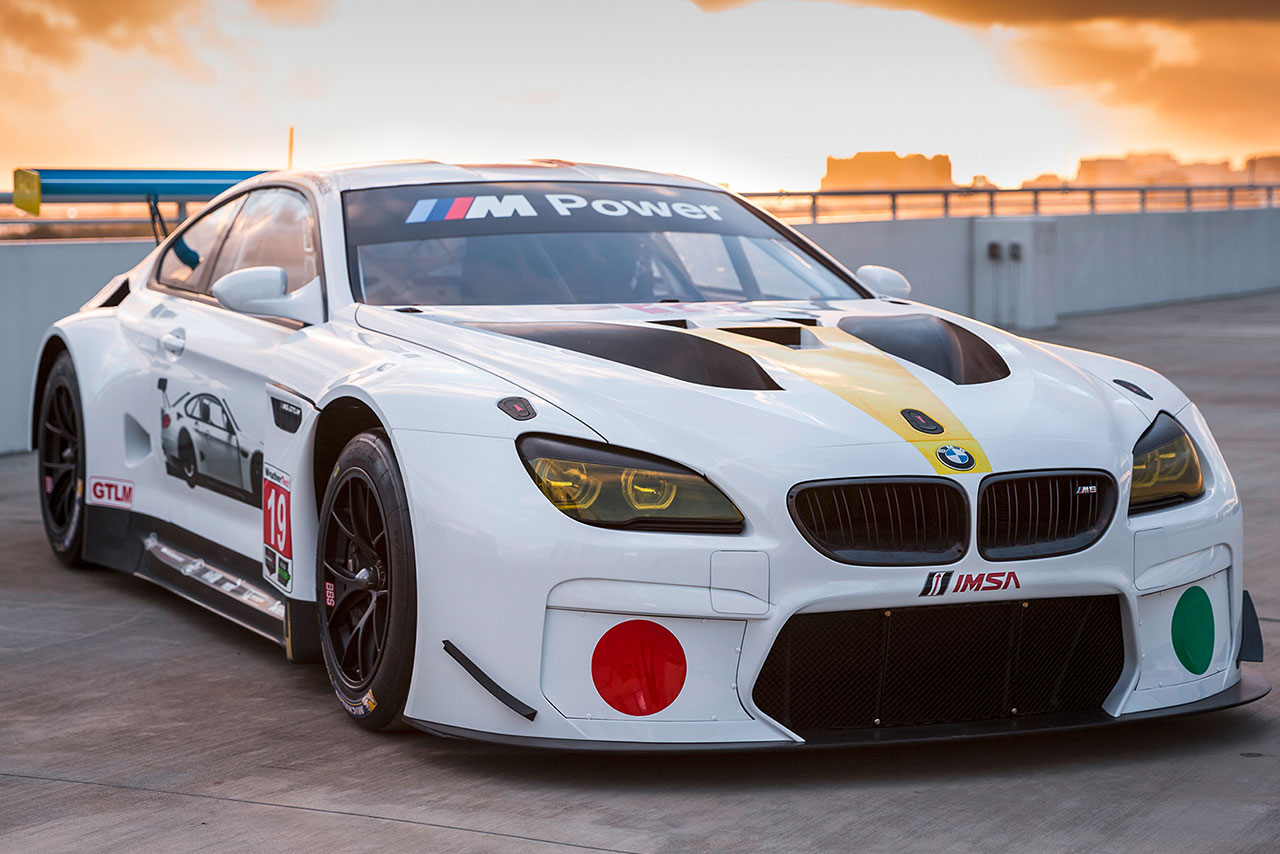
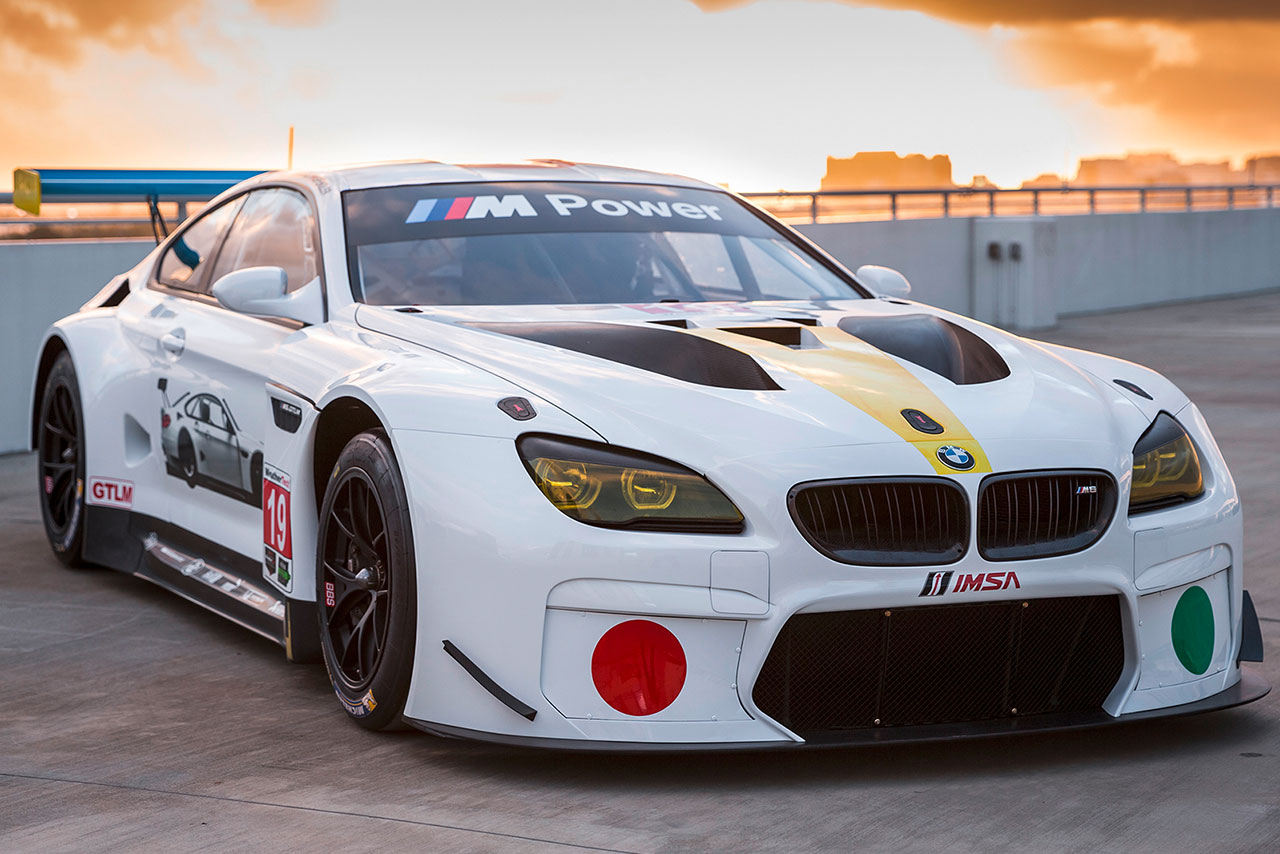
Californian artist John Baldessari once said that he would be remembered as "the guy who puts dots over people's faces." With that in mind, it was to be expected that his design for the BMW M6 GTLM would feature the dots and shapes - in red, yellow, blue, and green - that typify his work. He also added the word FAST on the driver's side as an energetic reminder to the driver and team - because, after all, as Baldessari said, he still wanted to come in first. Expressive, minimalistic, pure: Baldessari's car was the first Art Car to be sent out to race without sponsors' logos - and the third to cross the finish line of a 24-hour race.
#20 Julie Mehretu / BMW M Hybrid V8 / 2024.
"I love the interplay of the two: Motorsports and the actual aesthetic object which a car is.. It becomes this space where painting, conceptual art, and aesthetics can participate." – Julie Mehretu
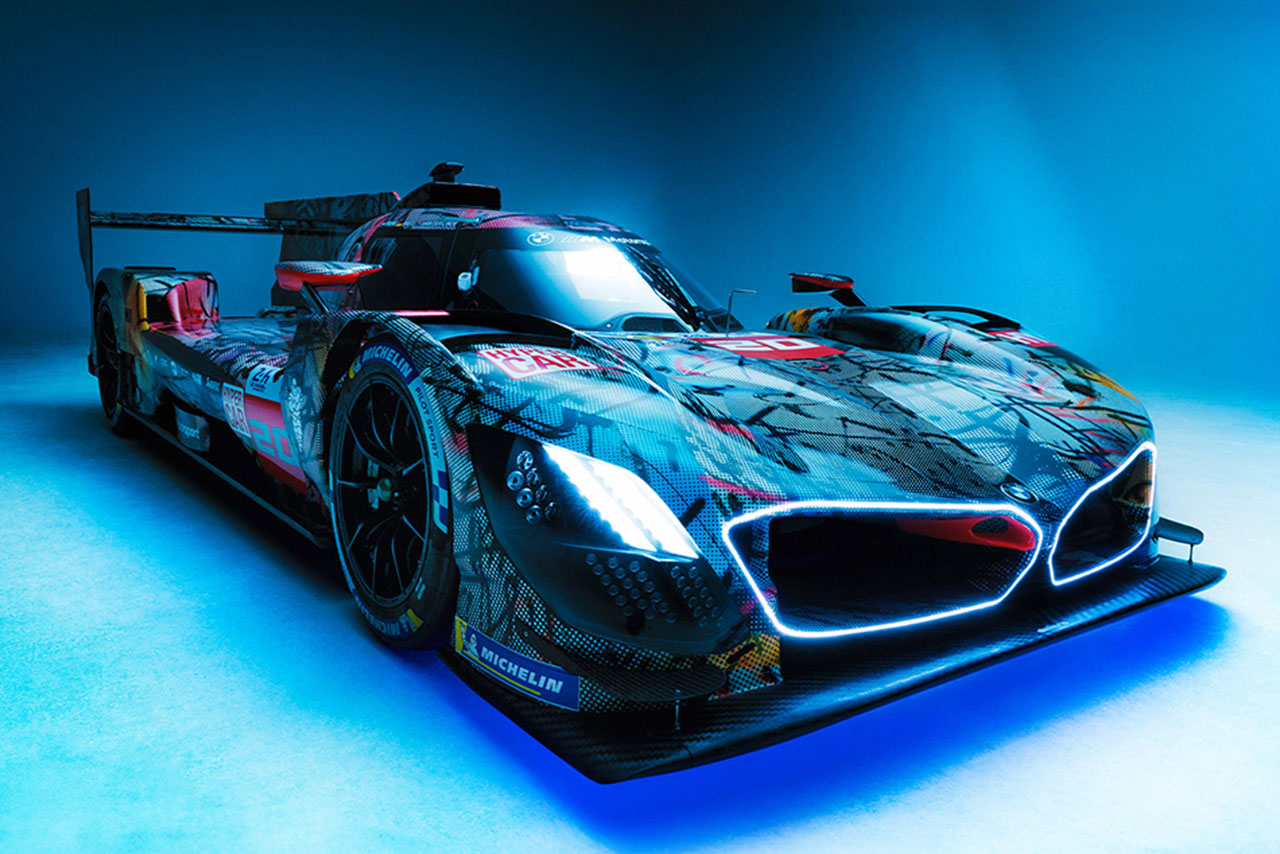
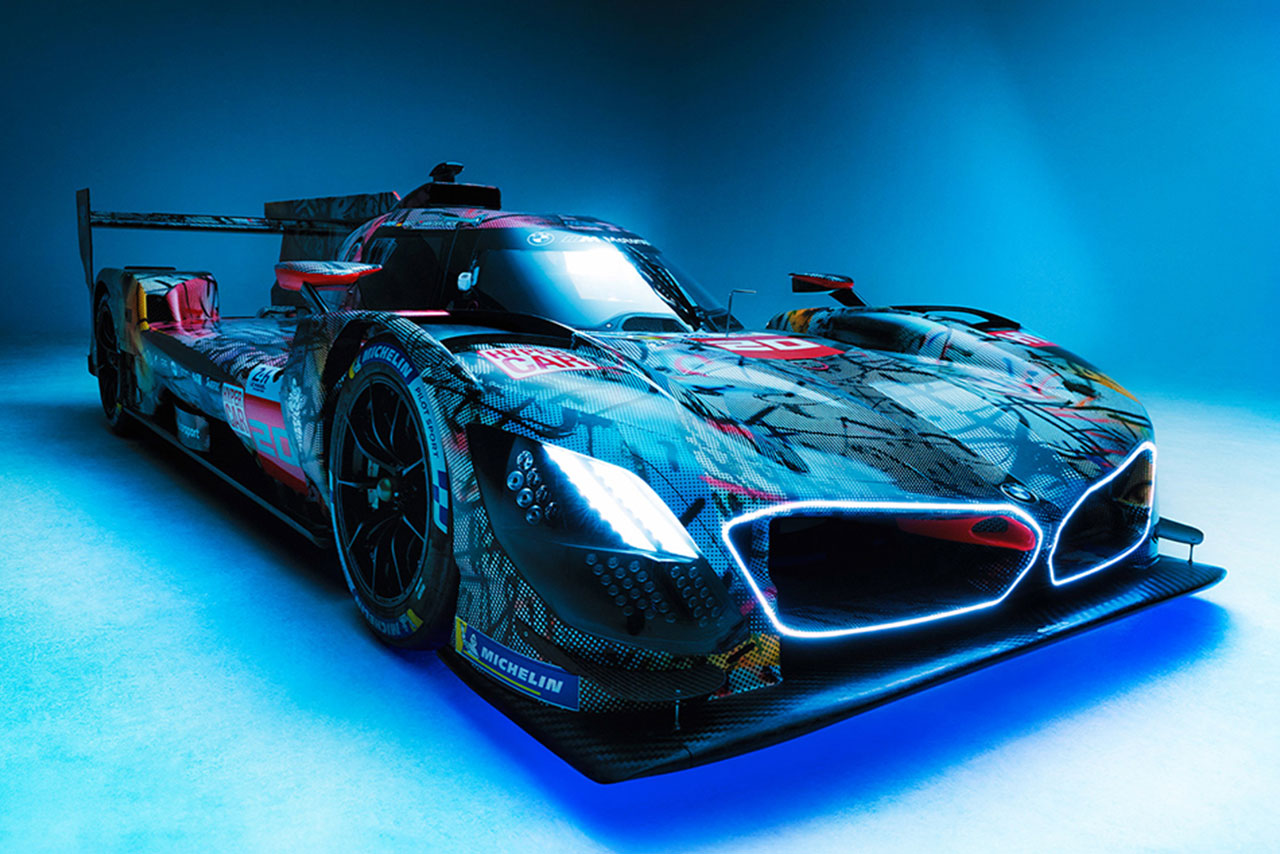
Multifaceted, dynamic, and monumental are all words that describe American artist Julie Mehretu's work. She layers all kinds of media and observations on her huge canvases - photos, social media posts, musical motifs, literary quotations - distorting, pixelating, and painting over them while adding her own visual gestures. The spaces which these works map out are always political, global and universal. Mehretu refers to them as psychogeographies. The artist was working on a painting called "Everywhen" when the model of a BMW M Hybrid V8 was delivered to her studio. She immediately began to think: what if the car were racing through the painting, absorbing all its ideas, quotations, and gestures into its bodywork? Her outcome brings the worlds of art and motorsport closer together than almost any other Art Car to date, creating a performative artwork that is a quivering, almost synaesthetic experience.