



Report of the supervisory board
20 min reading time
The BMW Group once again proved its strength in the financial year 2025. Despite a volatile environment, the BMW Group achieved the targets as revised in October. The Company continues to ramp up electromobility with consistency and ambition. In the financial year 2025, the BMW Group delivered more than 640,000 electrified vehicles worldwide (+8.2%). The Company also recorded slight growth in all-electric vehicles (+3.6%). Europe stood out particularly in terms of BEV sales, with growth of over 28% compared to the financial year 2024. This means around one in four vehicles sold in Europe is a BEV. Together, BEVs and PHEVs now account for 40% of all new vehicle sales in Europe. As a result, the Company beat the EU target for fleet carbon emissions in Europe once again with a figure of 89.971 grams CO2 per kilometre.
The BMW Group entered a new era with the world premiere of the BMW iX3* at the IAA Mobility in Munich. The NEUE KLASSE represents a quantum leap in terms of technology and driving experience. Following the successful launch of the BMW iX3*, the production of the BMW i3 is already set to begin at the Company’s revamped main plant in Munich.
The BMW Group remains in a strong position thanks to its cutting-edge NEUE KLASSE technology, global presence, and technology openness when it comes to drivetrains. The BMW Group is well-equipped to master future challenges under its own power.
Focus of Supervisory Board activities during the past financial year
The Supervisory Board of the Company performed the duties incumbent upon it with the utmost diligence throughout the financial year 2025.
We continuously and thoroughly monitored the governance of the BMW Group based on in-depth reports received from the Board of Management. We also advised the Board of Management on key business conduct issues and on the Group’s strategic development. In the financial year 2025, the Supervisory Board focused on corporate planning and management in light of geopolitical shifts and on the developments in the Chinese market. The Supervisory Board shaped the framework for corporate governance at BMW by making key decisions about the composition of the Board of Management.
At each of the five plenary sessions of the Supervisory Board (including one two-day meeting), we held detailed discussions with the Board of Management regarding the Group’s situation. The Board of Management also kept the Supervisory Board well informed regarding matters of significance outside the framework of formal meetings. The Chairman of the Board of Management also communicated directly with the Chairman of the Supervisory Board on a regular basis. In addition, the Chairman of the Audit Committee, Dr Kurt Bock, maintained a direct line of contact with the Board of Management member responsible for Finance as well as with the external auditor’s representatives outside of meetings. We regularly dealt with internal Supervisory Board issues and personnel-related matters without the presence of the Board of Management. Our cooperation, both within the Supervisory Board and its committees and with the Board of Management, was conducted in a spirit of trust, respect and constructiveness. Detailed documents were generally distributed to the members in advance to allow them to prepare for meetings. In addition, separate preliminary meetings of the shareholder and employee representatives were held on a regular basis.
In its reports on the BMW Group’s business situation, the Board of Management kept us well informed at each meeting regarding current developments and the Group’s overall performance. These reports included breakdowns of the sales performance by brand, drivetrain and region, in addition to overall market trends and comparisons with the competition. We were also provided with information about key financial indicators and the Group’s treasury system at every meeting. The topics covered by these reports included funding, financial liabilities and the liquidity situation. The Board of Management also kept us informed about the Group’s share buyback programmes, the currency management strategy and related effects.
The Board of Management’s reports also covered relevant developments, such as key partnerships, significant organisational changes and the Company’s success at trade fairs like the IAA Mobility in Munich and Auto Shanghai. They also addressed the Company's performance in quality and customer satisfaction studies.
The Board also updated us on topical issues and strategic projects, including the action taken by the Company to secure semiconductor supplies and the roll-out of the MINI direct sales model in Europe. We closely monitored the Chinese market at every meeting.
The Board of Management also provided us with regular updates related to international trade policy and regulations. It used scenarios to illustrate how changing tariffs might affect the BMW Group. We discussed economic trends and forecasts across various regions and heard from the Board of Management about the Company’s strategies and actions for sourcing critical raw materials and components. We also held regular discussions on the EU regulations on fleet carbon emissions. The Chairman of the Board of Management set out the Company’s position on the European Commission’s requirements and plans for combustion-engine vehicles.
Corporate strategy, including sustainability, remained high on the Supervisory Board’s agenda in the financial year 2025. We analysed geopolitical trends and their impact on the BMW Group, with a particular focus on trade policy in key regions and the Chinese market. The Board of Management provided us with an insight into the Group’s strategic focus areas of drivetrain systems, cell development and sourcing, digitalisation, automated driving, integrating AI into vehicles and corporate processes, and sustainability. The NEUE KLASSE and its technological features were a major topic of discussion. The technological leap forward that the NEUE KLASSE represents is driven by four “superbrains”: Driving Dynamics, Basic Functions, Infotainment and Automated Driving. This leap means increased efficiency, reduced complexity and optimised energy consumption.
The Board of Management explained the 360-degree approach to sustainability which is part of the BMW Group’s strategy. This approach covers the Group’s production processes and the entire product life cycle. The Board of Management also reaffirmed the Company's commitment to the Paris Climate Agreement. We dealt extensively with the corporate strategy for the Chinese market and the MINI brand, in addition to the implementation of the new direct sales model with an increased focus on artificial intelligence (AI). The Board of Management gave us a cross-brand outlook for the future product portfolio.
The BMW iX3* was a frequent topic of discussion as the first NEUE KLASSE model and a key milestone in the BMW Group's new era. Highlights included its successful, highly publicised world premiere at the IAA Mobility in Munich in September. Supervisory Board members also experienced driving it themselves during the September meeting. The trade magazine “Auto Bild” awarded the BMW iX3* the Golden Steering Wheel for “Best Innovation”. We were kept up to date about preparations for the start of production and received updates about how the Debrecen plant in Hungary was ramping up to the first vehicle in the NEUE KLASSE.
Sustainability and ESG topics were also on our agenda. We received reports about the Group’s decarbonisation targets for its supply chains and the progress that has been made. In a report on recent developments within the Group, the Board of Management also informed us about the opening of the Debrecen plant, which sets new standards in sustainability and efficiency. We examined the prospects for hydrogen fuel cell technology as part of the corporate strategy. We were pleased to note that the BMW Group is receiving funding for researching and developing hydrogen fuel cell technology as part of the European IPCEI (Important Projects of Common European Interest) initiative. We also consider it a great success that the BMW Group maintained its first-place position from the previous year in the Trendence Ranking Germany 2025 for employer attractiveness. In September, the Board of Management updated us on the interim progress which had been made towards achieving the ESG targets set for the financial year 2025.
Based on a self-assessment in the course of our work on corporate governance, we concluded that the composition of the Supervisory Board at 31 December 2025 fully meets the targets stipulated in the diversity concept and the competency profile.
In the Declaration of Compliance with the German Corporate Governance Code issued in December 2025, the Board of Management and the Supervisory Board confirmed that they have complied with the recommendations of the Code as amended on 28 April 2022 without exception and will continue to fully comply with them in future. Following a preparatory review conducted by the Presiding Committee as well as a further review at Supervisory Board level, the Corporate Governance Statement drawn up by the Board of Management was approved by the Supervisory Board in March 2026.
The Supervisory Board passed a resolution which granted it authority to approve or deny the share buy-back authorisation which had been approved at the 2025 Annual General Meeting. In July 2025, the Board of Management explained its decision to hold the 2026 Annual General Meeting as a virtual event. The Company opted for the virtual format following last year's in-person Annual General Meeting at the Olympiahalle in Munich.
We also took a detailed look at the topic of compliance within the Company. In his annual report to the Supervisory Board, the Chief Compliance Officer explained what was being done to enhance and strengthen the Company’s Compliance function. These measures included an increasingly international approach, the integration of Product Compliance into the organisational structure and the establishment of the ESG regulatory framework in 2025. He also covered the preventive measures that had been implemented and highlighted the positivity surrounding the BMW Group's compliance culture in the 2025 employee survey. The Company continued to take action to make Compliance IT fit for the future and integrate AI. The report also covered how the Company was implementing export control requirements and the measures it had in place to prevent grey market transactions and money laundering. The members of the Supervisory Board also received additional information on the topics of anticorruption and lobbying in accordance with EU legal requirements.
Board of Management remuneration was another important issue on the Supervisory Board’s agenda. The refined remuneration system for Board of Management members came into effect at the start of the financial year 2025. The Annual General Meeting approved this system, which had been proposed by the Supervisory Board, on 14 May 2025 with a majority of 96.74% of the valid votes cast. We reviewed the target structure, maximum remuneration and expected remuneration for the Board of Management for the financial year 2025, considering in particular the Group’s performance and the development of remuneration for senior executives and employees in Germany over the past few years. Based on a comparative study with the other members of the DAX conducted by an external independent remuneration consultant and subsequent oral advice, we concluded that the remuneration paid to Board of Management members for the financial year 2024 and the target remuneration for 2025 were appropriate. Detailed information on the Board of Management’s remuneration for the financial year 2025 is provided in the Remuneration Report.
Throughout the year, the Board of Management kept us updated on the Company’s progress towards achieving its financial and non-financial targets. These included targets related to ESG, such as the sales share of electrified vehicles, the reduction of EU fleet carbon emissions and employer attractiveness.
In December 2025, we adopted the performance criteria and targets for the Board of Management’s variable remuneration for the financial year 2026. These are based on the corporate planning for 2026, the longer-term corporate planning and the ESG targets included in the corporate strategy.
Key topics from the Board of Management’s individual areas of responsibility were also on our agenda. The Supervisory Board will continue to monitor the practical applications and impacts of AI across all of the Board of Management’s areas of responsibility. In December, we received a detailed report on the strategic importance, the various stages and the current areas of application of AI in the BMW Group production processes. BMW Group plants are already using AI to improve quality inspections and their maintenance, planning and testing processes. We also learned about the prospects for using humanoid robots in production.
We took a detailed look at product quality and the quality strategy. Quality in the supply chain was also on our agenda. The Board of Management explained the actions that were being taken to improve quality in the supplier network. It also updated us on the progress that was being made with technical measures related to a supplier's integrated brake system. Moreover we were informed about the legal dispute with the supplier.
The Board of Management also reported on the strategy, its implementation, business performance and the risk situation of the Financial Services segment.
In the highly detailed risk report, we were brought up to date with the structure and working methods of the risk management system. We paid particular attention to geopolitical risk scenarios, with a focus on the effects of tariff increases and potential supply bottlenecks.
The Supervisory Board looked at the competitiveness of the BMW Group’s HR structures and discussed strategic topics related to personnel development on the basis of the Group's report on Human Resources and Real Estate.
The BMW Group’s long-term business plan was the subject of comprehensive examination by the Supervisory Board. Growing geopolitical tensions, high levels of volatility in the market environment and increasing competition, particularly in China, make long-range planning challenging. The BMW Group’s plans remain focused on securing the BMW Group’s growth and returns. The Board of Management explained the Group’s ambitious planning targets, and paid particular attention to sales planning and the underlying assumptions, including the drivetrain mix. We also took a detailed look at the Group’s financial planning. The CFO presented key financial indicators for each segment, in addition to opportunities and risks for the planning period. After thorough examination, the Supervisory Board approved the long-term business plan drawn up by the Board of Management. The Supervisory Board will keep a close eye on further developments and how the Company’s measures are progressing.
The reasons for adjusting the annual forecast for the financial year 2025 in early October were subject of a discussion we had with the Board of Management in the subsequent meeting.
In December 2025, the Board of Management presented the budget for the 2026 financial year. The Board of Management explained the underlying assumptions in connection with tariffs and the Chinese market in detail. We approved the budget following an in-depth discussion which took a close look at opportunities and risks.
In line with the German Corporate Governance Code, Dr-Ing Dr-Ing E.h. Norbert Reithofer held regular meetings with investor representatives about Supervisory-Board-specific topics and reported back to the Board. I later continued these discussions in my capacity as Chairman of the Supervisory Board. We touched on corporate governance issues such as the composition of the Supervisory Board, the expertise and experience of its members, succession planning for the Board of Management and the remuneration system for the Board of Management.
The Company continued to provide internal training for Supervisory Board members in 2025. In March, we visited a BMW branch in Munich. We also gained insight into how the direct sales model was being put into practice at the MINI branch. In July, we visited the BMW component plant in Landshut and learned about its role as a competence centre for technology diversity, lightweight construction and electromobility. The tour focused on the development and production of the new Gen6 high-voltage batteries. These batteries provide a significant improvement in energy density, allowing NEUE KLASSE models to charge quicker and go further. In September, we took an in-depth look at the NEUE KLASSE at the BMW M Driving Academy in Maisach near Munich. The Board of Management member responsible for Development gave us an overview of the far-reaching innovations made by the NEUE KLASSE in terms of design, drivetrains, digitalisation and sustainability. After an introduction to the BMW Panoramic iDrive, we were able to drive the first NEUE KLASSE model, the BMW iX3*, on the road ourselves to get a first-hand impression of a next-level driving experience. The Supervisory Board was also interested to hear about the BMW Group’s future models cars from the BMW, BMW Alpina, BMW M and Rolls-Royce brands, including concept cars.
We deliberately draw on external input. In 2025, we invited the CEO of another industrial company listed on the DAX as a guest speaker. This allowed us to exchange views on transformation and innovation in disruptive times.
The Company provides an onboarding programme for new Supervisory Board members, in which representatives from various divisions present the key business areas and planning processes of the BMW Group. They also provide an introduction to the ongoing work of the Supervisory Board.
In late 2025, we reviewed the effectiveness of the work of the Supervisory Board and its committees with the aid of a digital questionnaire, and discussed the findings in our subsequent meeting. Cooperation both within the Supervisory Board and with the Board of Management was unanimously perceived as constructive and trustworthy, and the topics selected for meetings and further training events were considered to be good, sensible choices. In the current financial year, we intend to act on proposals to explore certain topics in greater depth, such as maintaining a focus on geopolitical developments and the Chinese market, as well as updating the BMW Group’s supply chain strategy.
The Supervisory Board takes precautions early on to avoid any conflicts of interest in the course of its deliberations and decision-making processes. No conflicts of interest occurred in the past financial year.
Description of Presiding Board activities and committee work
Following the changes that were made to the distribution of duties on 1 January 2025, the Supervisory Board committees in the financial year 2025 were the Presiding Committee, the Audit Committee, the Remuneration Committee, the Nomination Committee and the Mediation Committee. The Chairs of the committees reported in detail on the work of the committees at the subsequent Supervisory Board meeting. Further information on the duties, composition and working methods of the Supervisory Board committees is provided in the Corporate Governance Statement on the BMW Group website.
Unless a particular committee was responsible, the Presiding Committee prepared the topics for the plenary meetings at its six meetings. It also put forward proposals for reporting within the Supervisory Board. The Presiding Committee dealt intensively with the corporate strategy, including sustainability-related topics. It also focused on long-range corporate planning and the business development planning for the financial year 2026. The Group’s business situation was discussed in detail at every meeting of the Presiding Committee. The Presiding Committee also prepared the Board of Management succession plan. Moreover, it approved specific cases in which a member of the Board of Management took on Supervisory Board duties. The anticipatory resolution on the approval of loans and transactions by BMW Bank GmbH was renewed.
The Audit Committee convened eight times in total in the financial year 2025.
In March 2025, the focus was on preparing for the Supervisory Board meeting at which the financial statements and the non-financial statement for the financial year 2024 were discussed and examined. After verifying the matter of independence, the Audit Committee recommended to the Supervisory Board that PricewaterhouseCoopers GmbH Wirtschaftsprüfungsgesellschaft (“PwC”) be elected auditor at the 2025 Annual General Meeting. There were no indications of conflicts of interest, grounds for exclusion or lack of independence on the part of the auditor.
The Audit Committee concluded that PwC’s fee proposal for the audit of the Company and Group Financial Statements and the BMW Group Report 2025, as well as for the review of the Half-Year Report 2025, was appropriate in light of the scope of its tasks. The Committee therefore issued the corresponding contracts to PwC following its election at the Annual General Meeting in May 2025. The Audit Committee also specified supplementary audit focus areas. Moreover, it approved the scope of the non-audit services to be performed by PwC, and received regular reports regarding these services. We also reviewed the quality of our auditing processes on a regular basis. A report was provided by the relevant division on the Group’s experience with the audit of the financial statements for the financial year 2024 and on the results of the survey conducted within the Group for this purpose. External sources were also assessed. Based on this report, the auditor’s description of the quality assurance processes and measures undertaken, and the Audit Committee’s own experience with the auditor, the Audit Committee concluded that the audit by PwC continues to be of good quality.
The Audit Committee also examined the Combined Non-financial Statement of BMW AG and the BMW Group for the financial year 2024, which was part of the BMW Group Report 2024. The Audit Committee had representatives from PwC explain the results of the audit. We have again engaged PwC to conduct a limited assurance audit of the Non-financial (Group) Statement for the financial year 2025, with the exception of individual indicators within the sustainability reporting that are subject to a reasonable assurance audit.
The BMW Group reported on sustainability for the first time in line with the EU Corporate Sustainability Reporting Directive and the European Sustainability Reporting Standards for the financial year 2024. The Head of Group Reporting and Taxes presented a benchmarking comparison with other DAX 40 companies and reported on the progress that was being made towards implementing the standards within the Company. PwC kept us informed about the content and schedule of the audit and updated us on the status of the German legislative process involved in implementing the directive.
The Board of Management presented the Half-Year Report and the Quarterly Statements to us prior to publication and discussed the relevant financial information as well as the development of key indicators in competitor metrics with us. Representatives of the external auditor were also present when the Half-Year Report was discussed and provided information about their review. We deliberated on these matters partially without the Board of Management present.
In November, we looked at the schedule for changing the external auditor, which the Company is legally required to do at least every ten years. In line with the relevant department’s proposal, we decided to prepare to make the regular change in the financial year 2029. We will do this via a tendering process in 2026.
At its meeting in November, the Audit Committee considered the effectiveness and appropriateness of the BMW Group’s internal control system (including the Corporate Audit function), the compliance management system and the risk management system. The responsible department head briefed us on the Internal Control System for accounting and the Tax and Customs Control System. He also explained the requirements for the income tax information report (Country-by-Country Reporting), which we are required to publish from the financial year 2025 onwards. We receive a detailed risk report twice a year. In addition to the main risks for the BMW Group and an assessment of these risks, particular emphasis was placed on geopolitical risk scenarios, especially for supply chains and sales markets. We took a detailed look at the Chinese market and key risks relating to ESRS standards. We investigated geopolitical developments and the Company's measures in another report. The Head of Corporate Strategy provided an analysis of various global geopolitical scenarios with a focus on tariffs, technological restrictions and carbon regulations.
The Head of Group Corporate Audit presented us with the audit matters and findings in the 2025/2026 audit year, as well as the plans for further internal audits.
We also addressed compliance issues. In his half-year report, the Chief Compliance Officer informed us about the expansion of the international compliance organisation and the operational focus areas of the Group's compliance activities. We received detailed updates about a dedicated management system for the ESG framework, enhancements to Product Compliance and measures related to export control. The Audit Committee also reviewed the annual compliance report. The Chief Compliance Officer kept us informed about significant official proceedings related to compliance. He also reported on the results of internal whistleblower investigations and the resulting measures.
In its report on the audit of over-the-counter derivatives entered into by BMW AG during the financial year 2024, the external auditor confirmed to the Audit Committee the effectiveness of the system in place at BMW AG in complying with the regulatory requirements of the European Market Infrastructure Regulation.
The Audit Committee received regular reports on the state and development of significant legal proceedings and internal investigations (see ↗ note [39] to the Group Financial Statements). It dealt specifically with official proceedings regarding the functionalities of the emission control system of BMW X3 automobiles produced between September 2010 and March 2014 with a 2.0-litre diesel engine (EU5). The Audit Committee also monitored the methodology and progress of the internal investigation into emission issues in older BMW Group diesel vehicles. It received regular updates on internal Company measures and the status of official proceedings. The Audit Committee and the Supervisory Board ensured they properly fulfilled their duties to monitor the internal investigation, measures and official proceedings with the support of a law firm assigned by the Supervisory Board. Following a thorough discussion, the Supervisory Board decided not to assert claims for damages against former or current Board of Management members for the time being in line with the Audit Committee's recommendation. The legal consultants determined that this was a lawful decision.
The Audit Committee also dealt extensively with antitrust investigations by the European Commission and the UK Competition and Markets Authority (CMA). These investigations focused on automotive manufacturers and industry associations in connection with end-of-life vehicle recycling. An external law firm appointed by the Supervisory Board advised the Committee in this regard. With support from their external legal advisors the Audit Committee and the Supervisory Board ensured they properly fulfilled their monitoring duties and examined potential claims for damages against former or current Board of Management members. After both proceedings ended, the Supervisory Board decided not to assert claims for damages against former or current Board of Management members. This decision was in line with the Audit Committee's recommendation and supported by legal counsel.
Out of an abundance of caution, I chose not to participate in the deliberations in either case, despite our legal advisors concluding that my involvement would not constitute a conflict of interest.
In July, the Audit Committee resolved to amend the Articles of Incorporation. This reflected the changed composition of the share capital following the Board of Management's decision to cancel repurchased shares.
The Remuneration Committee met three times in the financial year 2025 to prepare the Supervisory Board in connection with the remuneration for the Board of Management. The Committee reviewed the appropriateness of the Board of Management's remuneration for the financial year 2024 and the target remuneration for 2025 in February with the help of an independent external remuneration consultant. In preparation, the Committee discussed the factors involved in the variable remuneration components for the members of the Board of Management for 2024. It also reviewed the draft Remuneration Report for the financial year 2024 along with PwC's audit report. The Committee also decided to engage PwC to audit the contents of the Remuneration Report for 2025. The outlook for Board of Management remuneration in 2025 was on the agenda in September and November. The proposals related to metrics and setting financial and non-financial targets, including ESG targets, for the Board of Management remuneration for the financial year 2026 were also discussed in great depth in November.
In February 2026, the Committee discussed the factors involved in the variable remuneration components of Board of Management members for 2025. It also dealt with the draft Remuneration Report 2025 and PwC's audit of the report. The Committee also issued the contract for PwC to audit the contents of the Remuneration Report in the financial year 2026 at this meeting.
The Remuneration Committee also prepared the proposals for the Annual General Meeting 2025 to approve the remuneration system for the Board of Management and the Supervisory Board. It adopted a corresponding recommendation for the Supervisory Board.
The Nomination Committee held one meeting in the financial year 2025. We discussed the Supervisory Board's competency matrix, the requirements for future appointments and medium-term succession planning for shareholder representatives. In another meeting in February 2026, we adopted the recommendation to propose Dr-Ing Christian Bruch to the Annual General Meeting for a term of office of approximately four years.
The Mediation Committee, which is prescribed by law, did not need to convene during the financial year under report.
Composition of the Board of Management
The Supervisory Board made key personnel decisions in the financial year 2025 to secure the Company's future leadership in innovation and technology. They also help the BMW Group to continue its successful course during the current transformation.
Frank Weber, the Board of Management member responsible for Development, left the Board of Management on 31 May 2025 by mutual agreement as part of a succession arrangement. Following a change in the distribution of duties, Dr Joachim Post took over the Development remit on 1 June 2025. He was previously the Board of Management member responsible for the Purchasing and Supplier Network. On 1 June 2025, Dr Nicolai Martin was appointed as a member of the Board of Management. He has been with the BMW Group since 2004. Most recently, he headed the BMW luxury and Rolls-Royce product lines. Nicolai Martin took over as the member of the Board of Management responsible for Purchasing and the Supplier Network. We would like to thank Frank Weber for his forward-thinking leadership at the helm of Development. His leadership was instrumental in the BMW Group getting the NEUE KLASSE ready for mass production.
In December, the Supervisory Board decided on the next Chairman of the Board of Management as planned. Oliver Zipse's term will come to an end by mutual agreement on the day of the 2026 Annual General Meeting. Dr Milan Nedeljković will succeed him as Chairman of the Board of Management. Milan Nedeljković has worked for the BMW Group since 1993. He has been the Board of Management member responsible for Production since October 2019. We are convinced that he will lead the Company into a successful future. He brings strategic foresight, an entrepreneurial mindset and an ability to implement projects to the role.
Oliver Zipse has been with the BMW Group since 1991. He has been a member of the Board of Management since May 2015, initially as the member responsible for Production. He became the Chairman of the Board of Management in August 2019. He has achieved great things for the BMW Group. Thanks to his strong leadership, the BMW Group was stronger at the end of the coronavirus pandemic than it was at the beginning. His consistently forward-thinking approach was instrumental in establishing the Company’s technology-neutral approach. He deserves our deepest gratitude for his outstanding performance.
The Supervisory Board also extended the terms of Walter Mertl, Board of Management member responsible for Finance, and Jochen Goller, Board of Management member responsible for Customer, Brands and Sales.
Composition of the Supervisory Board, the Presiding Board and the Supervisory Board’s committees
2025 marked Dr-Ing Dr-Ing E.h. Norbert Reithofer’s last Annual General Meeting. He retired after a total of 38 outstanding years with the BMW Group. Norbert Reithofer was a member of the Board of Management for 15 years and served as Chairman for nine of those years. This extensive experience proved invaluable when he became the Chairman of the Supervisory Board – a position he held for ten years. The BMW Group owes Norbert Reithofer a huge debt of gratitude. His departure marked the end of an era.
The Annual General Meeting elected me to the Supervisory Board in May 2025 for a term of approximately four years. I completed a cooling-off period after leaving the Board of Management, where I served as the Board member responsible for Finance until May 2023. Rachel Empey, Anke Schäferkordt, Dr Marc Bitzer and Professor Dr Dr h.c. Christoph Schmidt were each elected as shareholder representatives for a further term of approximately four years. The Supervisory Board members elected me as Chairman of the Supervisory Board at the Supervisory Board meeting following the Annual General Meeting. According to the rules of procedure, the Chair of the Supervisory Board is a member and the Chair of the Presiding Committee, the Remuneration Committee and the Nomination Committee. Rachel Empey and I were appointed to the Audit Committee by the members of the Supervisory Board. Anke Schäferkordt was appointed to the Remuneration Committee.
There were no changes to the composition of the Supervisory Board on the employee representative side during the past financial year.
Disclosure of attendance at meetings by individual members
| Meetings | Attendance | Attendance in % | ||||
| Members of the Supervisory Board | Plenum | Committees | Plenum | Committees | Plenum | Committees |
| Nicolas Peter2 | 4 | 12 | 4 | 12 | 100 | 100 |
| Norbert Reithofer1 | 1 | 6 | 1 | 6 | 100 | 100 |
| Martin Kimmich | 5 | 17 | 5 | 17 | 100 | 100 |
| Stefan Quandt | 5 | 18 | 5 | 18 | 100 | 100 |
| Stefan Schmid | 5 | 17 | 5 | 17 | 100 | 100 |
| Kurt Bock | 5 | 18 | 5 | 18 | 100 | 100 |
| Ulrich Bauer | 5 | – | 5 | – | 100 | – |
| Marc Bitzer | 5 | – | 5 | – | 100 | – |
| Rachel Empey | 5 | 8 | 5 | 8 | 100 | 100 |
| Heinrich Hiesinger | 5 | – | 5 | – | 100 | – |
| Susanne Klatten | 5 | 1 | 5 | 1 | 100 | 100 |
| Jens Köhler | 5 | – | 5 | – | 100 | – |
| André Mandl | 5 | – | 5 | – | 100 | – |
| Dominique Mohabeer | 5 | 11 | 5 | 11 | 100 | 100 |
| Michael Nikolaides | 5 | – | 5 | – | 100 | – |
| Horst Ott | 5 | – | 4 | – | 80 | – |
| Anke Schäferkordt | 5 | 3 | 5 | 3 | 100 | 100 |
| Christoph M. Schmidt | 5 | – | 5 | – | 100 | – |
| Vishal Sikka | 5 | – | 5 | – | 100 | – |
| Sibylle Wankel | 5 | – | 5 | – | 100 | – |
| Johanna Wenckebach | 5 | – | 5 | – | 100 | – |
|
1 Member of the Supervisory Board until 14 May 2025. 2 Member of the Supervisory Board since 14 May 2025. |
||||||
The meetings of the Supervisory Board and Committees were held in person, with individual members participating by video conference in justified exceptional cases. Three Audit Committee meetings dealing with the quarterly figures and the Half-Year Report were held as hybrid meetings as planned. This means some participants attended in person, while other members joined via video call. The attendance rate at Supervisory Board meetings was 99%, and 100% for the meetings held by the various committees.
Review of financial statements and the profit distribution proposal
PricewaterhouseCoopers GmbH Wirtschaftsprüfungsgesellschaft (PwC) was appointed external auditor for the financial year 2025. PwC initially conducted a review of the condensed Interim Group Financial Statements and the Interim Group Management Report for the first half of 2025 and presented its results to the Audit Committee. No issues were identified that might indicate that the condensed Interim Group Financial Statements and Interim Group Management Report had not been prepared in accordance with the applicable provisions in all material respects.
The Company Financial Statements and the Group Financial Statements of BMW AG for the financial year ended 31 December 2025, including the Combined Management Report were authorised by the Board of Management on 9 March 2026. PwC has issued unqualified audit opinions on them. These audit opinions were signed for the second time in a row by Ralf Räpple and, for the fourth time, by Michael Popp as the auditors (Wirtschaftsprüfer) respon-sible for the performance of the engagement.
At its meeting held on 26 February 2026, the Audit Committee initially gave in-depth consideration to the preliminary version of the Company and Group Financial Statements and the Combined Management Report (including the Combined Non-financial (Group) Statement and the information on the EU Taxonomy) as well as the draft version of the auditor’s long-form reports.
Immediately after authorising their issue on 9 March 2026, the Board of Management submitted the Company and Group Financial Statements for the financial year 2025 and the Combined Management Report (including the Combined Non-financial (Group) Statement) to the Supervisory Board. The auditor’s long-form audit reports were also submitted to the Supervisory Board in a prompt manner. The Supervisory Board had received drafts of these documents in advance to allow it to prepare in detail. At its meeting held on 10 March 2026, the Audit Committee diligently examined and deliberated on these documents before they were considered in detail at the plenary session of the Supervisory Board on 11 March 2026.
At the two respective meetings, the Board of Management provided a detailed explanation of the reporting documents submitted to the Audit Committee and the Supervisory Board. The representatives of the external auditor reported on the main results of their audit and answered questions put to them by members of the Audit Committee and the Supervisory Board, partially without the members of the Board of Management being present. Both the Audit Committee and the Supervisory Board gave meticulous consideration to the key audit matters and the related audit procedures.
The representatives of the external auditor confirmed that the risk management system established by the Board of Management is capable of identifying at an early stage any developments that might threaten the Company’s going-concern status. They also confirmed that no material weaknesses in the internal control system and risk management system were identified with regard to the financial reporting process. In the course of their audit work, they did not identify any facts inconsistent with the contents of the Declaration of Compliance pursuant to § 161 of the German Stock Corporation Act (AktG) jointly issued by the Board of Management and the Supervisory Board.
Based on a thorough examination conducted by the Audit Committee and the Supervisory Board, we concurred with the results of the external audit. In accordance with the final result of this examination, no objections were raised. At our meeting held on 11 March 2026, we accordingly approved the Group and Company Financial Statements of BMW AG for the financial year 2025. The Company Financial Statements for the year ended 31 December 2025 have therefore been adopted.
Furthermore, in both the Audit Committee and the Supervisory Board, we examined the Board of Management’s proposal to use the unappropriated profit to pay a dividend of € 4.40 for each ordinary share entitled to receive a dividend and € 4.42 for each preferred share enti-tled to receive a dividend and to transfer the remaining amount to other revenue reserves. We consider the proposal appropriate and have therefore approved it.
The Audit Committee and the Supervisory Board also carefully examined the Combined Non-financial (Group) Statement for the year ended 31 December 2025. Following an in-depth explanation of the statement by the Board of Management, representatives of PwC presented the key results of their audit and answered questions posed by the members of the Supervisory Board. PwC conducted a “limited assurance” audit on the Combined Non-financial (Group) Statement, printed in the Management Report in the “Sustainability Statement” chapter. Individual indicators within the Sustainability Statement were audited as part of a “reasonable assurance” audit. An unqualified audit opinion was issued on the Non-financial Statement, signed for the second time in a row by the auditor Ralf Räpple (Wirtschaftsprüfer) and for the fourth time in a row by the auditor Michael Popp (Wirtschaftsprüfer). The Supervisory Board acknowledged and approved the Combined Non-financial (Group) Statement drawn up by the Board of Management.
Based on the preparatory work of the Remuneration Committee, the Supervisory Board and the Board of Management jointly prepared the Remuneration Report for the financial year 2025 in accordance with § 162 AktG. Going beyond the formal review required by law, the Audit Committee also engaged PwC to audit the contents of the Remuneration Report. Representatives of the auditor reported first to the Remuneration Committee and then to the Supervisory Board on the results of the review, and confirmed that the Remuneration Report complies with the financial reporting provisions contained in § 162 AktG in all material respects.
Expression of appreciation by the Supervisory Board
The members of the Board of Management and the employees of the BMW Group around the world drove the BMW Group’s good performance last year in a challenging environment thanks to their strong commitment, courage and creativity. We therefore wish to express our deep thanks and appreciation to all of them.
We are confident that the Board of Management and the entirety of the Company's workforce will continue the Company’s success story in 2026 with a combination of dedication, team spirit and enthusiasm.
Munich, March 2026
On behalf of the Supervisory Board


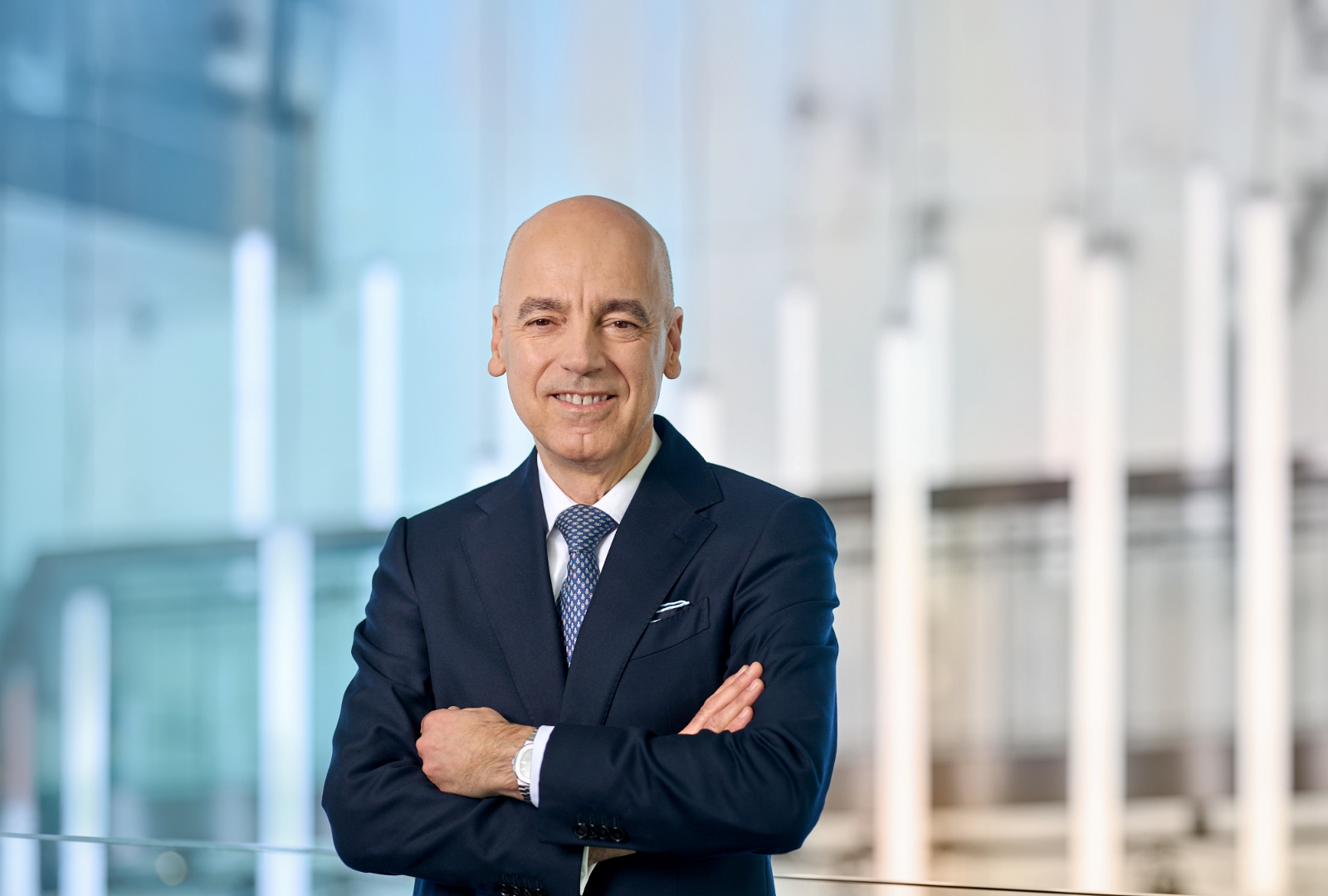
Nicolas Peter
Chairman of the Supervisory Board
A complete list of all Supervisory Board members is provided here